
5 Steps to Become a Copywriter: From Zero Experience to First Clients
Discover the essential steps to become a copywriter, from understanding the role and choosing your career path to landing your first clients and scaling your rates. Learn which skills matter most, how to build a portfolio, and practical strategies to grow a sustainable copywriting career in 2026.
February 18, 2026

Many people wonder how to become a copywriter, and it’s not a big surprise. Despite the overwhelming concerns of AI replacing us all for good, the demand for human writing is still strong. And now more than ever. The global market for copywriting services is expected to grow from about $30.12 billion in 2025 to roughly $32.38 billion in 2026, as more companies turn to freelancers and agencies to create content that actually connects with their audiences.
The copywriting business is hot right now, and if you want to be part of it, you’ve come to the right place. In this guide, I’ll walk you through practical steps to embark on this journey, even if you start from zero and want to become a hero. Let's dive in and see how we can make it happen!
So, what exactly is a copywriter? (And what isn’t?)
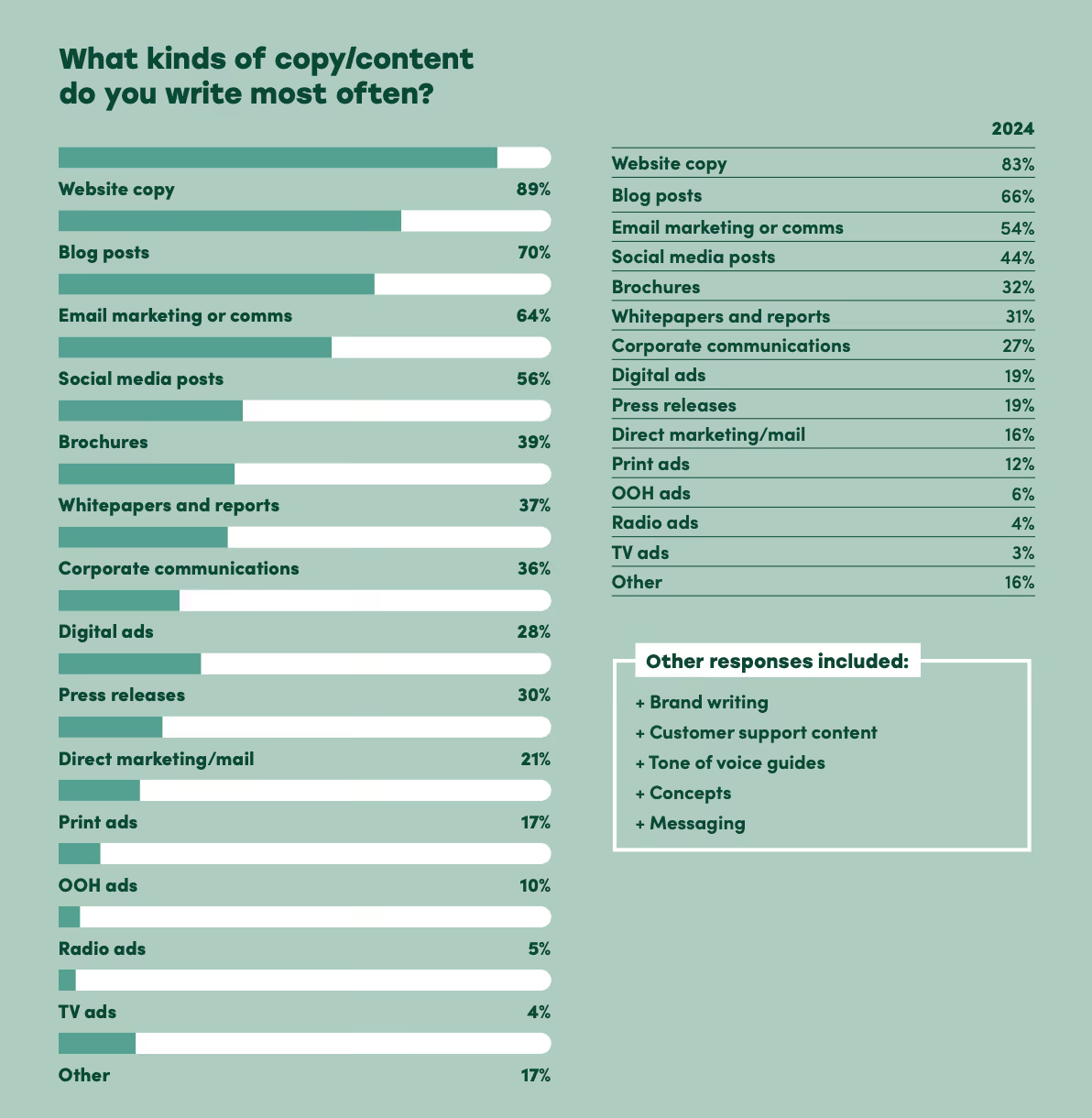
Before we start learning about the specific skills and ways to get clients, let’s focus on the role of a copywriter and, more importantly, what they really do in practice. In simple terms, copywriters create engaging content that inspires people to take action — whether that’s clicking a button, signing up for a newsletter, or making a purchase. Some people may think that all you need to do to become a copywriter is to learn how to put words together nicely, but copywriting is first and foremost strategic writing.

What copywriters do
At its core, a copywriter’s job is simple:
- Write with purpose. Copywriters craft text designed to influence readers, from website pages and email campaigns to product descriptions and marketing materials.
- Understand people. A good copywriter digs into who they’re writing for — their goals, frustrations, and motivations — then speaks directly to those needs.
- Collaborate with teams. They often work with marketers, designers, product teams, and strategists to make sure words and visuals work together.
What copywriters don’t do
Knowing what copywriters are not responsible for is just as useful:
- They aren’t journalists. Their writing is persuasive, not reporting.
- They aren’t editors. Well, not fully. They polish their own writing but usually don’t manage others’ content.
- They aren’t purely creative writers. Unlike authors or poets, every word serves a purpose: to persuade, inform, or sell.
Now that you understand what a copywriter is and what it isn’t, let’s focus on the practical steps of how to become one.
Step 1: Learn the copywriting basics
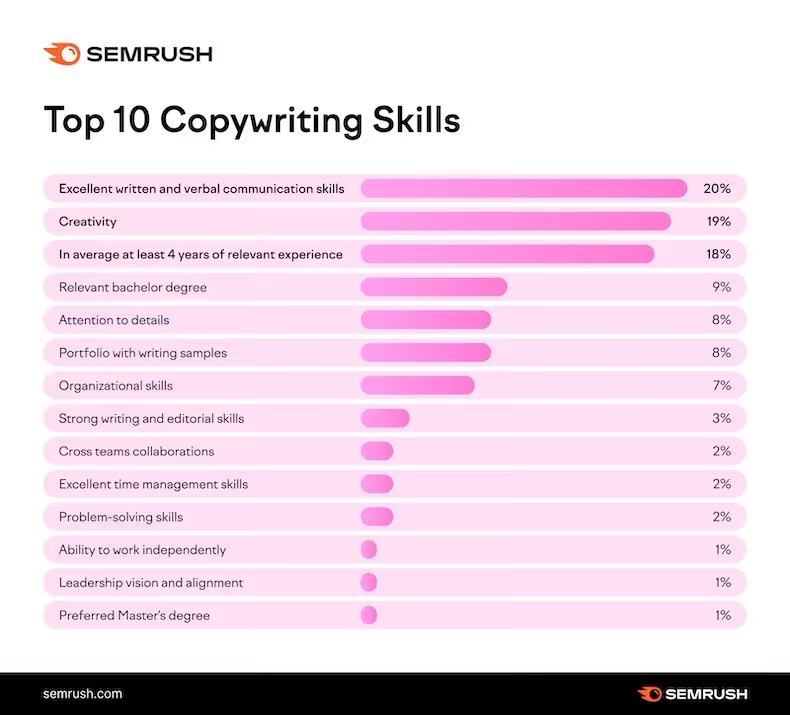
To become a copywriter, you need to master the fundamental skills the job requires. A degree is nice to have, but it’s not required for a copywriting career; even the American Writers & Artists Institute (AWAI) admits it. Most copywriters develop their skills through a mix of practice, self-education, and training.
At the very least, you need:
- strong writing and editing skills;
- research and analytical skills;
- creativity;
- audience awareness;
- communication skills;
- time management;
- attention to detail.
Nice to haves:
- SEO knowledge;
- digital awareness;
- industry knowledge;
- understanding of marketing principles.
Of course, you don’t need to know everything before you begin, but you do need to start learning deliberately. You can do it through:
- Copywriting courses
There are an unlimited number of academies online providing both free training and fully paid education. Here are some copywriting courses online: HubSpot Academy, edX, Udemy, and Coursera.
- Professional literature
As Steve Altier once said, "There is nothing better than a good read on a quiet morning!" So, here are some books that can help you improve your copywriting skills and enjoy some quiet mornings: The Copywriter's Handbook by Robert W. Bly, Copywriting 101 by Copyblogger Media, and Words that Sell by Richard Bayan.
- Copywriters’ blogs and workshops
Many established copywriters create free educational content and organize workshops to help people with no experience enter the profession. Here’s one of the top bloggers, Alex Cattoni, sharing 9 practical exercises that can help improve your copywriting skills:
The most important thing to keep in mind is that copywriting is a skills-based profession. The more you practice, the better your results will be.
Step 2: Practice writing and build your portfolio
You can watch as many videos and read as many books as you want, but without real-world practice, it may all be for nothing.
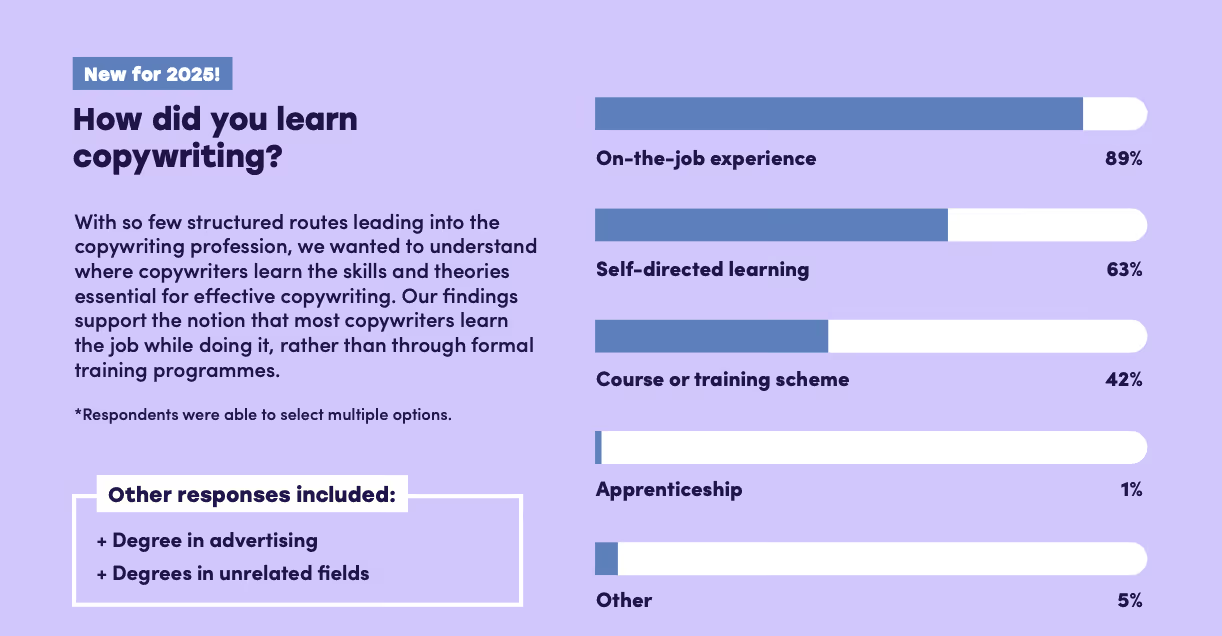
Many beginners underestimate this aspect, thinking that they need to learn how to write before they can start. The reality is that you learn while you’re writing.
Do daily writing exercises
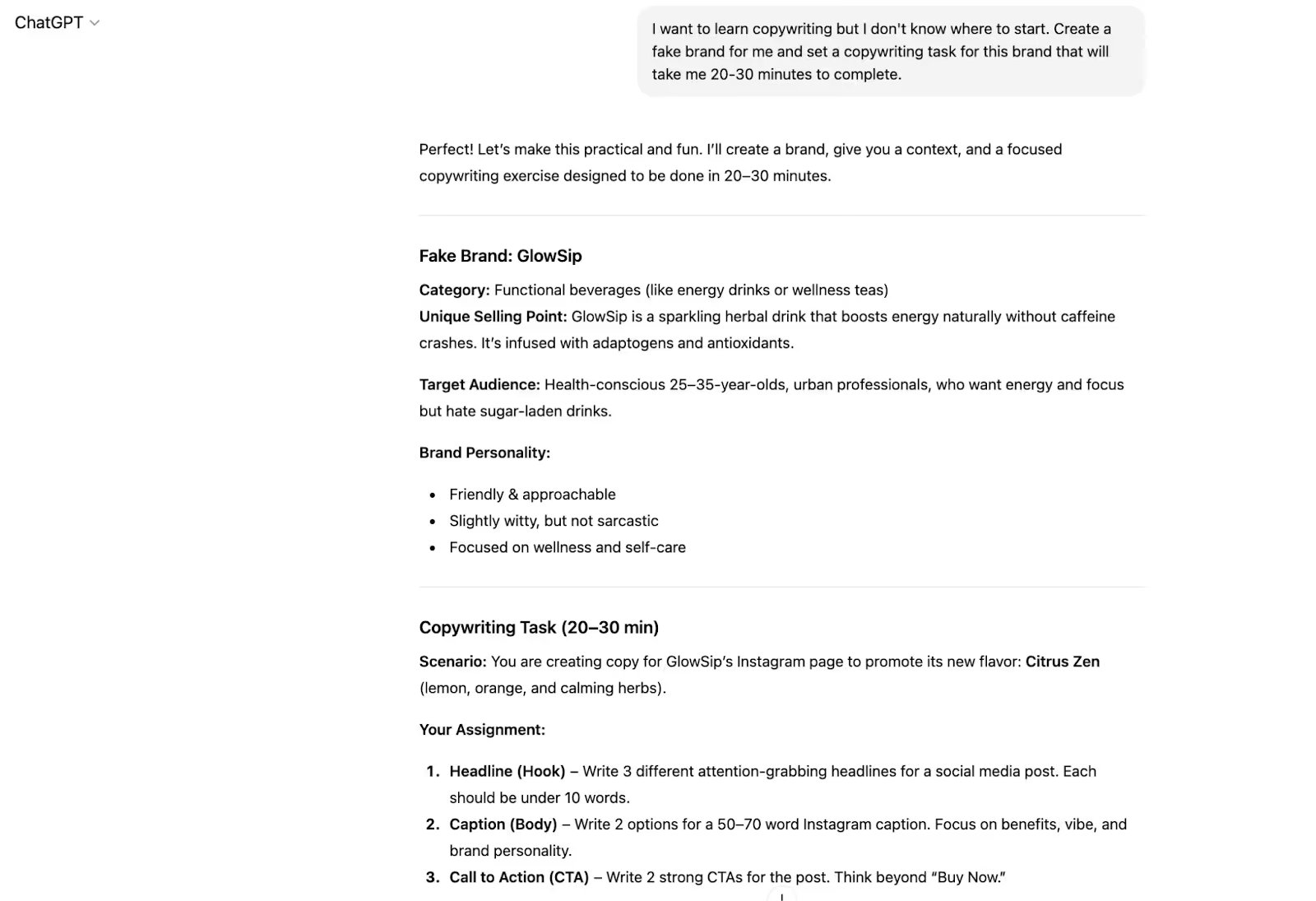
You don't need to spend long hours writing or working on complex projects at the beginning. Even 20-30 minutes of practice will be enough as long as you do it regularly. Choose a brand (or imagine one) and write copy for it — anything from ads to social media posts. Try different ideas every day, and if you're struggling to find something, I encourage you to use AI tools to help you. Seriously, don't think of AI as your enemy — go to ChatGPT and ask it to generate a brand and a copywriting task for you.
Practice real-world formats
A copywriter is someone who’s comfortable working with various formats that businesses actually use. Good beginner-friendly formats include:
- Email sequences
- Website landing pages
- Social media content
- Product or service descriptions
Try working on them with real business goals and the target audience in mind.
Get real feedback when you can
Writing in isolation can slow down your progress, as you are the only one evaluating your work. To understand what's working and what's not, you need feedback. I know it's not always easy to find a coach or experienced mentor who can help you, but here are two things I recommend when you don't have one: join writing communities on Reddit, Facebook, or LinkedIn and ask for feedback. And, again, use AI. You can use the Hemingway app or Grammarly to proofread your text. Or, you can ask ChatGPT to review your writing and suggest improvements.
Turn practice into portfolio pieces
Your portfolio doesn’t have to consist of paid work only. As you practice writing, you’ll notice that some of your pieces are better than others, and they can be put together to demonstrate your copywriting skills.
You can use Notion, Google Docs, Behance, or a sample website to build a portfolio. It doesn’t need to be large and impressive — it needs to prove you’ve done a good job. Add a short explanation of your thought process — what the goal was, what you emphasized, and why. Sometimes the context behind the work matters more than the work itself.
Your portfolio is evidence that you can do what you claim you can do. From developing a brand voice to writing creatively while remaining relatable, it’s very easy to say these things, but impossible to back the claims up without evidence. Now, if you’re stuck saying, “But no one will give me the opportunity to write for them because I have no experience,” then I totally get you. I felt the same when I first started. The good news is that there’s a solution. It doesn’t really matter who you write for at the beginning. It’s about what you write. And that’s why spec work is so important. So long as you label it “SPEC,” you can write for any brand. SPEC work is when you essentially imagine a brand to be your client and the piece you’re working on to be your project. That way, you can demonstrate your skills and build your portfolio. Even 10 years on, I still like to add a few SPEC pieces to my portfolio surrounding the brands I’m super passionate about.
{{Ami Green}}
Step 3: Choose your career path
Most copywriting career paths fall into one of three categories: agency, in-house, and freelance.
Agency copywriters
- write for a variety of different clients and niches;
- collaborate with marketing, design, and other teams;
- have a regular salary and benefits;
- go through a clear career path (junior to mid-level to senior).
Typical salary range (in the US): $50,000-$72,000.
In-house copywriters
- work for one brand, one audience, and one niche;
- have a regular salary and benefits;
- work in collaboration with internal teams;
- have regular working hours.
Typical salary range (in the US): $43,000-$95,000.
Freelance copywriters
- have the freedom to choose clients and projects;
- control their schedules and working hours;
- are their own bosses with no stable salary or benefits;
- set their rates and have unlimited income potential.
Typical salary range (in the US): $57,000-$177,000.
Of course, income can vary due to many other factors. If you're curious about how a copywriter's earnings differ around the world by role and experience levels, check out our guide. It can also help determine copywriting rates.
You're not strictly locked into one of these paths, either. Many switch, starting at an agency to gain experience and moving to freelancing after a while. Some prefer a hybrid approach, with a stable in-house copywriting job and occasional side projects.
When I first launched, I remember being absolutely petrified. Before I became a copywriter and content writer, I was an English teacher. I started in a secondary school, teaching GCSE English Language and Literature. I was miserable. So, I moved to primary school and was even more miserable. One day, I came home from work in the middle of the day and told my husband I’d quit. I knew I couldn’t do one more day there without my soul shattering. The shock fizzled after an hour or so, and the excitement turned to sheer panic and fear. Where am I going to get paying clients from? Who is going to trust me to do what I say I can do without any proof that I can do it? I can guarantee that anyone who has just started has asked themselves the exact same question. I even booked calls with more established copywriters and content writers, asking them if there was a secret garden where clients would hang out just waiting for a copywriter to come along. Unfortunately, there is no secret garden. (Or I’m still unaware of it.) But there is the wonderful space of the internet.
{{Ami Green}}
Step 4: Find your first clients
Becoming a copywriter is one thing, but finding clients is another story (and often the most difficult one). If you’re choosing freelance copywriting, you need to be more than a writer; you need to be a project manager, a salesperson, and take on a whole lot of other responsibilities as well. It might be hard, but it’s not impossible.
Here are some ways you can start landing clients if you have no experience:
Freelance marketplaces
Yes, there is a lot of competition there, and yes, some copywriting jobs may be underpaid, but for beginners, platforms like Fiverr and Upwork can be a great way to gain experience and work with real clients if they know how to navigate these platforms properly. We've prepared two guides for you to follow: "How to promote your Fiverr gig" and "How to successfully bid on Upwork."
Cold pitches
This means sending direct emails to businesses that may require your services. As a newbie, it’s best to contact small or local companies to have a better chance of getting a reply. It's also important to note that while cold pitching continues to be a popular option for contacting potential clients, it needs to be done strategically. According to Mailforge, the average cold email reply rate is 4.1%, which isn’t very high. However, personalization does make a difference — such emails can increase response rates by around 32%, and subject lines that are tailored to the recipient's interests can boost open rates by up to 50%. Your email should be something that the client will want to open. It should provide value for that specific client and address concrete problems that you can help them with.
The problem with cold pitching is that it’s mainly a numbers game. I get cold pitches sent to me all the time via email, and I never reply because it’s so impersonal. It feels like the sender doesn’t care in the slightest - just wants my money. However, some cold pitches can lead to amazing things. I’d say that, if you want to do some cold pitching and get real results, make sure to pitch to businesses you actually care about and prove that you care. Go through their website and pay attention to their ethos and values. Reiterate what drew you to their site in particular and explain why you would love the opportunity to help them grow.
{{Ami Green}}
Content marketing
Publishing content on social media or a personal blog can be considered a long-term strategy, but it serves two purposes at once: showcasing your writing skills and attracting potential clients. You can start a blog on professional platforms like Medium, or you can create content for LinkedIn. In fact, you’d better. Approximately 80% of B2B leads generated through social media come from LinkedIn, so it’s probably one of the best platforms to promote your copywriting services.
If you want to do well as a copywriter, you need to be visible online. I have said this before, and I will say it again. Just being good at writing is not enough anymore. There are many writers out there, and the writing world is very competitive. So, don’t just write and keep your work hidden. Share your writing on the internet regularly. Post your ideas, thoughts, or ads online. This way, more people will see your work, and some might want to hire you.
{{Shambhavi Gupta}}
Internship
Even an unpaid or short-term internship can provide you with valuable experience (and add some new projects to your portfolio). Plus, it can actually lead to your first full-time copywriting job — around 62% of interns are converted to full-time employees, according to NACE.
Finding the first client or first paid job can be challenging, but it’s one that lays the foundation for future projects and personal growth. As Bryant McGill once said, "Whatever makes you uncomfortable is your biggest opportunity for growth." So, treat this experience as such, even if it feels a bit unstable at the beginning.
One note when it comes to paying clients: there is no shame in a skill swap. Never do things for free because it strips your confidence and your perception of your own value. However, a skill swap is not (and nor has it ever been) about delivering your services for free. For example, if you’re working with a designer, you can suggest that you write their website copy to add to your portfolio if they design your website. This is a fair swap and allows you to build your portfolio. I’ve been writing copy and content for women all around the world for around a decade now. I’m doing well financially. I am still open to skill swaps because I see it as a more extreme version of networking. While I don’t have to build my portfolio anymore, I do get to meet people and therefore recommend certain service providers to my clients (and build friendships because being a freelance writer can be pretty lonely!).
{{Ami Green}}
Step 5: Scale your copywriting career
Whether you are working as an in-house or freelance copywriter, there’s always room for growth. Being in demand and wanted is a powerful asset in any profession. Here are some tips on how to achieve this:
- Build a personal brand. Even for someone who’s working 9-5, learning how to brand yourself is important. Those who earn more aren’t always better at what they do; they just know how to position themselves properly. And besides, creating a brand strategy, defining your own TOV (tone of voice), identifying your target audience, and understanding your mission and key differences are at the heart of the copywriting profession! So do it for yourself just as you do it for your clients. I've already mentioned blogs and LinkedIn — those are great platforms for building your online presence. But you can also create a personal website to showcase studies and results.
- Aim for better clients. Once you establish your brand, you can identify your ICP (Ideal Customer Profile) and move towards working with them. Make sure you know what their budget should be, the niches you’d like to work with the most, etc. Here’s a step-by-step guide created by Semrush to help you with it. Once you have your ICP, you can start saying “no” to low-budget clients that drain your time and energy and aim for better, more targeted opportunities.
- Improve your skills, both existing and new. You may be very good, but it’s never enough, right? There’s always something you can learn — taking advanced copywriting or conversion-focused courses and improving your editing skills. You can also study SEO, UX-writing, and even design principles to ensure your work gets better every day. The more unique skills you have, the more value you can give to clients.
- Raise your copywriting rates. Why do you think I have mentioned all these points? Exactly! As you gain more experience, an online presence, and new skills, it's time to adjust your rates accordingly. Upwork’s data offers a useful snapshot of how copywriting rates tend to grow with experience: many writers start at around $20–$30 an hour, move into the $30–$50 range as they gain experience, and eventually, experienced specialists often charge $50–$150 an hour or more, depending on the type of work.
Don’t force yourself to do everything at once — scaling any career is a result of small but deliberate steps. If I had to summarize them, I’d say: do your work well, improve it constantly, and talk about it.
Conclusion
Getting into copywriting is not as mysterious or hard as some people think, but it’s not effortless either. You don’t need a specific degree (although it’s nice to have) — practice, creativity, and willingness to learn are much more important. The challenge lies in proving yourself: understanding what copywriters actually do, choosing the right career path, developing essential skills, landing your first clients, and building a portfolio with measurable results. Once you’ve taken those initial steps, the field opens up quickly, and opportunities grow, as does your experience, reputation, and ability to raise your rates.
FAQ
.avif)



I'm a copywriter, creative lead, and project manager who blends storytelling and strategy to create memorable content. Outside of work, I’m either re-reading favorite books or staying active with sports.
Learn moreAs a copywriter and content writer in the UK, I’m all about using words to grow female-led businesses and close the success gap between male and female entrepreneurship.
I'm a personal branding strategist and LinkedIn expert with over 80 clients globally. I help entrepreneurs, leaders, and industry experts create powerful online presences and craft compelling content. I also work as a premium ghostwriter and copywriter.
We are here to ease your working routine
Whether you're freelancing or a full-time contractor, we simplify the working process, putting you in control.
Try it free

Gusto and Deel both help companies manage payroll and HR, but they serve different business needs. Gusto is a better fit for US-based small and midsize businesses that need simple payroll, tax filing, benefits, onboarding, and basic HR tools. Deel is better for companies hiring internationally, managing global contractors, or using Employer of Record services. This comparison breaks down their key differences in payroll, compliance, pricing, integrations, benefits, contractor management, pros and cons, and best use cases to help businesses choose the right platform in 2026.

Compare the best Deel alternatives for global hiring, payroll, EOR, and contractor payments. See pricing, coverage, pros, cons, and best use cases.

Running payroll for one employee still means tax calculations, filings, forms, and deadlines — so the cheapest option isn't always the best value. This guide compares affordable payroll services for a one-person business, breaking down real monthly costs, what's included, and which choice fits how you actually pay your worker.
