
Understanding Gig Drivers in 2026: A Complete Guide
Gig driving is one of the quickest ways to find job opportunities and make extra money. Check our complete guide for independent contractor drivers in 2026, with tips and best practices to help you earn more.
February 18, 2026
When people need to be taken somewhere, they call a cab. If they want a product delivered, they resort to the postal service. In case they need food, restaurants offer delivery services. Well, that’s how it used to be. Nowadays, gig economy drivers can do it all and more. These independent contractors use their own vehicles to provide on-demand transportation or deliveries, typically working through apps or platforms that connect them with clients who require their services.
In this article, you’ll learn more about what they do, where and when they do it, and how to become one yourself – those extra hours driving on a flexible schedule might be just what you need to supplement your income and reach financial stability.
Who are gig drivers?
Gig drivers have come to facilitate the lives of both businesses and everyday people alike. It goes three ways: businesses can count on these drivers to deliver their products without needing to account for vehicle maintenance or a monthly salary. Drivers have the flexibility to choose when they drive and which jobs to accept. Meanwhile, regular people can open an app and find a ride or someone to deliver what they want.
These drivers make up a big part of the gig economy, as the numbers from the UK can tell:
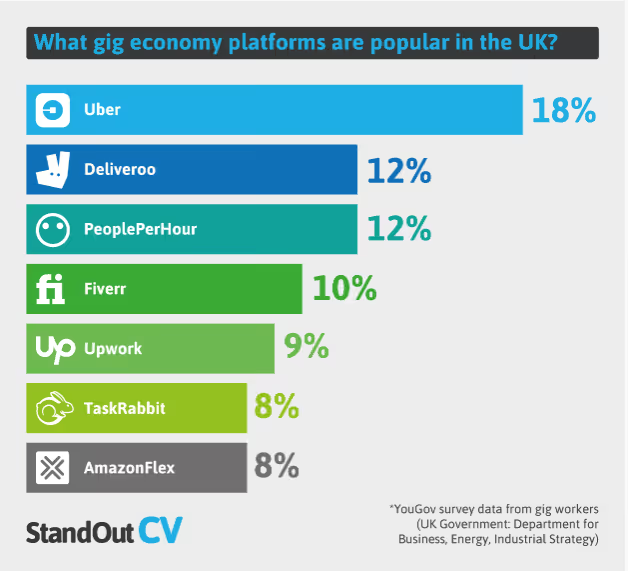
Of course, any independent contractor or freelancer is part of the gig economy, but the ability to improve monthly income without learning any new skills is very attractive. Data from the US Department of Commerce also indicates that gig driving makes up most of the non-employment economy in the country.


According to the 2025 Gig Driving Report by Everee, 27% of respondents do gig driving as a full-time job. However, 59% say it is at least half their income, which means that there is significant money to be earned after their regular work schedule. Some platforms, such as Dispatch, even allow drivers to check jobs while not being online, which provides extra flexibility.
While gig driving is the most prominent activity according to the data, make sure to check our guide on the 33 best-paying gig jobs, both online and offline, so you don’t miss out on other good opportunities.
Pros and cons of gig driving
Driving your own vehicle for ridesharing or on-demand last-minute deliveries comes with its perks, but also its own challenges. Here are some things for you to take into consideration before making any decisions.
Pros
- Extra income. While some gig drivers actually do it as a full-time job, many prefer doing it part-time to supplement their salaries, and the extra money helps in paying a household’s regular bills or becomes savings.
- Flexibility. You can choose your working hours and days, take a day off, and still come back to find jobs the following day. Moreover, you can decide if you want to give rides, deliver food or packages, or even carry out bigger deliveries for the logistics industry, given you have the required vehicle and driver’s license.
- Easy to start. There is some bureaucracy involved before you get to drive for platforms (clean criminal record, proof of residency, insurance, and so on), and, in general, you need a 4-door vehicle with AC for ridesharing, but as long as you fulfill these prerequisites, you are ready to go. Once you are approved, you can start driving right away.
Cons
- Vehicle maintenance and fuel. You are responsible for the maintenance of your own vehicle and the costs it entails. Likewise, the fuel costs are up to you, as you only get paid for the ride or by delivery.
- No ties with a company, no fringe benefits. You are a third-party driver using the resources of a platform to find jobs. Using Lyft (a competitor to Uber in the ridesharing industry) as an example: you are not a Lyft employee, you have no meal ticket or paid leave, and you are only going to make money if you work. If you get involved in an accident, you will deal with all the consequences involved by yourself.
- Algorithmic pressure and fatigue. Driving as an independent contractor means you are at the mercy of an algorithm, which is going to calculate how much you earn in any given trip and which time windows pay more. You might be compelled to drive even when feeling tired because prices have surged, and that can contribute to exhaustion and burnout, especially if you already have a regular job.
- Account deactivation risk. Your account can be deactivated due to inactivity, recurrent vehicle malfunction, driving misconduct, or poor user ratings, among other factors. While this is important to keep the quality of the service, once again, all liability falls on the driver.
As you can see, there is a trade-off: platforms enable you to find quick work with a minimum of bureaucracy, and as long as you are responsible and disciplined, you won’t have many problems. On the other hand, you deal with all the costs and don’t get the benefits an employee would.
How much do gig drivers make
The gig driving economy revolves around two major categories: ridesharing and deliveries. The routine, requisites, and payment are also different.
Rideshare driving
Ridesharing involves giving rides to others and getting paid for it. Some of the factors that alter pay according to Uber are:
- Time of day and demand;
- Traffic conditions;
- Weather conditions;
- Special events in an area (concerts, sports, etc.);
- Vehicle type (size, comfort).
Other ridesharing platforms, such as Lyft, also feature dynamic pricing (called PrimeTime). The main benefit for drivers is that rates go up – being available at these times means more profitable rides. In general, if there’s a big demand for drivers in any given moment, prices are likely to increase. As a driver who does ridesharing, here are some other things that will be expected of you:
- Vehicle in top condition. App users who enter your vehicle will expect it to be clean, without any kind of malfunction, and in top condition. Ridesharing platforms use a star-rating system, and you will be evaluated based on your vehicle as well. The better your vehicle ratings, the more likely people are to ride with you.
- Socializing. While not everyone wants to talk, some people do, and if you come across as impolite or indifferent, this will likely affect your driver ratings. You want to keep those as close to five stars as possible. Be gentle, polite, and stay away from controversial subjects.
- Smooth driving. Be mindful of how you drive and behave. I wouldn’t want to be the passenger of a reckless driver, or someone who is constantly cursing in traffic, for example.
- Optimal routes and attentiveness. It might seem easy since these apps often come with an embedded GPS, but pay attention to the routes given and avoid mistakes. Taking a wrong turn might cost you or your clients precious minutes, sometimes even more.
In terms of payment, according to the Economic Policy Institute (data compiled by Zety), Uber drivers make $9.21 per hour after expenses. In some locations, you can also offer rides on a motorcycle through Uber Moto. According to TripLog, it’s $15-25 before expenses.
As for Lyft, the platform reports a median of $23.46 per hour, after expenses and including tips/bonuses. Pro tip: you can work for as many apps as you like:
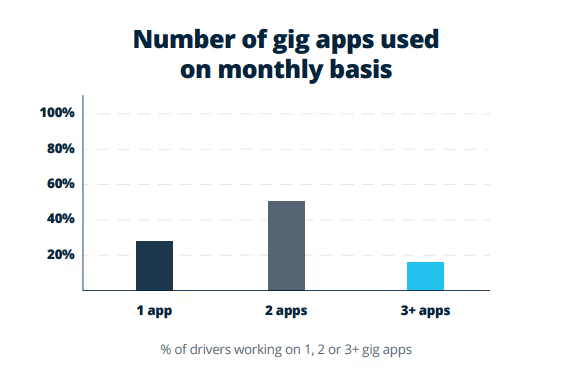
Being on different platforms will allow you to thoroughly check the best possible times and routes. In other words, hopping into your vehicle without a plan is not the best idea.
I didn’t get into gig driving with a grand plan. I started because I needed a flexible income without committing to fixed hours. I began with app-based deliveries as a side gig, mainly food and local logistics runs, and gradually treated it like a small operation rather than casual driving.
The biggest shift came when I stopped chasing every order and started choosing routes and time windows that actually paid. I avoid short trips during peak traffic, stack deliveries only when routes overlap cleanly, and pause the app instead of accepting low-margin orders out of habit.
{{Ananya Varma}}
Delivery driving
The other option, in case you don’t want to give rides or don’t have an appropriate vehicle for the ridesharing platforms, is delivering packages, food, or even cargo. Platforms such as DoorDash, Uber Eats, Amazon Flex, Deliveroo (UK-based), or Dispatch (US-based) provide plenty of opportunities for people wanting to make extra money – even without a car.
DoorDash, Uber Eats, and Deliveroo are centered towards food delivery, and all of them allow you to deliver food using a bicycle, scooter, e-bike, or even on foot for short distances. They also cater to grocery, convenience store, or retail delivery from business partners. Amazon Flex revolves around package delivery: imagine yourself delivering something that the postal service or the company itself would. You can also deliver products from Amazon Fresh (Amazon’s online and physical grocery store).
I did app-based delivery and local logistics work as a side income. My work was primarily food delivery and short-distance logistics rather than passenger rides. In addition to Uber, I used multiple delivery platforms, including regional and food-focused apps.
From my experience, delivery platforms were more profitable than ride-hailing because they offered better control over routes, stacking orders, and time windows. Tracking cost per mile and avoiding peak congestion made a bigger difference to earnings than the specific app itself.
{{Ananya Varma}}
If you are based in Europe, Deliveroo is also a choice. The platform pays from £2.90 to £6 per delivery, according to the pay floor of £12.30 per hour plus vehicle costs and all the criteria mentioned here. If you make more deliveries per hour, your earnings will likely improve.
Also in the delivery category, there is Dispatch, which is a bit different. The platform is made to facilitate the logistics of companies in many industries (Automotive, HVAC, Paint, Plastics, and so on), relying on owner operators or drivers who also have a bigger vehicle (vans, pick-ups, or even box trucks) to do package and cargo deliveries. Companies place an order on the platform, and the app itself finds the best matches according to vehicle and location. As the company itself states, bigger cargo pays more, as it also drives up costs.
Other honorable mentions include GrubHub (food, groceries, convenience store goods delivery) and Roadie (shorter route package deliveries).
Comparative table
You can find below a table with the most popular gig driving apps, their category, the type of vehicle you need, and the average earnings per hour (all values are based in the US, unless stated otherwise). For the platforms that allow for bicycles, scooters, or walking, this is dependent on location. Uber Moto services are also location-dependent.
How to start gig driving
As long as you have a vehicle, a clean criminal record, and are old enough, all you have to do is apply and go through the onboarding process. Some requirements differ from platform to platform, so here is a list of all the platforms mentioned in this article, with links to their driver prerequisites section. Requirements vary according to country, and in case you are based in the US, state. Don’t forget to set your current location.
How to make more money gig driving
From speaking with and observing long-term gig drivers while researching modern work models as an Editor at Trovia Magazine, one pattern emerges repeatedly: profitability comes from driver discipline, not volume. Avoiding short trips during traffic, thinking your delivery routes through to avoid backtracking, and working during better-paying times, that alone reduced fuel waste and wear on the vehicle.
Another thing I wish I had known earlier is that vehicle maintenance is part of the job, not an afterthought. Regular oil checks, tire pressure monitoring, and setting aside a maintenance fund prevent small issues from turning into lost income days. Gig driving rewards drivers who think like operators, not just drivers.
{{Ananya Varma}}
While the numbers provided in this article paint a good picture of the possible earnings, there are drivers bringing that average up, while others are bringing it down. Here are a few things that will help you make more money in the long run:
- Keep track of costs
- Do regular maintenance on your vehicle, and keep it clean
- Understand surge pricing for ridesharing platforms
- Understand the most profitable times and routes for food delivery platforms
- Use a bicycle or scooter when possible for shorter route deliveries; they don’t cost fuel
- Be polite and kind to others; it affects your ratings as much as your driving
- Never speed (you will frighten users, damage goods, or even get a ticket, which will destroy your earnings)
- Whether you go the ridesharing way, the delivery way, or both, you should work with multiple platforms to maximize opportunities
- Some platforms allow you to schedule your working hours, so make sure you don’t miss them
Last but not least, think carefully before you accept any rider or delivery request. Take into account where you are and where you are going, how likely you are to find another request in the destination area, and the pay per mile ratio, as all those factors will affect your dollar per hour earnings. Good decision-making goes a long way to prevent idle driving.
Is gig driving still worth it in 2026?
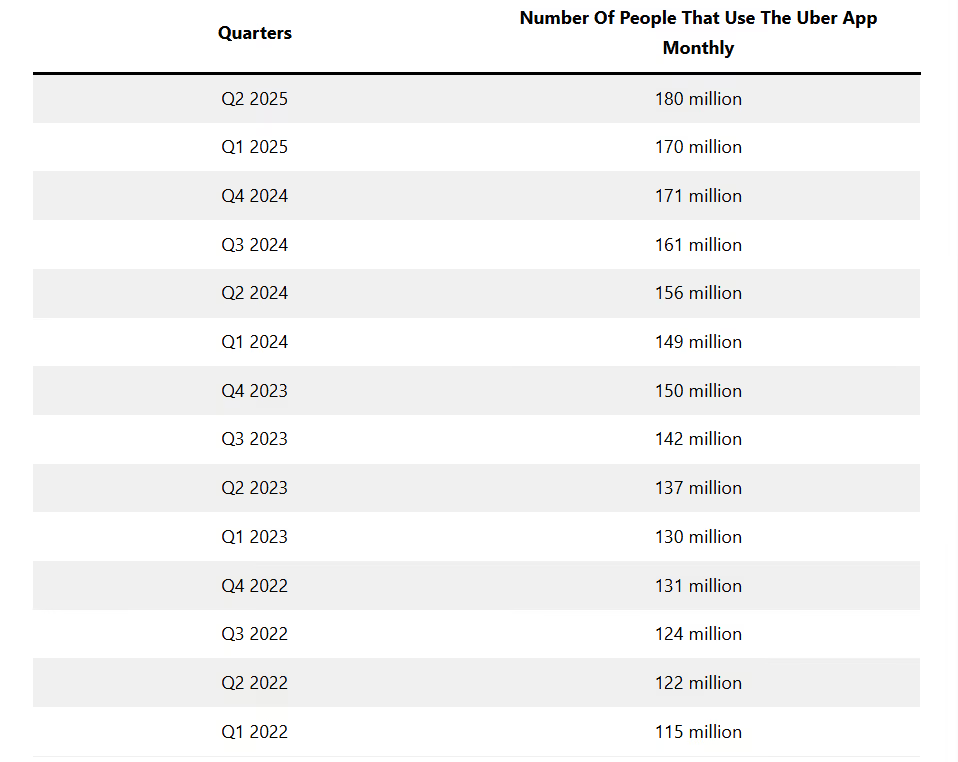
Gig drivers are a staple of the gig economy, and judging by the data on ridesharing and delivery provided in this article, the situation is unlikely to change. The demand is there, with more than 180 million people using Uber in the USA alone.
It is probably the easiest gig economy profession to pick up – having driving experience is all you need, you don’t need to learn any new skills, and all companies do the onboarding process to help you get used to the routine. In that regard alone, it is definitely worth it as a hustle, but very challenging as a full-time job.
Given that most of the liability and all the costs fall on you, the driver, structuring your working hours well and picking your spots can go a long way in helping you make more money from it. Adding your regular salary to it will help ease the pressure, and you have all the benefits of being formally employed.
The tips provided in this guide can surely help you maximize your profits, and while you can’t control all the factors involving earnings, you can take care of quite a few: your driving, politeness, decision-making, the platforms you work for, when and where you work, and the condition of your vehicle. Do your part, and good luck on your trips.
FAQ
Do I need any previous working experience to be a gig driver?
In general, no. Logistics-based apps such as Dispatch require you to have two years of experience as a licensed driver, though. You can check our “Becoming a gig driver” section to find the apps and their requirements, and you will notice that driving experience is what companies actually want.
Am I legally bound to the platforms I drive for?
As an independent contractor, you have to sign and respect each company’s terms of service. You can register as a driver in more than one, but you are not an employee. This means you are responsible for your own health (even if you suffer an accident while gig driving), vehicle conditions, and costs.
What do I do about my taxes?
Self-employed independent contractors pay taxes, regardless of how many hours they drive. Track your mileage and expenses (keep all the receipts) to maximize your tax deductions. Some of the deductible business expenses for tax purposes in the US are: vehicle expenses (mileage or other costs), delivery equipment and supplies, parking fees, tolls, and more.
The tax models vary according to each country, so you should keep all relevant documents and consult an accountant to avoid financial setbacks. In case you are based in the US, you can find all relevant information here.
Should I work part-time or full-time?
Proportionately, as you get paid by delivery or earn by ride given, it doesn’t matter. You will obviously earn more from gig driving if that’s all you do, but you should track your costs and earnings by mile and by the hour, and the biggest difference maker is being available at the best-paying time windows and knowing the best routes. What you want is a good net income to hours worked ratio.
Do I get paid on the same day?
Uber, Uber EATS, DoorDash, Lyft, Dispatch, Roadie, GrubHub, Amazon Flex, and Deliveroo usually pay weekly, but they all have instant cashout features, sometimes for a small fee. The apps also require you to have a registered debit card, or in the case of Amazon Flex, the brand’s own debit card. Regardless, you should check the payment policies of your chosen platforms beforehand.



I'm a journalist, translator, language teacher, marketing content writer and part-time music producer. Happily married and owner of four beautiful pets, I find it very hard to stand still - whether because I've got a lot to take care of, or because I simply can't anyway.
Learn moreI’m a digital content editor and researcher focused on modern work models and the gig economy, and was a gig driver in the past. As editor at Trovia Magazine, I analyze real-world earning behavior, cost structures, and platform dynamics, drawing from both hands-on experience and long-term observation of gig workers.
We are here to ease your working routine
Whether you're freelancing or a full-time contractor, we simplify the working process, putting you in control.
Try it free

Gusto and Deel both help companies manage payroll and HR, but they serve different business needs. Gusto is a better fit for US-based small and midsize businesses that need simple payroll, tax filing, benefits, onboarding, and basic HR tools. Deel is better for companies hiring internationally, managing global contractors, or using Employer of Record services. This comparison breaks down their key differences in payroll, compliance, pricing, integrations, benefits, contractor management, pros and cons, and best use cases to help businesses choose the right platform in 2026.
Compare the best Deel alternatives for global hiring, payroll, EOR, and contractor payments. See pricing, coverage, pros, cons, and best use cases.
Running payroll for one employee still means tax calculations, filings, forms, and deadlines — so the cheapest option isn't always the best value. This guide compares affordable payroll services for a one-person business, breaking down real monthly costs, what's included, and which choice fits how you actually pay your worker.
