
Understanding Upfront Payment: Key Aspects Every Freelancer Should Know
A simple guide to upfront payments: what they are, when to use them, how to explain them to clients, and what to do if they push back.
December 12, 2025
Many freelancers and solopreneurs want to charge their clients upfront payments but they don’t know how to get started. This article has got you covered.
Today we’ll discuss pros and cons of upfront payments, the best ways to ask your clients for one, and viable alternatives.
What are upfront payments?
What are upfront payments, you ask? Well, it’s kind of in the name. An upfront payment is any amount a client pays before the work begins, and it’s a crucial payment term for anyone working for themselves. There are different kinds of upfront payments: deposits, percentage-based commitments (like 30–50% upfront), call-out fees, assessment fees, or payments for materials before the project starts. In some industries, it’s even normal to collect 100% upfront!
The main reason upfront payments exist is to protect you (whether you’re a freelancer or have your own business) from non-payment by the client. They also ensure you’re not covering project costs out of your own pocket.
We began requiring deposits after experiencing two instances of late payments and unexpected schedule changes. These incidents left gaps in our schedule and led to wasted material costs.
{{Dimitar Dechev}}
How upfront payments work in different service transactions
Upfront payments can look very different depending on the type of service you offer. In project-based industries, it’s common to take 50% at signing and 50% at completion, which helps cover early research, planning, or materials.
For smaller, quick-turnaround jobs, businesses may only ask for the material cost upfront, especially if they need to purchase supplies before they can begin.
Service providers who travel to the client — like tradespeople, consultants, or surveyors — may charge a call-out fee or assessment fee to make sure their time and travel are covered, even if the customer doesn’t move forward with the full project. All of these fall under the “upfront payment” umbrella.
Our company requires upfront payments for HVAC installation and repiping work — typically 50% of the total cost — and we take smaller, material-based deposits for service calls.
{{Dimitar Dechev}}
Benefits of upfront payments
Let’s have a closer look at the pros of upfront payments.
Better cash flow and covering early expenses
One of the biggest benefits of upfront payments is that they give you immediate breathing room, financially speaking. You don’t need to dip into your personal savings for things like research, tools, or any other early expenses, when you’re starting a project with some money in the bank already. They can also help you improve your cash flow, especially when your workload is uneven.
The payment system helps clients demonstrate serious commitment to the work, while allowing our company to organize inventory and schedule crew members more efficiently. The deposit system also enables our business to stay financially stable during slower customer periods.
{{Dimitar Dechev}}
Reduced risk of late/non-payment
One big advantage of upfront payments is that they take most of the risk out of getting paid, like being paid late or not at all. Instead of waiting until the very end and hoping the client pays on time, you start with money already secured. Even a small upfront amount protects your time and ensures you don’t waste hours following up on invoices.
Stronger commitment and fewer cancellations
Imagine you’re the client. When you’ve already paid someone upfront, you’re naturally going to take work more seriously, which also makes cancellations less likely.
Upfront payments reduce the number of clients who disappear, postpone indefinitely, or send feedback weeks late. For freelancers, this can mean smoother timelines, fewer stalled projects, and less chasing.
The upfront payment filters out tire-kickers before I waste 10 hours on strategy calls. When The Pipe Boss paid their deposit, they responded to every email within 24 hours and we launched in six weeks.
Serious clients never blink at a deposit, only the ones planning to micromanage you to death do.
{{Hooman Bahrani}}
Clearer expectations and more efficient service terms
Upfront payments can also make it easier to set clear terms before the work begins. If you and your client have already exchanged money, you also probably discussed the scope, deliverables, deadlines, and payment schedule, because otherwise, the client has no reference point for what they’re paying for.
What I’m trying to say here is that when you agree on upfront payments, you end up defining the project in more detail naturally. This can cover aspects like what’s included, what counts as extra work, when drafts are due, how revisions will be handled, and what the final handoff looks like. This means more peace of mind for both you and the client.
Potential downsides of asking for upfront payments
Unfortunately, even though upfront payments make the lives of freelancers and small business owners easier, there are some cons associated with them as well.
Cons of upfront payments and typical customer concerns
Some customers may feel uncomfortable paying upfront, especially if they’ve never worked with you before or they’ve had negative experiences with other providers. Others may push back because they don’t fully understand what the deposit covers or worry about what happens if the project scope changes.
This is frustrating, but it’s also not unusual. It doesn’t mean that your customer doesn’t trust you, but rather that they want reassurance and transparency.
New customers sometimes surprise us by expressing dissatisfaction with the contractor deposit requirement. We also have to clearly establish terms for deposit adjustments if the job scope changes during the project.
{{Dimitar Dechev}}
When payment upfront makes sense, and when it doesn’t
Upfront payments are a good idea if:
- You’re working with a new client and don’t have a track record together
- The project has high upfront costs
- The project is complex, long-term, or requires a lot of planning
- You have limited availability and need clients to commit to a time slot in your schedule
Upfront payments might not be the right choice for you if:
- The work is small, low-risk, or one-off
- Upfront payments are not the standard in your industry
- The client is a larger organisation with strict procurement processes that don’t allow deposits (companies like this usually expect net terms)
- You’re brand-new to your industry and don’t have a lot of reviews
- Your industry is oversaturated, and your competitors don’t require upfront payments
Alternatives to upfront payments (when you can’t or don’t want to charge upfront)
So, if your situation doesn’t allow for upfront payments, you may be wondering what the alternative is. There are a few other payment structures that ensure you get paid on time without souring your relationship with the client.
Same-day payment
Same-day payments are a solid middle ground if asking for money upfront doesn’t fit your business model. Instead of charging a deposit, you complete the service as usual, but the invoice is due immediately after the job is done.
With a system like this, there are no long wait times for payment, your cash flow is protected, and both sides are held accountable. No upfront payment needed!
We don't charge upfront deposits for recurring cleaning services, but we do require payment immediately after each clean is completed. This came from watching too many service businesses chase payments for weeks — I decided early on that our team deserves to be paid the day they do the work, so we built our entire payment system around same-day processing through automated invoicing.
The biggest unexpected benefit has been attracting clients who truly value our service. When I explain during our 15-minute in-home consultation that we're not the cheapest option and payment is due immediately, it filters out price shoppers and brings in people who respect our team's work.
{{Ashley Matuska Kidder}}
Milestone-based payments for longer projects
Milestone payments usually involve breaking a project into stages. And yes, most milestone systems still require some upfront payment. But often, it’s easier for clients to accept a payment structure like this since each stage is clearly defined, they know what you’re working on, what they’ll receive, and when the next payment is due.
Here’s an example of a milestone system that doesn’t involve being paid upfront before any work has been done:
- Milestone 1 (20%), after initial research has been delivered.
- Milestone 2 (40%), after the first full draft of deliverables.
- Milestone 3 (40%), at final delivery.
While the quote below doesn’t represent a traditional milestone plan with multiple checkpoints, some freelancers use a simple 50/50 structure as a way to combine upfront commitment with a final delivery payment.
I require 50% upfront on every website project, with the remaining 50% due at launch. The decision came after years of running a photography business and a SaaS company where I learned that clients who won't commit financially almost never commit operationally. They don't send content on time, they ghost during revision rounds, and they blame you when their indecision stalls the timeline.
{{Hooman Bahrani}}
Retainers for ongoing service work
If you and your client work together regularly, and trust is already established, a retainer is a good alternative to upfront payments. In fact, it can replace the need for being paid upfront completely. Instead of paying before each project, the client pays a fixed monthly fee to reserve your time and access to your services.
Retainers are a good idea if the scope of your work is ongoing (like social media updates, content management, website maintenance — you get the gist), and both sides prefer predictable schedules.
Payment plans and instalments
Some freelancers use instalments or payment plans. If you’re thinking it sounds similar to a milestone structure, you’re not wrong. The difference is that instalments follow a schedule (such as the first of every month) and are not tied to deliverables.
This works best for clients who want to move forward, but can’t afford to pay a large amount at once. It’s not as secure as upfront or milestone payments, but it still adds some structure and reduces the financial pressure,
How to communicate upfront payment terms to clients
So, how do you tell your clients you want to be paid upfront? Freelancers all over the world are asking themselves and each other the same thing.
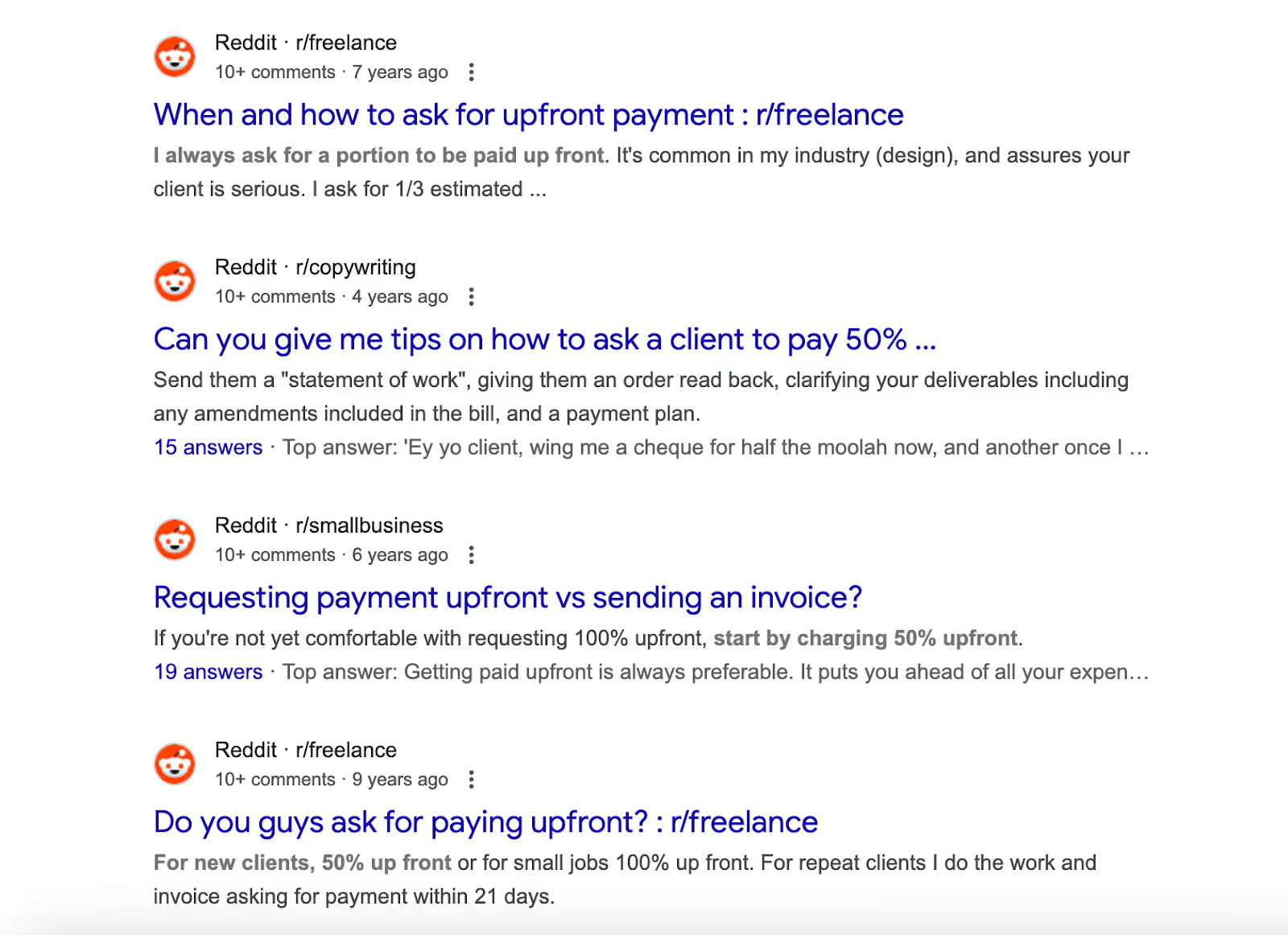
We actually have a very detailed guide on how to ask your clients for upfront payments, so you should check it out if you’re unsure. But let’s cover the basics here too, just in case.
Addressing trust and risk without sounding defensive
Show professional confidence when asking for deposits — most clients are simply looking for clear, upfront information. Include the deposit details directly in your estimate and avoid sounding defensive; clients appreciate straightforward answers.
{{Dimitar Dechev}}
When asking for upfront payments, you don’t need to justify yourself or apologise. Clients simply want clarity, so the easiest way to avoid sounding defensive is to state your payment terms confidently, the same way you’d state your availability or rates. Add the requirement directly into your estimate or proposal, keep the language neutral, and explain how the payment supports the workflow.
Explaining what upfront payment covers and why it’s there in the first place
We explain that the deposit guarantees both personnel and materials for long-duration jobs and special equipment needs. This system protects both sides, ensuring full commitment from us to complete the work after the agreement is signed.
{{Dimitar Dechev}}
When discussing upfront payments with your clients, try to communicate the value of it. It’s not like you’re asking for upfront payments just for the sake of it, so tell the clients why you need it. Maybe it’s to secure time or materials, or maybe a lot of strategic preparation is needed. When clients understand what the deposit actually covers, they are more likely to accept paying it.
My framing is simple: "The deposit reserves your project slot and covers findy, wireframes, and the strategy work that happens before you see any design." I don't apologize or offer payment plans. If someone pushes back, I know they're not ready and I move on.
{{Hooman Bahrani}}
What local laws usually cover and why terms should be transparent
Most countries don’t actually regulate upfront payments specifically. There are, however, local laws about aspects related to upfront payments, such as deposits, refunds, cancellations and unfair pricing.
For example, in the US, some states such as Maryland cap how large a deposit can be for certain industries (like home improvement). In the UK, the Consumer Rights Act requires that deposits and fees be fair and clearly explained. Australia and New Zealand have similar rules.
Make sure you check your local laws, and that your payment plans look clear and transparent before you set them.
Practical tips for using upfront payments in your business
Before we get into discussing ideas for using upfront payments specifically, let me remind you of the first rule of freelancing. All of your payment terms must be clearly listed in your contract!
Common percentages and when to use them
There’s no such thing as an “average” upfront payment because it really depends on your situation. Many freelancers charge in the range of 20–50% before any work starts. It’s enough to secure the project, cover early prep time, and make sure the client is committed.
In some cases, businesses go higher, up to 100% upfront. It’s less widespread, and makes sense for small easy jobs or for anything that requires materials straight away. Also, charging the whole amount upfront makes sense when working with clients who are known for paying late or canceling.
On the other hand, bigger or ongoing projects may use a smaller deposit plus milestone payments so the cost feels more predictable for the client.
Payment methods that keep things smooth
Clients pay more quickly when they don’t have to think too hard about it. Most freelancers stick to the basics: bank transfers, payment links, or card payments through tools like Stripe or PayPal. These methods are fast and traceable, and most importantly, they give you a clear record if anything goes awry. Just remember that some platforms take a small processing fee, so factor that in before you choose your “default” payment method.
Another thing that makes your life as a freelancer even easier is invoicing tools. These platforms allow you to set up automatic invoices that go out as soon as the deposit is due. Most can also send payment reminders to clients on your behalf. No more wasting time on PDFs or chasing payments!
Handling refunds, scope changes, and disputes
The easiest way to avoid any awkward situations down the line is to spell out the basics easily. This includes questions like, is the upfront payment refundable? What counts as scope change? How will you and your client handle any delays or cancellations? The answers to these should be clearly defined in your contract.
Most freelancers don’t refund upfront payments, because they treat it as covering the work that has started already. However, the rest of the project fee can be adjusted if the scope changes.
A few parting thoughts
Asking clients for an upfront payment can feel scary, but it doesn’t need to be. Figure out a payment structure that makes sense for you, communicate with your client confidently and clearly, and don’t forget to spell everything out in your contract.
FAQ
Why do freelancers and service businesses ask for upfront payments in the first place?
Usually, they do so to reduce risk of being paid late (or not at all), to cover early work or material costs, and to make sure the client really is committed to the project.
What’s the difference between an upfront payment, a deposit, and a milestone payment?
An upfront payment is any money paid before work begins. A deposit is a type of upfront payment, usually a percentage. A milestone payment is tied to progress, with payments due after specific stages of the project are completed.
What happens to the upfront payment if the client cancels the project or the scope changes?
Most disputes about upfront payments come down to a few scenarios, including the client cancelling halfway through, the scope increasing dramatically, or expectations changing in any other way as the project is underway. To avoid this, make sure your contract states whether the upfront payment is refundable, what exactly counts as a change of scope, how to approve and bill additional work, and what happens if either side abandons the project early.
Can I legally charge 100% upfront?
In most cases, yes. In fact, it’s not uncommon to charge the whole amount upfront if the projects are small or a one-off. Some regions and industries, like home improvement in the United States, do have their own rules and limits so make sure you check these out in advance.
.avif)




I’m a bilingual writer and content strategist working across SaaS and digital media. I cover topics like marketing, tech, and the occasional niche curiosity.
Learn moreI founded Super Brothers Plumbing Heating & Air as the CEO to establish a home-services business in Sacramento, providing plumbing, HVAC, electrical services, and heat pump installation since 2013.
I'm the founder of Dashing Maids in Denver — we've been providing eco-friendly home cleaning services since 2013, and I personally conduct most of our initial consultations to ensure we're the right fit for each client.
I run Birch Stream Digital in Winston-Salem, NC, where I design websites and digital marketing systems for local businesses and professional firms.
We are here to ease your working routine
Whether you're freelancing or a full-time contractor, we simplify the working process, putting you in control.
Try it free
Gusto and Deel both help companies manage payroll and HR, but they serve different business needs. Gusto is a better fit for US-based small and midsize businesses that need simple payroll, tax filing, benefits, onboarding, and basic HR tools. Deel is better for companies hiring internationally, managing global contractors, or using Employer of Record services. This comparison breaks down their key differences in payroll, compliance, pricing, integrations, benefits, contractor management, pros and cons, and best use cases to help businesses choose the right platform in 2026.
Compare the best Deel alternatives for global hiring, payroll, EOR, and contractor payments. See pricing, coverage, pros, cons, and best use cases.
Running payroll for one employee still means tax calculations, filings, forms, and deadlines — so the cheapest option isn't always the best value. This guide compares affordable payroll services for a one-person business, breaking down real monthly costs, what's included, and which choice fits how you actually pay your worker.
