
How to Start a Small Business in the U.S.
Use this U.S. launch checklist to test your idea, estimate startup costs, choose a business structure, check permits, and find your first customers.
November 23, 2026
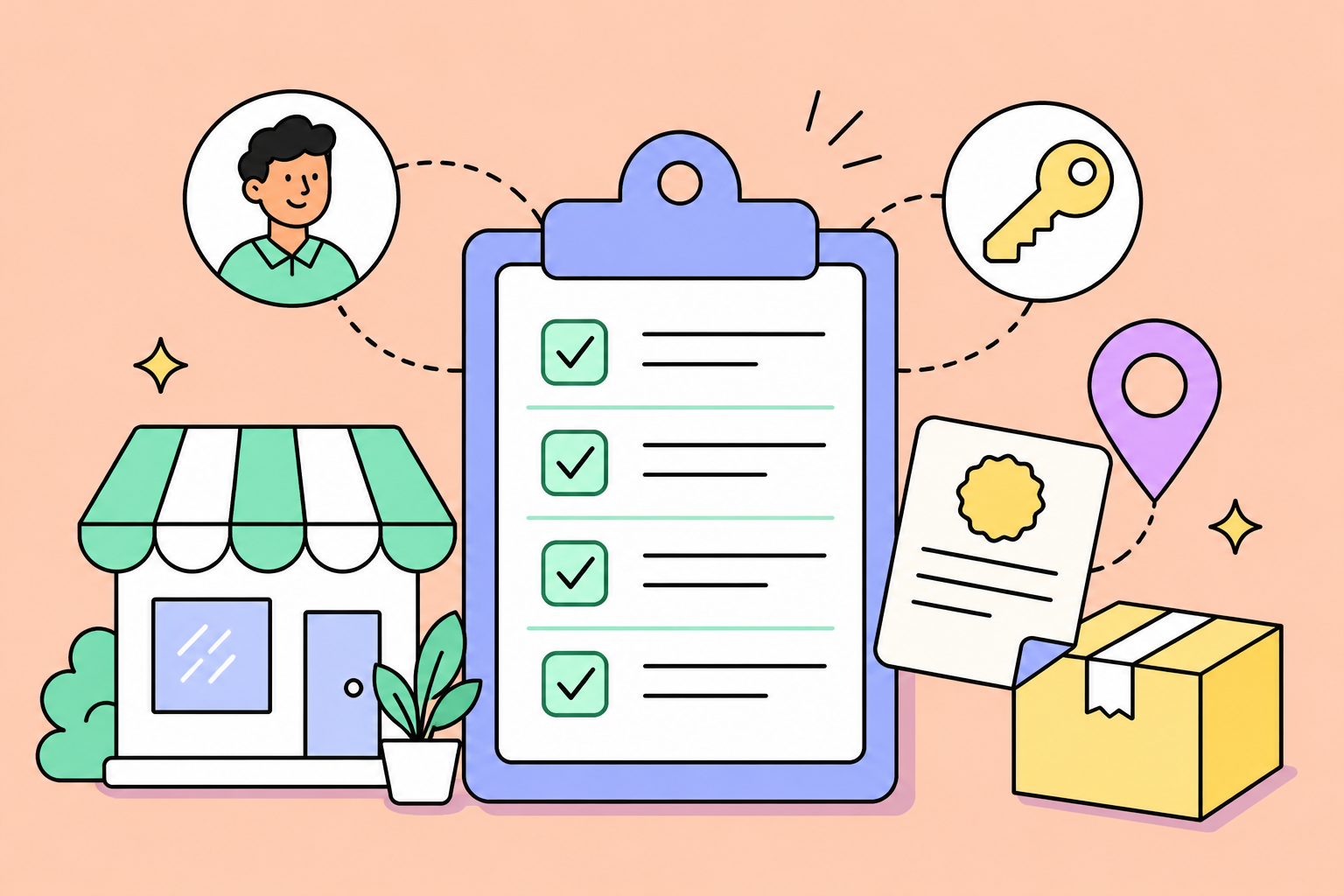
Starting a small business in the U.S. begins with three questions. What will you sell, who will buy it, and how much will it cost to get started? Test the offer first. Then write a plan, estimate the cash you’ll need, and check which registrations and permits apply. This guide takes you through those decisions and ends with a prelaunch checklist.
1. Validate Your Business Idea
Define who you’ll sell to, what problem they face, and what you’ll charge. Check how they solve that problem today. Compare competing offers on price and scope, and read customer reviews to see where those offers fall short. Use what you learn to decide what your first offer should include.
Ask prospective buyers about the last time they paid to solve the problem. What did they buy, and what would they change? Then show them a sample or describe a small paid trial at a specific price. Track concrete responses, such as quote requests or willingness to book a trial. If buyers hesitate, adjust the offer, price, or audience before you commit to inventory or a lease.
2. Write a Business Plan
Start with a one-page plan if your offer is simple and you’re still testing it. A traditional business plan gives you room for market analysis, operating details, and financial projections. If you’re seeking financing, ask what the lender or investor expects before choosing a format.
- Offer and customer. Describe what you’ll sell, who it’s for, and what those customers use today. Talk to prospective buyers to test your assumptions before committing to inventory or a lease.
- Price and costs. Estimate what you’ll charge, what it costs to deliver each sale, and what you’ll spend each month. List one-time expenses such as equipment and deposits separately.
- Location and ownership. Decide where you’ll work, who will own the business, and whether you’ll need help at launch. These decisions affect which filings and permits you’ll need to check.
- Cash needs. Estimate how much you’ll spend before opening and how you’ll cover expenses if sales take longer than expected.
Turn your assumptions into a sales forecast. Estimate how many customers you can reach each month, how many might buy, and how much work you can handle. Write down which numbers came from your research and which you still need to test.
3. Estimate Costs and Choose Funding
List one-time expenses such as equipment, deposits, and initial inventory. Then total your recurring costs, such as software, rent, and insurance, and estimate what each additional sale costs to fulfill. Use your sales forecast to see how many months of expenses you’ll need to cover while you build demand.
Say your handmade-product shop charges $40 per order. After $24 for materials, packaging, shipping, and payment fees, you have $16 per order to cover fixed costs. At $480 in monthly fixed costs, you’d need 30 orders to cover those costs. Budget separately for returns and owner pay, and see how much cash you’d need if you sell fewer than 30 orders.
Choose a funding source that fits the budget. Self-funding lets you keep ownership and puts your savings at risk. Loans add repayments that come due even in a slow month. An investor may take an ownership stake. Grants depend on eligibility and approval. Crowdfunding can bring in early buyers, so price any promised rewards and shipping before setting your goal.
4. Choose a Structure and Register
Your structure affects who owns the business, how it’s taxed, what paperwork you’ll file, and how much personal liability you may have. Start with your ownership plans and the risks of the work you’ll do.
For federal income tax purposes, a domestic LLC with one member is generally treated as part of the owner’s tax return by default. A domestic LLC with two or more members is generally treated as a partnership. An eligible LLC can elect corporate tax treatment. Employment taxes and certain excise taxes follow separate rules, and state taxes may differ. Consider both filing obligations and liability when choosing, and ask a tax professional how the rules apply to you.
If two people are starting a business together, put the ownership discussion in writing before either person commits money. For example, if one founder pays for equipment and the other brings in customers, agree on what each person contributes, how you’ll divide ownership, who can authorize spending, and what happens if one person leaves. If you choose an LLC or corporation, reflect those decisions in the appropriate governing documents.
Check Your Business Name and Filing Requirements
Search your state’s business registry for your preferred name. For example, use the Pennsylvania Department of State’s business record search if you’ll register there. Then check the U.S. Patent and Trademark Office (USPTO) database for similar names used for related goods or services. Search the web, too, for businesses already using the name. Do both checks before spending money on packaging, signage, or a website.
If you’re forming an LLC or corporation, find your state’s filing office and save the approved formation documents. For example, Pennsylvania businesses can file formation documents with the Department of State. If you’ll advertise or invoice under a different name, check whether you need a doing business as (DBA) filing, also called a trade or fictitious name registration. For example, Riley Design LLC might sell under Riley Studio. In Pennsylvania, the owner would check the fictitious-name filing instructions.
Check Tax IDs, Licenses, and Permits
Make a list of where you’ll operate and what you’ll do there. Use it to work through three checks.
- Federal. Check whether you need an Employer Identification Number (EIN), the federal tax ID the IRS issues to businesses and other entities. Businesses with employees generally need one, and your structure or federal tax obligations may also trigger the requirement. If you’re forming an LLC or corporation, register it with the state before applying. You can apply directly through the IRS for free. Check for federal permits if a federal agency regulates your activity.
- State. Ask the state tax agency which accounts you need. For example, if you’ll sell taxable goods or services, check whether you need to register to collect sales tax. If you’ll employ workers, check state employer registrations. Look up any state license for your industry or occupation.
- County and city. Contact the office that handles local business licenses and zoning for your address. A home-based online seller in Reading, Pennsylvania, can check the city’s Home Occupation Zoning Permit Application and ask whether it applies to their setup. Tell the local office if you’ll make products, store inventory, or have customers pick up orders at home. If you’re considering commercial space, confirm that your intended use is allowed before signing a lease.
Keep a record of the agency, application status, and renewal date for each requirement you identify. Save approvals where you can find them when it’s time to renew or open a second location.
5. Set Up Finances and Insurance
Open a separate business bank account before you start taking payments. Ask the bank which documents it needs for your structure. It may request a tax ID, formation documents, ownership agreements, or a business license. Decide how customers will pay and compare processing fees and payout timing before picking a provider.
Set up bookkeeping from your first purchase. Record sales and expenses, save receipts and invoices, and compare your records with your bank statement regularly. If you use a payment processor, record gross sales, refunds, and processing fees separately. For example, if a customer pays $100 and the processor deposits $97, record $100 in sales and $3 in fees so you can reconcile the deposit and see what the sale cost you.
Ask an insurance agent what coverage fits your work before launch. A lawn-care business working on customers’ property might ask about general liability insurance. A consultant might also ask about professional liability coverage if a client claims an error in their work. Compare what each policy covers, where coverage applies, and how much you would pay out of pocket after a claim.
Prepare Customer Agreements and Plan for Hiring
Put customer terms in writing before you take on work. For a service business, spell out what’s included, what the customer will pay, when payment is due, and how you’ll handle changes or cancellation. If you bring in a contractor to produce work, agree on deliverables, deadlines, payment, and who owns the finished material.
Before engaging a worker, check whether the role is an employee or independent contractor under the applicable rules. For federal tax purposes, the IRS looks at control over the work, the financial arrangement, and the nature of the relationship. Check applicable state rules as well. For example, a cleaning company that assigns shifts and directs how each job is performed should review the full working arrangement before deciding how to hire.
If you decide to work with an independent contractor, see our guide to Form W-9 vs. Form 1099 for an explanation of how the two forms are used.
If the cleaning company determines the worker is an employee, it should obtain an EIN and register for applicable state withholding and unemployment accounts. Check workers’ compensation coverage and prepare employment eligibility verification. Before the first paycheck, collect Form W-4, set up the pay schedule and withholding, and confirm who will deposit and report payroll taxes. Use the payroll setup checklist to plan the first pay run.
6. Find Your First Customers
Choose one channel where your buyers already spend time. A freelance marketer selling to independent retailers might start on LinkedIn, share a sample newsletter, and invite owners to book a short call. A local service business could focus on a business listing and referrals. Build a simple page with the offer, price or quote process, and a clear way to get in touch.
Announce the launch through that channel and email people who signed up for updates. Test the contact form or checkout before sending anyone there. During the first few weeks, track where inquiries come from and which turn into orders. If buyers keep asking the same question, answer it on your site or adjust your offer.
Prelaunch Checklist
Test your offer and price with prospective buyers.
- Write a plan, estimate startup costs, and decide how to fund them.
- Choose a structure and confirm applicable registrations, tax IDs, and permits.
- Set up banking, bookkeeping, payments, and insurance.
- Choose a marketing channel, test how customers will buy, and announce your launch.
- If you have co-owners, document contributions, responsibilities, and ownership.
- If you sell online, test checkout and check applicable privacy and sales tax rules.
- If you hire, verify classification, employer registrations, and payroll setup.
FAQ
When does a sole proprietor need an EIN?
A sole proprietor generally needs an EIN when hiring employees or when certain federal tax obligations apply, such as filing certain excise tax returns. A bank or state agency may also ask for one. Check the IRS criteria and the requirements of the institution you’re dealing with.
Can I start a small business with very little money?
Yes. A service business that uses equipment and skills you already have may cost less to start than an online shop with inventory or a storefront with rent. Test a narrow offer first, and budget for registration, insurance, and the tools you’ll need to deliver it.
Can an online business need a local permit?
Yes. Local rules can apply to the physical address where you run the business, including your home. Ask the city or county about licensing and zoning for your activity, especially if you make products, store inventory, or have customers pick up orders there.
Can I form an LLC without employees?
Yes. Most states allow one owner to form a single-member LLC, and you can run it without employees. Compare the state’s filing and ongoing requirements with those of a sole proprietorship before you choose.

We are here to ease your working routine
Whether you're freelancing or a full-time contractor, we simplify the working process, putting you in control.
Try it free
Find out who must file IRS Form 945, when the return and deposits are due, and how to report nonpayroll withholding and submit the form.
Compare gross pay and net pay, calculate hourly and salaried earnings, and see how taxes and deductions affect take-home pay with a worked example.
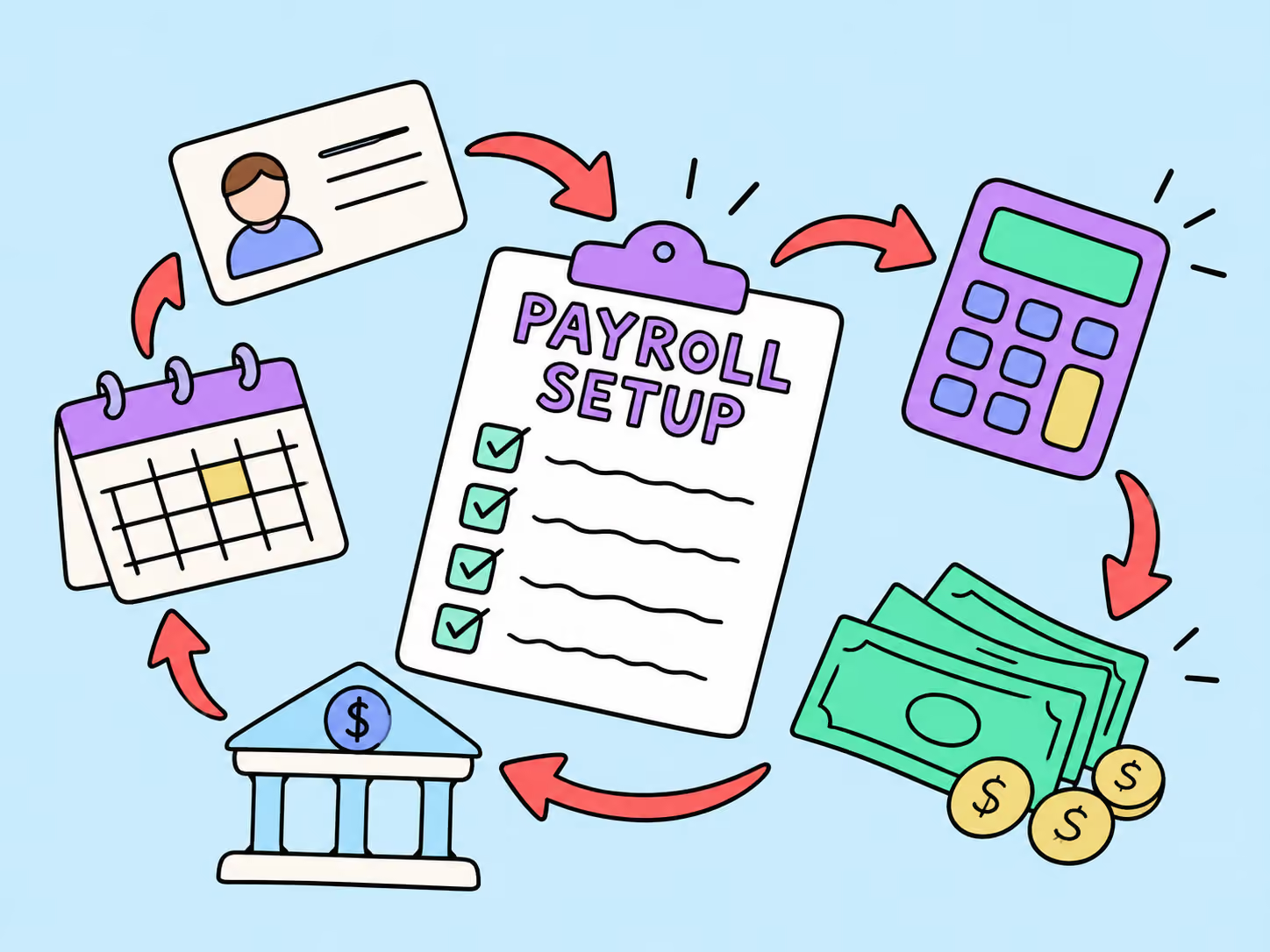
Set up payroll for your small business with steps for EINs, state tax accounts, employee forms, pay schedules, software and your first payroll run.
