
How Much Do UX Writers Make? A Realistic Look at Salary, Rates, and Income
Learn how much UX writers earn on average, what affects their income, and how to increase pay in-house or as a freelancer.
January 23, 2026

Key Points
- The job of UX writing entails improving user experience in digital products.
- How much UX writers earn depends on experience, their location, skills, and the type of company they’re working for, among other factors.
- There are other writing roles in tech. UX writing overlaps with roles like content design but is different from technical writing or copywriting.
- If you’re looking to earn more as a UX writer, learn product-based skills, specialise in a complex niche, adjust your work setup, or move into an adjacent role with more responsibility.
I bet you’ve heard the term “UX” before. It’s not as mysterious as it sounds, and it encompasses several roles in tech. One of them is UX writing, which is what we’ll focus on today. In this article, I’m going to cover what UX writing is, how it differs from other kinds of writing, what an average salary for UX writers is (and why there’s so much variation in pay), and how you can increase your overall earnings as a freelancer in this field.
What do UX writers actually do?
First of all… What is UX? Who are UX writers? These terms are everywhere online these days, so let’s get to the bottom of it. UX stands for user experience. In simple terms, user experience is how a person feels when they use a product — how easy it is to understand, how intuitive it feels, and how smoothly they can get things done. So, basically, UX writing is writing that improves the user’s experience inside a digital product.
UX writers’ job entails guiding users clearly and intuitively through actions like signing up, completing tasks, fixing errors, or understanding what happens next in apps, websites, and software interfaces. UX writing is all about clarity, usability, and consistency.

Where UX writers fit in the UX process
As important as UX writing is, it’s only a single part of the broader UX process. Creating a good user experience also involves research, design, testing, and prototyping. UX writers focus on the words inside the product, while other team members handle design and research. If you’re working on a smaller project, you may be wearing all of these hats. Bigger teams sometimes have different people doing each role.
UX vs UI
Oftentimes, the term UX is coupled together with UI, aka user interface. If UX is all about how a product works and how easy it is for users to navigate everything, UI focuses on how a product looks — layout, colours, typography, and visual elements.
In practice, and this is especially true for smaller teams, both UI and UX tasks are handled by the same person. In larger product teams, however, UX and UI are usually separate roles, and UX writers work on the UX side rather than the visual one.
What UX writers actually write
UX writing is different from marketing, ghostwriting, content, or copywriting. These types of writing aim to inform or persuade, whereas UX writing seeks to help users complete tasks inside a product. There are several things they focus on:
- Microcopy. As the name suggests, it’s very short copy. It includes button labels, error messages, helper text, and form instructions.
- User flows and journeys. A user journey is the sequence of steps a person goes through to complete a task in a product. While UX writers don’t design the journey itself, they work on how the text supports each step, making sure the language stays clear and consistent from start to finish.
Beyond this, UX writers also help define tone and consistency, review existing interface copy, and collaborate with designers and product teams.
Most of my day is spent reviewing copy in design tools, writing error messages, and checking that the tone fits the user journey.
{{Ankit Sharma}}
All of this sounds a bit abstract, right? Let’s have a look at a real-life example to show you what UX work actually looks like to the end user. Below are two screenshots from British bank NatWest’s app. These onboarding screens illustrate UX writing in practice: the copy is short and clear, and it helps users understand features and complete tasks in the app.

If I’ve got your curiosity piqued already, but you’re very new to the world of UX, check out this video to help you make sense of the basics.
How much does a UX writer make in 2026?
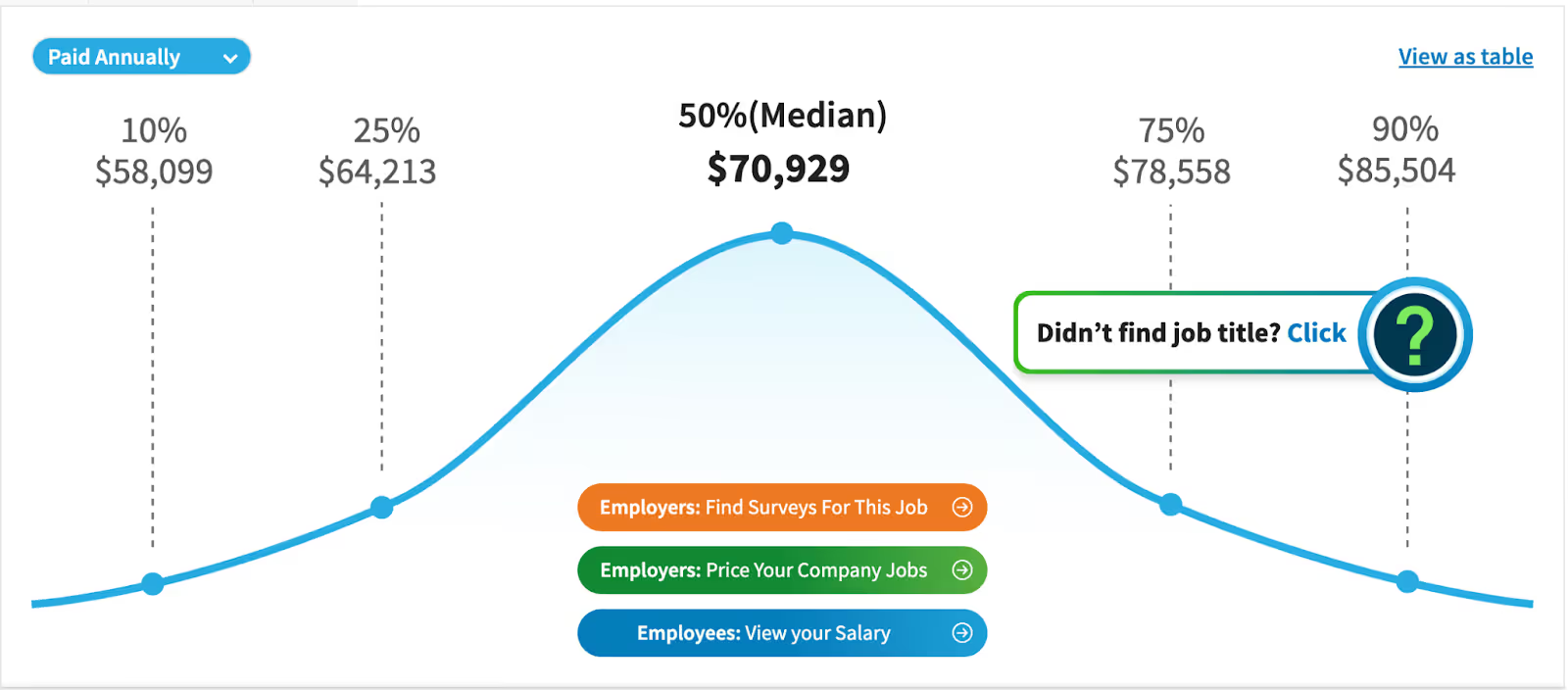
As we move into 2026, UX writer salaries continue to vary widely depending on experience, location, and company type. If we’re talking about the United States, the median UX writer salary stands at $70,929 per year, or $34 hourly as of 1 December 2025, according to Salary.com.
UX writer salaries around the world
In India, full-time UX writers usually earn between ₹8 and ₹18 lakh [between 8,900 USD and 20,000 USD] a year, while freelancers charge in the low hundreds per hour. Companies tend to hire in-house, although short-term contracts are common in SaaS and fintech.
{{Ankit Sharma}}
As with all jobs, where you work (or where your clients are based) makes a huge difference. We’ve already had a look at how much UX writers make in the States, as well as having an insight into the Indian market. How do other UX writers fare in other countries?
The salaries below are averages provided by SalaryExpert. I converted all currencies to US dollars. In some countries, reported averages may reflect senior or remote roles rather than the local market as a whole.
What affects a UX writer’s earnings?
Where you’re located isn’t the only thing that affects how much you’re earning as a UX writer. Let’s have a look at other factors.
Experience and scope of work
This one is somewhat obvious: the more senior you are, the more you earn. Junior UX writers tend to focus on individual pieces of interface copy, while more senior roles involve owning larger user flows, reviewing work, and contributing to broader content decisions.
Industry and company type
The industry you’re in also matters. According to a survey by UX Content, UX writers are especially in demand in tech, finance, healthcare, and e-commerce. Another exciting and very current niche for UX writers right now is artificial intelligence. Why is this, you ask? AI can generate interface text, but only when it’s given clear context and direction. UX writers provide that context by understanding users and product goals.
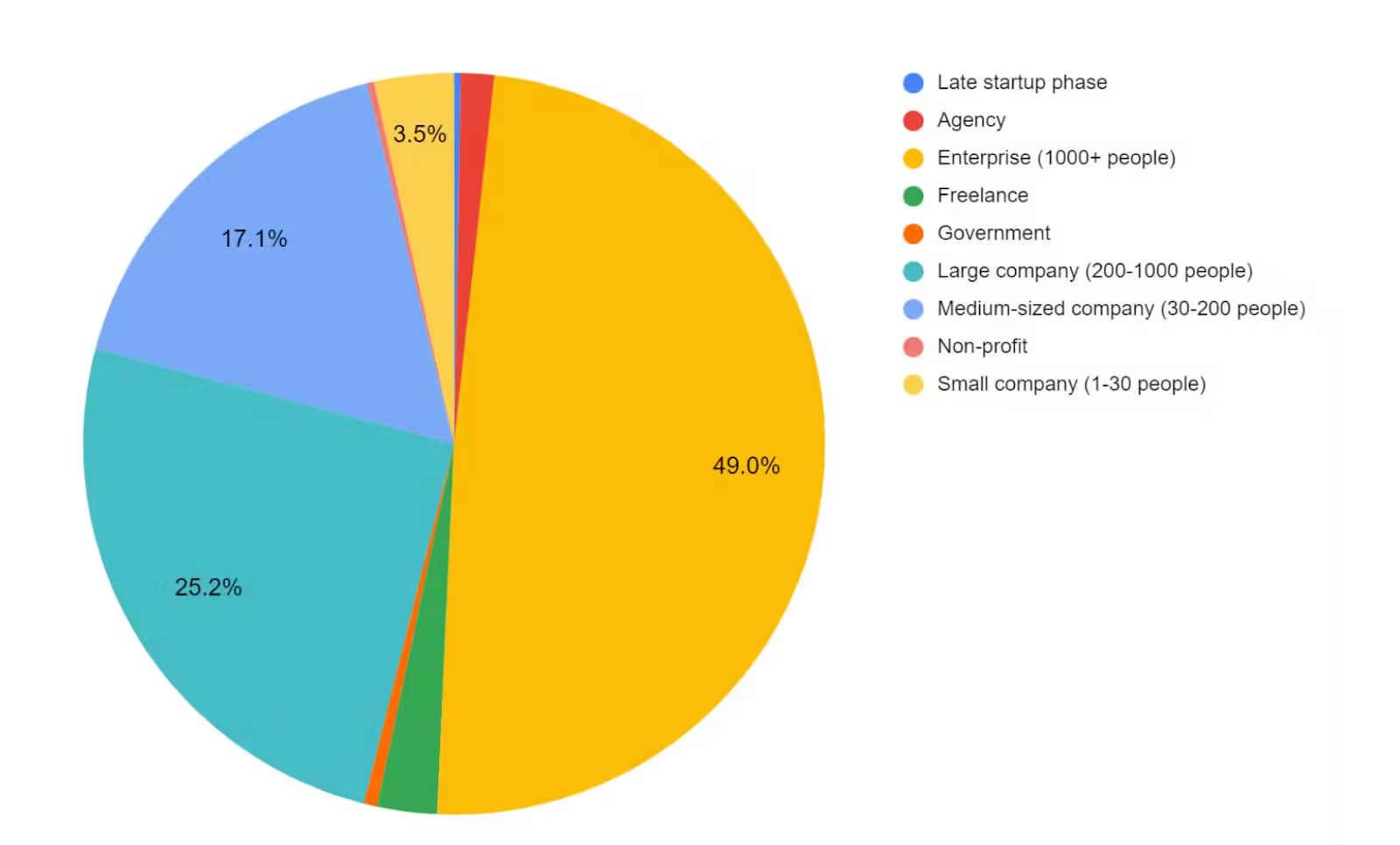
I should also mention that UX writers work for companies of all sizes, and that determines their pay, too. A survey by UX Writing Hub suggests that almost half of all UX writers work in enterprise organisations with more than 1,000 employees, while another quarter are employed at large companies with 200–1,000 people. Larger, product-led organisations typically have bigger budgets and clearer role definitions, which can mean higher and more stable pay.
Skills and specialisation
Specific skills can also influence how much money UX writers can expect to make. This includes things like being able to use different design tools like Figma confidently and work together with other professionals like designers and product managers. Another big bonus is being able to show how your writing improves usability for the end user. All of this will give you the upper hand when it comes to pay and seniority.
The hardest part of the job is alignment. You spend time explaining that words are part of design, not just decoration. For anyone coming from copywriting, build a portfolio that shows how your writing improves usability, not just tone. Learn basic UX tools like Figma and stay comfortable with feedback loops. Notion is another tool extremely useful for building content inventories, so try that too.
{{Ankit Sharma}}
Freelance UX writer rates and pricing models
The survey we saw earlier suggests that only a small minority of UX writers work as freelancers. However, a career in UX writing can be a pretty good fit for them — that’s because many smaller companies or startups don’t need or can’t afford to have a UX writer in-house, but need one when launching or revamping a product.
How freelance UX writers charge
There’s no one-size-fits-all answer to this question of how freelance UX writers charge. Let’s check out the most common pricing models.
- Hourly rates are one of the most common ways to get paid as a UX writer. It’s commonly used for short-term work or projects with unclear or changing scope. If you’re a freelance UX writer working with a team for a limited number of hours per week or supporting multiple small tasks across a product, you’ll most likely be paid per hour. Sometimes hourly rates aren’t the best idea, though. As freelancers become more experienced, hourly pricing can limit earning potential compared to value-based models, so experienced writers use this model with caution, or as a starting point before moving onto other models. If you’re just getting started and need help setting your rates, check out Solowise’s hourly fee calculator to help you make sense of things. It was built for freelancers!
- If you go for a project-based pricing model, you’ll be charging a fixed fee for a defined piece of work. For example, this could mean writing copy for an onboarding flow or working on a full feature launch. Project-based models mean that you can focus on the task at hand and its complexity, rather than time alone. However, you do have to be mindful of managing expectations, as unclear requirements or frequent changes can quickly turn into scope creep.
- Monthly retainers involve a recurring fee when your collaboration is ongoing. This is common with startups or product teams that need regular updates and optimisation but don’t require a full-time hire. Retainers can be a great idea because they mean income stability for freelancers and predictability for their clients. They usually work best when responsibilities, availability, and response times are clearly defined.
Is UX writing a well-paid career?
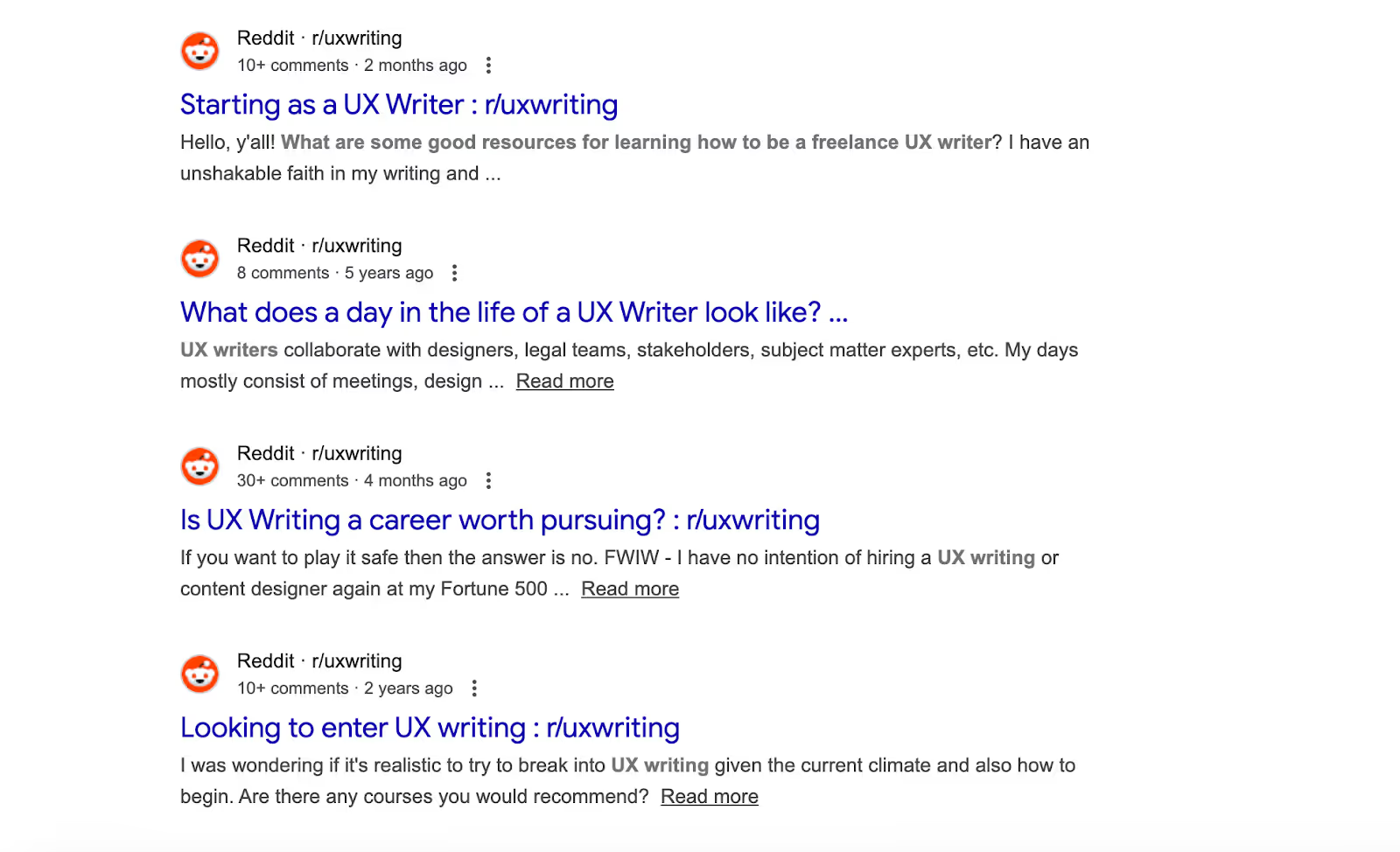
Freelancers all over the world are curious about getting into UX writing. Even a cursory glance through Reddit and freelancing forums shows how interested people, especially those working in adjacent fields, are in it.
One of the reasons for this is that it’s a pretty well-paid job. To understand why, let’s compare it with other writing roles and look at how responsibilities and expectations differ.
UX writing vs other writing roles
When it comes to tech, UX writing isn’t the only type of technical writing out there.
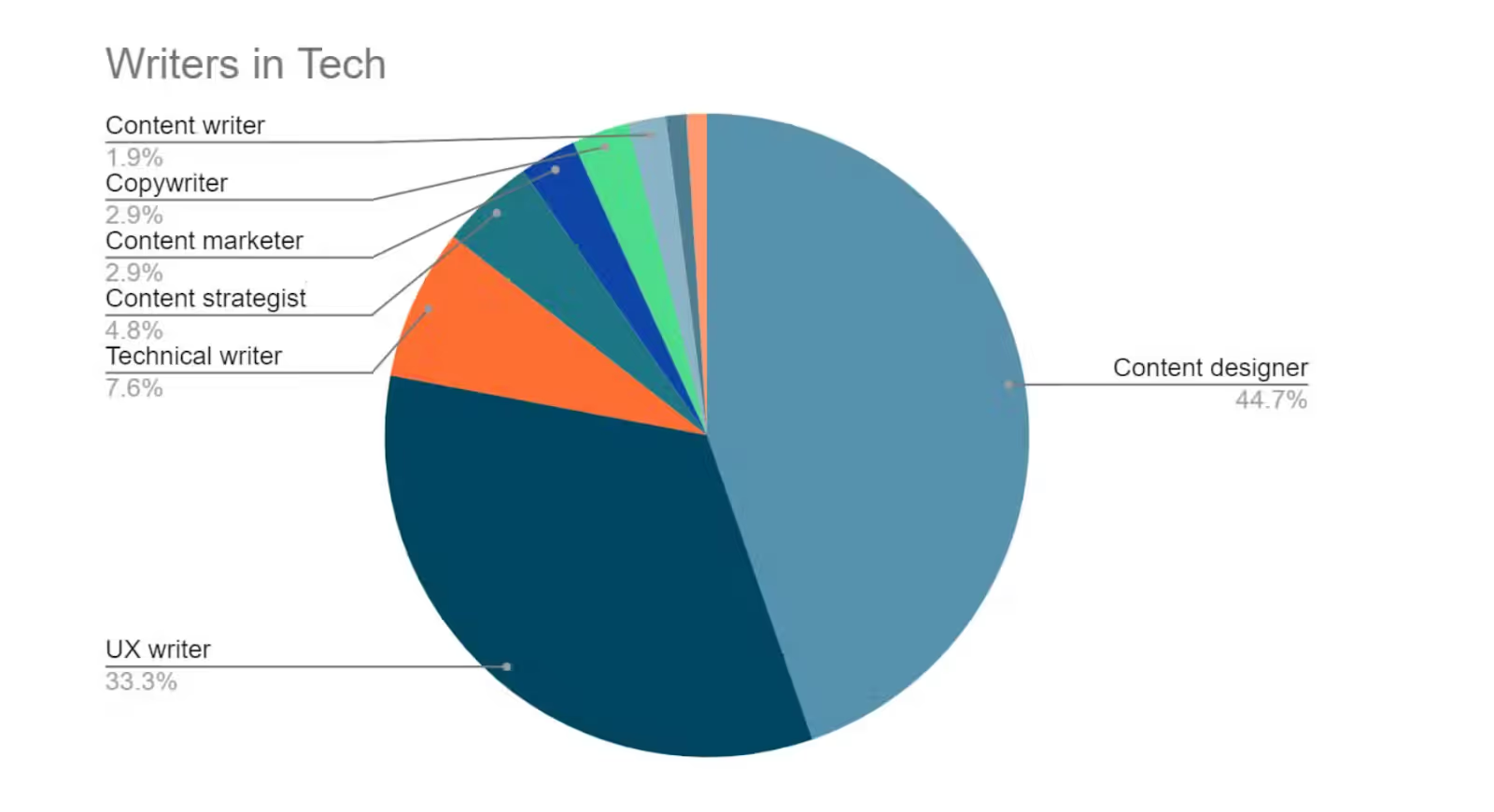
According to data above, UX writers and content designers make up 78% of all writers in tech out there. You may be wondering what the difference is between these two job titles. Spoiler alert: not much. Even though the terms are used differently, in practice, these two roles usually describe the same type of work. Both focus on creating clear, user-centred language within digital products and are embedded in the product design process.
Technical writing is a related but different job. Unlike UX writers, who usually work inside the product itself, technical writers usually work around it. What I mean by that is creating documentation such as manuals, help centres, and guides for developers, as well as explaining how a product works.
If the roles we’ve already discussed focus more on product usability, the aim of copywriting is persuasion. Copywriters write landing pages, ads, emails, and other promotional content designed to attract attention and drive action.
According to UX Writing Hub’s survey, UX writing isn’t the most highly paid career in tech writing, and tech writers and content designers (even though it’s basically the same job) are paid more. However, UX writing still remains a great career choice: it’s still very profitable and in-demand.
How to get paid more as a UX writer
If you’re looking to increase your income as a UX writer, the biggest gains usually come from positioning. Here are a few ways to do that:
- Build product-level skills. You don’t need to become a designer, but understanding research, usability testing, design systems, and other parts of the UX/UI field can make your work more profitable.
- Specialise instead of staying generic. The harder the product is to understand, the more valuable your work is. This means that UX writers with experience in complex products like SaaS or fintech apps are typically paid more than generalists.
- Reassess your market value. Whether you’re working in-house or as a freelancer, income growth often comes from changing your setup rather than waiting for incremental increases. If you’re an employee, this can mean switching companies. If you’re a freelancer, it could look like raising your rates or changing clients.
- Strengthen your UX foundations. While there isn’t a specific UX writer university degree, taking relevant courses or getting certification can always be helpful, especially at the start of your career. In addition to this, you need to be comfortable with working in tools like design files, prototypes, and content systems.
- Move into adjacent roles. As UX writers gain experience, some increase their earning potential by shifting into closely related roles such as senior content designer, content strategist, or conversation designer. These roles require the same UX skills but come with broader responsibilities.
Final musings
And that’s all there is to getting paid as a UX writer! It can be a pretty well-paid and stable career, especially if you deepen your product knowledge and position your work effectively. As with every other job under the sun, salaries vary by experience, location, and company type. But strong UX writers remain in demand across many industries. Happy writing!
FAQ
FAQ
Do you need a degree or certification to become a UX writer?
No, you don’t! Many UX writers come from backgrounds like journalism, copywriting, content marketing, or communications. That said, certifications can be helpful, especially at the beginning. As you gain more experience, your employers will care more about your portfolio than courses or certifications.
Do UX writers get bonuses or commission?
UX writers are usually paid a fixed salary or project rate, not commission. Some in-house roles include benefits, bonuses or equity, but it’s not usually tied to sales performance of the company.
Can UX writers work remotely or internationally?
For sure! In fact, many freelance UX writers are fully remote. That’s because the work is digital and collaborative. That also means it’s well-suited to international teamwork.
Is UX writing a good long-term career?
As long as digital products exist, there will be a need for clear, user-centred language. That means that UX writing is a good long-term career. While job titles and tools may change over time, the core skills behind UX writing remain the same.
.avif)


I’m a bilingual writer and content strategist working across SaaS and digital media. I cover topics like marketing, tech, and the occasional niche curiosity.
Learn moreI work as a UX writer/designer focusing on product UI and onboarding flows.
We are here to ease your working routine
Whether you're freelancing or a full-time contractor, we simplify the working process, putting you in control.
Try it free

Gusto and Deel both help companies manage payroll and HR, but they serve different business needs. Gusto is a better fit for US-based small and midsize businesses that need simple payroll, tax filing, benefits, onboarding, and basic HR tools. Deel is better for companies hiring internationally, managing global contractors, or using Employer of Record services. This comparison breaks down their key differences in payroll, compliance, pricing, integrations, benefits, contractor management, pros and cons, and best use cases to help businesses choose the right platform in 2026.

Compare the best Deel alternatives for global hiring, payroll, EOR, and contractor payments. See pricing, coverage, pros, cons, and best use cases.

Running payroll for one employee still means tax calculations, filings, forms, and deadlines — so the cheapest option isn't always the best value. This guide compares affordable payroll services for a one-person business, breaking down real monthly costs, what's included, and which choice fits how you actually pay your worker.
