
Gusto vs Deel: Compare Features and Pricing 2026
Gusto and Deel both help companies manage payroll and HR, but they serve different business needs. Gusto is a better fit for US-based small and midsize businesses that need simple payroll, tax filing, benefits, onboarding, and basic HR tools. Deel is better for companies hiring internationally, managing global contractors, or using Employer of Record services. This comparison breaks down their key differences in payroll, compliance, pricing, integrations, benefits, contractor management, pros and cons, and best use cases to help businesses choose the right platform in 2026.
June 15, 2026
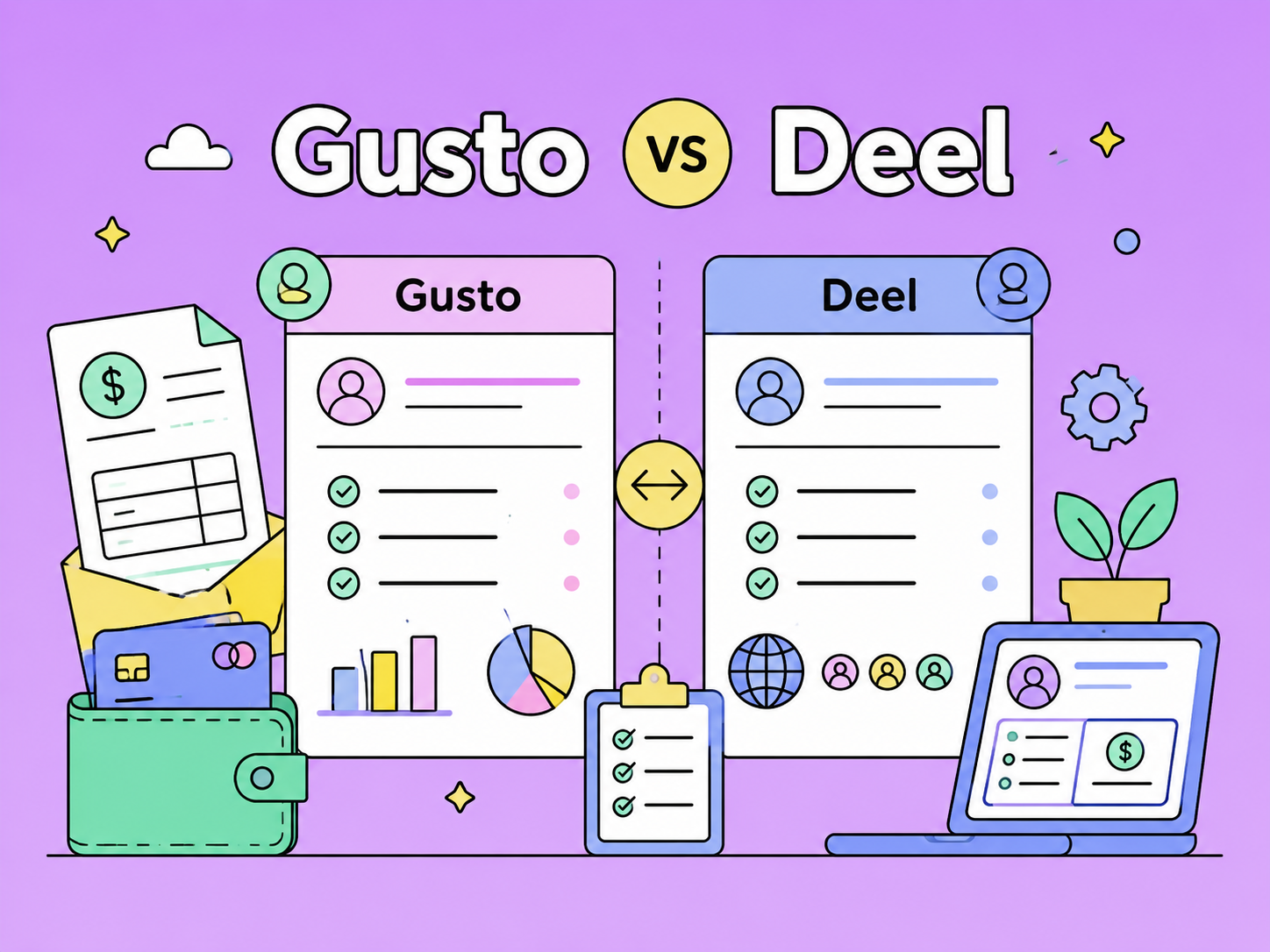
Choosing between Gusto and Deel can be difficult because both platforms sit in the same broad category: HR, payroll, and workforce management. But they are not built for the same type of company.
Gusto is mainly designed for small and midsize businesses in the United States that need a simple way to run payroll, file taxes, manage benefits, onboard employees, and handle everyday HR tasks.
Deel is built for companies that hire globally. It helps businesses manage international employees and contractors, run global payroll, handle compliance across countries, and use Employer of Record services when they do not have local entities.
That difference matters. A US-based small business with 20 employees has very different needs from a remote-first startup hiring contractors in five countries or opening its first international team.
This Gusto vs Deel comparison guide explains how the two platforms differ in payroll, EOR, compliance, integrations, pricing, contractor management, benefits, and ideal use cases.
Gusto vs Deel: Quick Verdict
Gusto is the better fit for US-based companies that need straightforward payroll and HR tools.
Deel is the better fit for companies hiring internationally, managing global contractors, or using Employer of Record services.
If your workforce is mostly in the United States, Gusto will usually be simpler and more cost-effective. If your workforce is distributed across countries, Deel will usually offer more relevant global employment and compliance features.
Gusto vs Deel: Quick Comparison
What Is Gusto?
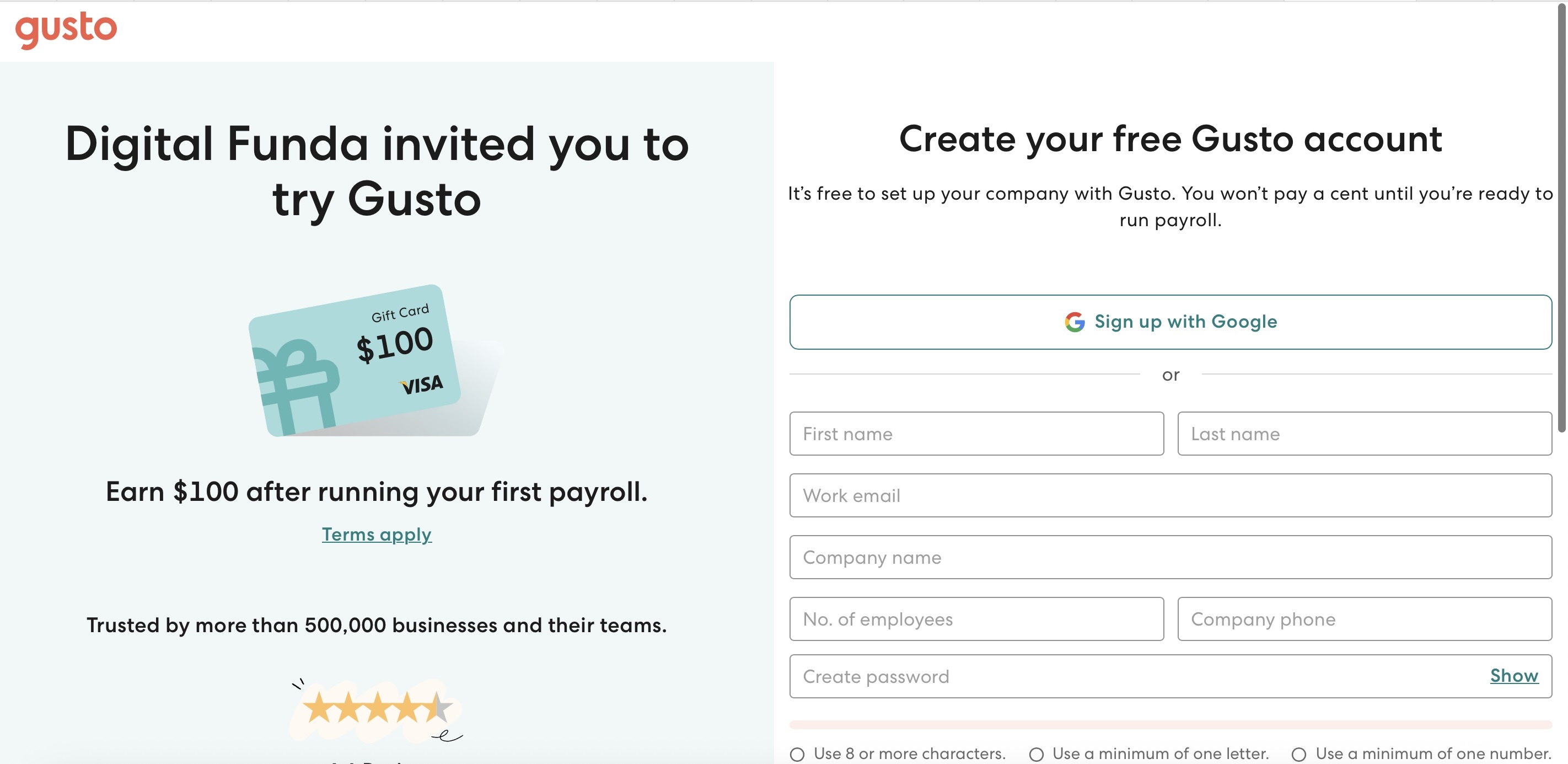
Gusto is a cloud-based payroll and HR platform for small and midsize businesses, especially in the United States. It helps companies automate payroll, file payroll taxes, manage employee benefits, onboard new hires, track time, and give employees access to their own payroll and HR information.
For many small businesses, Gusto becomes the central system for payroll and basic people operations. Instead of handling payroll calculations, tax deadlines, employee forms, and benefits deductions manually, employers can manage these workflows in one platform.
Gusto’s core features include:
- full-service US payroll
- automated payroll tax filing
- employee and contractor payments
- W-2 and 1099 support
- benefits administration
- health insurance and retirement plan options
- onboarding tools
- employee self-service
- time tracking and PTO tools
- hiring and HR document management
- integrations with accounting and business apps
- mobile access for employers and employees
Gusto is especially useful for companies without a large HR or finance team. A founder, office manager, accountant, or HR generalist can use the platform to manage payroll and basic HR without becoming a payroll expert.
Its biggest strength is ease of use. Gusto is built to make domestic payroll and HR feel less technical and less time-consuming.
What Is Deel?
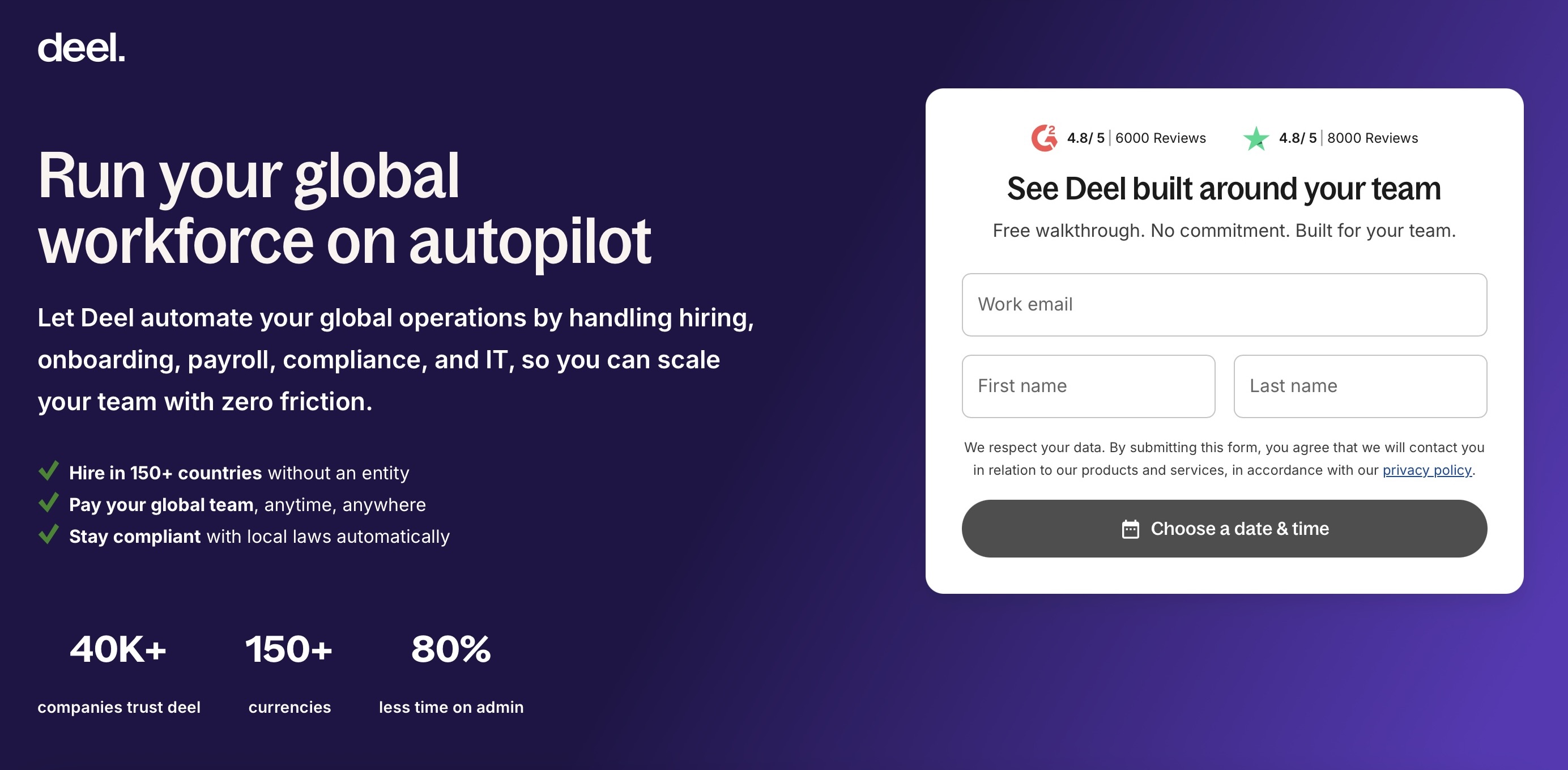
Deel is a global HR, payroll, and compliance platform built for international teams. It helps companies hire, pay, onboard, and manage employees and contractors in different countries.
Deel is especially known for its Employer of Record model. With EOR services, Deel can legally employ a worker on behalf of another company in a country where that company does not have its own legal entity. The client company manages the employee’s daily work, while Deel handles local employment contracts, payroll, taxes, benefits, and compliance.
Deel’s core features include:
- Employer of Record services
- global payroll
- international contractor management
- localized employment contracts
- country-specific onboarding
- compliance monitoring
- multi-currency payments
- benefits administration for global workers
- immigration and visa support in some cases
- document management and e-signatures
- workforce analytics
- integrations with HRIS, finance, and IT systems
- API access for custom workflows
Deel is a strong fit for remote-first companies, startups hiring globally, businesses expanding into new markets, and companies that work with international contractors.
Its biggest strength is global employment infrastructure. Deel helps businesses hire in other countries without building a legal and payroll operation from scratch.
Payroll: US Payroll vs Global Payroll
Payroll is one of the main reasons companies compare Gusto and Deel, but the platforms approach payroll from different angles.
Gusto is strongest for US payroll. It helps employers calculate wages, run payroll, manage deductions, process direct deposits, file payroll taxes, and prepare tax documents such as W-2s and 1099s.
It also helps with federal, state, and local payroll tax filing in the US. This is important because payroll tax rules can become complicated, especially when a company hires employees in multiple states.
Gusto’s payroll workflows are also connected to other HR features. Employee hours, PTO, benefits deductions, and onboarding information can flow into payroll, reducing manual work.
Deel is strongest for global payroll. It is designed for companies that pay people across multiple countries, currencies, and legal systems. Deel supports payroll for international employees, contractors, and EOR employees, depending on the service used.
For global teams, payroll is not only about paying people on time. It also involves local tax rules, social contributions, statutory benefits, local employment documents, and country-specific compliance. Deel is built to manage that complexity.
If your company only runs US payroll, Gusto will usually be the better fit. If your company needs payroll across several countries, Deel is usually stronger.
EOR Capabilities: Where Deel Clearly Wins
Employer of Record is one of the biggest differences between Gusto and Deel.
An Employer of Record is a third-party organization that legally employs workers on behalf of another company. This allows a business to hire employees in countries where it does not have a legal entity.
For example, a US company may want to hire a full-time employee in Spain, Brazil, or Germany. Without an EOR, the company may need to open a local entity, understand local employment law, register for taxes, create compliant contracts, and set up payroll. That can be expensive and slow.
With an EOR, the provider becomes the legal employer. The client company still manages the person’s work, but the EOR handles employment administration.
Deel is built around this model. Its EOR services can support international hiring, localized contracts, payroll processing, tax compliance, statutory benefits, onboarding, and employment documentation.
Gusto is not primarily an EOR platform. Its strongest capabilities are US payroll, benefits, onboarding, and HR tools. While it can support some global workforce needs through contractor payments or partner-based services, it does not have the same depth in EOR as Deel.
For US-only teams, this may not matter. For companies hiring full-time employees abroad, it matters a lot.
Choose Deel if EOR is central to your hiring strategy. Choose Gusto if you do not need EOR and mainly want to manage US payroll and HR.
Compliance: Domestic Payroll Compliance vs Global Labor Compliance
Compliance is another major difference between Gusto and Deel.
Gusto focuses on US payroll and HR compliance. It helps with payroll tax calculations, tax filing, new hire reporting, employee forms, deductions, and basic HR compliance workflows.
This is valuable for small businesses because payroll mistakes can be expensive. Missing tax deadlines, miscalculating withholdings, or mishandling employee documents can create problems with tax agencies and employees.
Gusto is especially useful for companies that need help staying organized across federal, state, and local payroll requirements in the US.
Deel focuses on international compliance. This includes local labor laws, country-specific employment contracts, statutory benefits, payroll taxes, social contributions, worker classification, termination requirements, and employment documentation.
Deel’s compliance value becomes more important as a company hires in more countries. Every country has its own employment rules. A contract, benefit, or payroll process that works in one market may not work in another.
For example, companies may need to consider:
- local minimum wage rules
- statutory paid leave
- probation periods
- notice periods
- severance rules
- social security contributions
- worker classification rules
- permanent establishment risk
- local tax reporting
- benefits requirements
Gusto helps with US compliance. Deel helps with multi-country compliance.
That is the key distinction.
Contractor Management
Both Gusto and Deel can be used for contractor payments, but Deel provides a deeper global contractor management experience.
Gusto is useful for companies that pay domestic contractors and some international contractors. For a US business that occasionally works with freelancers, consultants, designers, developers, or agencies, Gusto can help centralize payments and tax forms.
Deel is stronger for companies that work with contractors across many countries. It helps create localized contractor agreements, manage payment methods, support different currencies, and reduce worker classification risk.
Contractor classification is especially important for international teams. If a company treats a contractor like a full-time employee, local authorities may decide the worker has been misclassified. This can lead to penalties, back taxes, and legal issues.
Deel is built to help companies manage that risk more carefully.
For a few US contractors, Gusto may be enough. For a global contractor workforce, Deel is usually the better choice.
Benefits Administration
Gusto has strong benefits administration for US companies. Employers can manage health insurance, dental and vision plans, retirement benefits, workers’ compensation, and other employee benefits depending on availability.
This is one of Gusto’s biggest advantages for US-based employers. Payroll and benefits are closely connected, so managing them in one platform can reduce admin work and make the employee experience smoother.
Gusto is especially useful for small businesses that want to offer benefits but do not have a large HR department to manage plan administration manually.
Deel’s benefits capabilities are more global and country-specific. For international employees, benefits need to reflect local legal requirements and market expectations. Deel helps companies provide statutory and localized benefits depending on where the worker is employed.
The better choice depends on where your employees are located.
If your employees are in the US, Gusto’s benefits tools are likely more relevant. If your employees are in multiple countries, Deel’s localized benefits support is more important.
HR Tools and Employee Experience
Gusto offers a practical set of HR tools for small and midsize businesses. These include onboarding, employee self-service, PTO tracking, time tracking, document storage, hiring tools, and basic performance-related features.
Employee self-service is especially useful because workers can access pay stubs, tax documents, benefits information, and personal details without asking HR or finance every time.
Gusto also offers mobile access, which can be helpful for both employers and employees who need to manage payroll, benefits, or HR information on the go.
Deel also includes HR tools, but they are more focused on global workforce management. Its HR features are connected to contracts, onboarding, compliance documents, payroll, worker records, and international employment workflows.
Deel can also support document management, e-signatures, workforce analytics, and automated compliance workflows. These features are valuable when managing workers across different countries and legal systems.
Gusto feels more like a domestic payroll and HR platform. Deel feels more like a global workforce infrastructure platform.
Integrations
Integrations matter because payroll and HR rarely operate in isolation. Companies often need payroll data to connect with accounting, time tracking, benefits, HRIS, finance, and productivity tools.
Gusto integrates with many tools used by US small and midsize businesses. These may include accounting platforms such as QuickBooks, Xero, FreshBooks, ZarMoney, and Dext. It can also connect with time tracking tools such as QuickBooks Time, Workyard, and Homebase.
For HR workflows, Gusto may connect with tools such as BambooHR and JazzHR. It can also support integrations with communication and productivity tools such as Slack, Microsoft Teams, Zoom, Gmail, and Google Workspace.
Expense tools such as Expensify can help connect reimbursements with payroll. Automation platforms such as Zapier and Make can also help businesses build custom workflows.
Deel’s integrations are more focused on global HR, payroll, finance, and workforce operations. It can connect with HRIS and workforce management systems such as BambooHR, HiBob, Workday, and ADP.
Deel also supports accounting and finance integrations, IT asset management workflows, and API access for custom systems. This can be useful for larger or more complex companies that need to synchronize global workforce data across several platforms.
Gusto is stronger for SMB-friendly US business tools. Deel is stronger for global HR, payroll, finance, and enterprise workflows.
Pricing: Why the Costs Are Hard to Compare
Gusto and Deel pricing are not directly comparable because they solve different problems.
Gusto typically uses a transparent subscription model with a monthly base fee and a per-person fee depending on the plan. This makes costs easier to estimate for US-based small businesses.
Deel pricing depends on the service. Contractor management, global payroll, and EOR services usually have different pricing structures. EOR is typically more expensive than standard payroll software because it includes legal employment, local compliance, payroll administration, tax obligations, and benefits.
This does not mean Deel is simply “more expensive.” It means Deel handles a more complex type of work.
When comparing pricing, look beyond the platform fee. Consider:
- number of employees
- number of contractors
- countries where workers are located
- EOR needs
- payroll tax complexity
- benefits administration
- add-ons
- integrations
- support needs
- compliance risk
- time saved by automation
For US-only teams, Gusto will usually be more cost-effective. For global teams, Deel may cost more but can help avoid the cost and complexity of setting up local entities.
Gusto Pros and Cons
Gusto pros
Gusto is easy to use and well-suited for small and midsize US businesses. It simplifies payroll, tax filing, benefits, onboarding, and everyday HR workflows.
It is especially helpful for first-time payroll buyers and teams without dedicated payroll specialists.
Gusto also offers strong US benefits administration, employee self-service, time tracking, and useful integrations with common SMB tools.
Its mobile access is another advantage for companies that want employees and employers to manage HR and payroll information more easily.
Gusto cons
Gusto is not designed as a global employment platform. Its international capabilities are more limited than Deel’s, especially for companies that need EOR, localized contracts, immigration support, or multi-country compliance.
Companies with advanced reporting, complex workflow automation, or global hiring needs may need extra tools or integrations.
Gusto is best when the workforce is mostly in the US.
Deel Pros and Cons
Deel pros
Deel is strong for international hiring, EOR, global payroll, contractor management, and multi-country compliance.
It helps companies hire employees abroad without opening local entities and manage contractors across many countries.
Deel also supports multi-currency payments, localized contracts, compliance workflows, and global workforce documentation.
For remote-first companies or businesses expanding into new markets, Deel can reduce operational complexity and legal risk.
Deel cons
Deel may be more expensive than domestic payroll tools, especially when using EOR services.
It may also be too complex for small US-only teams that simply need payroll, benefits, and basic HR.
Some features may depend on plan, country, or add-ons, so companies should review total cost carefully before committing.
Best Use Cases
Choose Gusto if:
You are a US-based small or midsize business.
You need payroll, tax filing, benefits, onboarding, and basic HR tools.
You want a user-friendly platform that does not require deep payroll knowledge.
You mostly hire employees in the United States.
You want payroll connected with time tracking, PTO, benefits, and employee self-service.
Choose Deel if:
You hire employees or contractors internationally.
You need Employer of Record services.
You want to hire in countries where you do not have legal entities.
You need localized contracts and global compliance support.
You manage payments in multiple currencies.
You are a remote-first company or global startup.
You want to reduce the complexity of international payroll and contractor management.
Use both if:
Some companies may use both platforms together.
For example, a US startup could use Gusto for domestic employees and Deel for international contractors or EOR employees. This setup can make sense when the company has a mixed workforce and wants each platform to handle the use case it is best at.
Final Verdict: Gusto vs Deel
Gusto and Deel are both strong platforms, but they are built for different business needs.
Gusto is the better choice for US-based companies that need simple payroll, tax filing, benefits administration, onboarding, and HR tools.
Deel is the better choice for companies hiring internationally, managing global contractors, running global payroll, or using Employer of Record services.
The best choice depends on where your workers are, how they are classified, and what kind of compliance support you need.
If your team is US-only, start with Gusto.
If your team is global, start with Deel.
If your team includes both US employees and international workers, consider whether using both platforms gives you the cleanest setup.
FAQ
1. What is the main difference between Gusto and Deel?
The main difference is that Gusto focuses on US payroll and HR, while Deel focuses on global hiring, international payroll, contractor management, and Employer of Record services.
2. Is Gusto better than Deel?
Gusto is better for many US-based small and midsize businesses that need payroll, tax filing, benefits, onboarding, and basic HR tools. It is usually not the best option for complex international hiring.
3. Is Deel better than Gusto?
Deel is better for companies that hire internationally, manage global contractors, need EOR services, or run payroll across multiple countries.
4. Does Gusto offer EOR services?
Gusto is not primarily an EOR platform. Its main strength is US payroll and HR. Companies that need full EOR services will usually find Deel more suitable.
5.Can Gusto pay international contractors?
Yes, Gusto can support international contractor payments in many locations. However, Deel offers deeper global contractor management, localized agreements, and compliance workflows.
6. Can Deel handle US payroll?
Deel can support companies with global payroll needs, including teams with US and international workers. However, for a US-only small business, Gusto may be simpler and more cost-effective.
7.Which is cheaper, Gusto or Deel?
Gusto is usually cheaper for US-only payroll and HR. Deel is usually more expensive when using EOR or global payroll services because those services include international compliance, legal employment, and local payroll administration.
8. Can companies use Gusto and Deel together?
Yes. Some companies use Gusto for US payroll and Deel for international contractors or EOR employees.
9. Which platform is better for startups?
For US-only startups, Gusto is often a strong fit because it covers payroll, benefits, tax filing, and basic HR. For remote-first startups hiring globally, Deel may be better because it supports contractors, EOR, and international compliance.
10. Which platform is better for contractors?
For domestic or simple contractor payments, Gusto may be enough. For international contractor management, Deel is usually stronger because it supports localized agreements, global payments, and compliance workflows.
.avif)
I’m a bilingual writer and content strategist working across SaaS and digital media. I cover topics like marketing, tech, and the occasional niche curiosity.
Learn moreWe are here to ease your working routine
Whether you're freelancing or a full-time contractor, we simplify the working process, putting you in control.
Try it free

Compare the best Deel alternatives for global hiring, payroll, EOR, and contractor payments. See pricing, coverage, pros, cons, and best use cases.

Running payroll for one employee still means tax calculations, filings, forms, and deadlines — so the cheapest option isn't always the best value. This guide compares affordable payroll services for a one-person business, breaking down real monthly costs, what's included, and which choice fits how you actually pay your worker.

Church payroll comes with unique rules — clergy taxes, housing allowances, and a mix of W-2 employees and 1099 contractors. This guide compares the 9 best payroll services for churches and shows how to choose the right one for your ministry.
