
8 Solopreneur Social Media Tips for When You’re Just Starting Out
Get tips and advice on how to build a strategy for your solopreneur social media.
December 18, 2025

Key Points
- Pick social media platforms your target audience uses to make decisions about products or services similar to yours. Don’t try to be everywhere — start small and measure your progress before expanding.
- Allocate time to work on your social media marketing. Aim for 3-4 hours a week with daily engagement via comments and messages.
- Create a content plan and develop your tone of voice. Make sure each post reflects your personal brand and feels authentic. Even one post a week is a good start.
- Use dedicated tools for planning, scheduling, and analyzing your posts.
- Assess your progress weekly, monthly, and quarterly. Note what works and what doesn’t, and make changes when you don’t reach the necessary results.
- Engage with your audience: answer their queries, ask for feedback and reviews, repost their content, and run giveaways or contests.
- Collaborate with other professionals in your niche or influencers to reach a wider audience.
For a solopreneur, a consistent social media presence is one of the important success factors. In this article, I’ll share some tips on where to start with a social media strategy and how not to feel overwhelmed about it.
Identify the right platforms and start small
As a solopreneur, you know that time management is the name of the game. Without a content team to support you, you need to choose social media platforms strategically.
If you already have clients, ask them what platforms they frequent and where they search for products or services like yours. For example, you might find that people looking for wedding organizers are using Pinterest and completely ignore X (Twitter).
If you’ve already tried maintaining a social media presence on several platforms, analyze your results and find where your clients came from. Focus on one or two platforms that offer the biggest bang for your buck.
But what about when you’re just starting out and don’t have that many clients? Here’s a simple plan:
- Figure out your ideal customer profile. Where do they live? What’s their occupation? What are their wants and needs? What problem of theirs can you help to solve?
- Research what platforms these people use, especially when it comes to making purchasing decisions.
- Find out which content types your target audience prefers and responds well to. To learn about this, you can approach people who represent your ideal audience members and ask them questions. You can find some of them among the followers of your competitors or in industry chats or forums. If you’re an interior designer, for example, you might find that your clients prefer videos, like Instagram, and don’t frequent Facebook.
- Choose the platform you’ll focus on. Don’t try to do everything at once. Start from one platform and gradually expand if you see the need for it.
Instagram is great for couples who love exploring wedding ideas before visiting a website, while Pinterest continuously brings traffic to my guides and galleries even months or years later. For me, that balance feels sustainable and strategic.
{{Marketa Sindlerova}}
Want other platform options? Check out our guide on social media platforms for photographers.
One last tip here: don’t force yourself to create content you dislike. If you don’t really care for videos but need to use TikTok or Instagram, do carousel posts instead. Social media audience can sense when brand content is inauthentic and likely won’t respond well to it.
Schedule time to work on your social media presence
Social media marketing is more than just casual scrolling; it’s a work in itself. Treat it as one of your business tasks.
Allocate specific times of day or days of the week to work on your social media presence and brand image. As a busy solopreneur, 3-4 hours weekly can be a good starting point. If you have a lot of enquiries, spend some time daily to answer the messages and have a dedicated social media day when you comment, create posts, and schedule them.
I post on Instagram when I have something meaningful to share, not because the algorithm demands it. This rhythm keeps me inspired, not exhausted. I spend a few short pockets of time weekly — usually 1 to 2 hours, updating posts, sharing a Reel or carousel, or connecting with accounts I genuinely enjoy.
Pinterest feels lighter and more long-term: I batch-schedule pins once a month and don’t think about it afterward.
{{Marketa Sindlerova}}
Be strategic about posting
To make sure your social media efforts pay off and connect with your audience, you need a strategy.
Think of how you want to show up and what your personal brand is. For example, if you’re a legal assistant, you might want to appear level-headed, professional, and diligent. If you’re a web designer, you can be friendly, creative, and trend-savvy. This step is important, as it will guide your tone of voice.
One of the most popular tone of voice classifications is the four dimensions by the Nielsen Norman Group. Use this as inspiration to figure out how you’d like to sound:
- Formal vs casual
- Serious vs funny
- Respectful vs irreverent
- Matter-of-fact vs enthusiastic
Next, take a look at your competitors for inspiration and create a content plan that includes types of content and posting frequency. For example, a realtor’s content plan for Instagram and TikTok might include short videos about recent rentals and image-based carousel posts with guides or answers to popular questions.
Your cadence depends on your availability. Generally, you don’t need to post daily. Once a week or even bi-weekly is good enough, especially for content that takes a lot of time to produce.
Posting frequency may also be lower for content that requires you to be authentic or have insights to share.
TikTok is where I share behind-the-scenes moments and the reality of being a virtual assistant, while LinkedIn and Facebook are for professional updates, educational carousels, and milestones. This balance helps potential clients see both my personality and the quality of my professional work.
I never pressure myself to post daily on TikTok because I want those behind-the-scenes videos to feel authentic and real-time. This approach has been effective because a bookkeeping company recently emailed me after seeing my LinkedIn and TikTok, asking about my services and availability to support their team.
{{Kharla Denura}}
Create content that inspires action
Your content on social media should support your overall business strategy. To do that, you need to set clear and measurable goals. For example:
- Increase the number of followers I have.
- Have a better reach or reach a new audience.
- Increase the engagement levels (comments, shares) of my posts.
- Raise conversions or the number of inquiries.
Note your current stats, figure out the timeline, and target numbers. For example, your goal might be to increase the number of messages about services you get on Instagram from 3 to 6 a week over the next 2 months.
Next, think of what content can help you reach your goal. Collect references and ideas and start making posts. Most importantly, don’t forget to add clear calls to action, so that your social media audience knows what to do next.
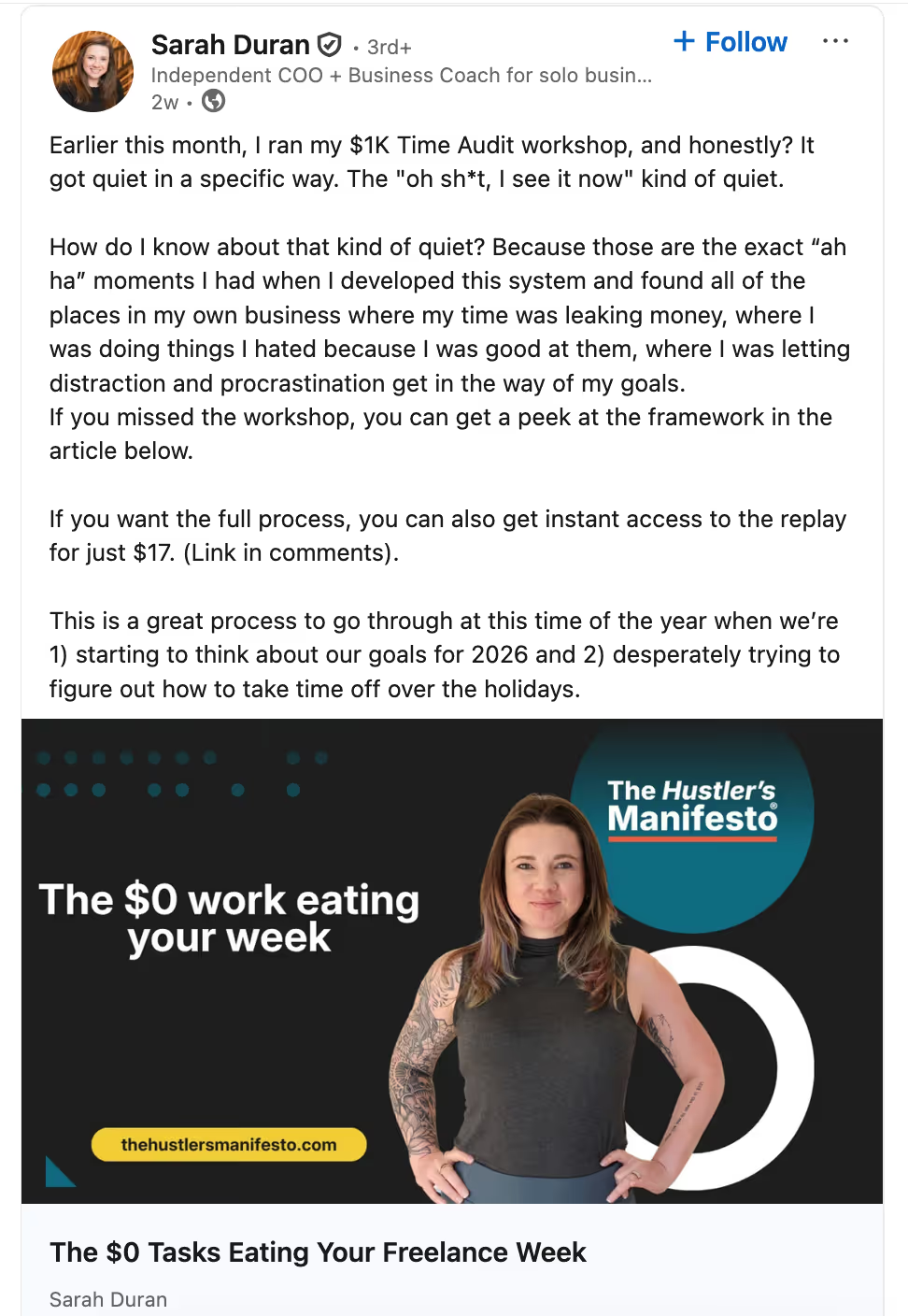
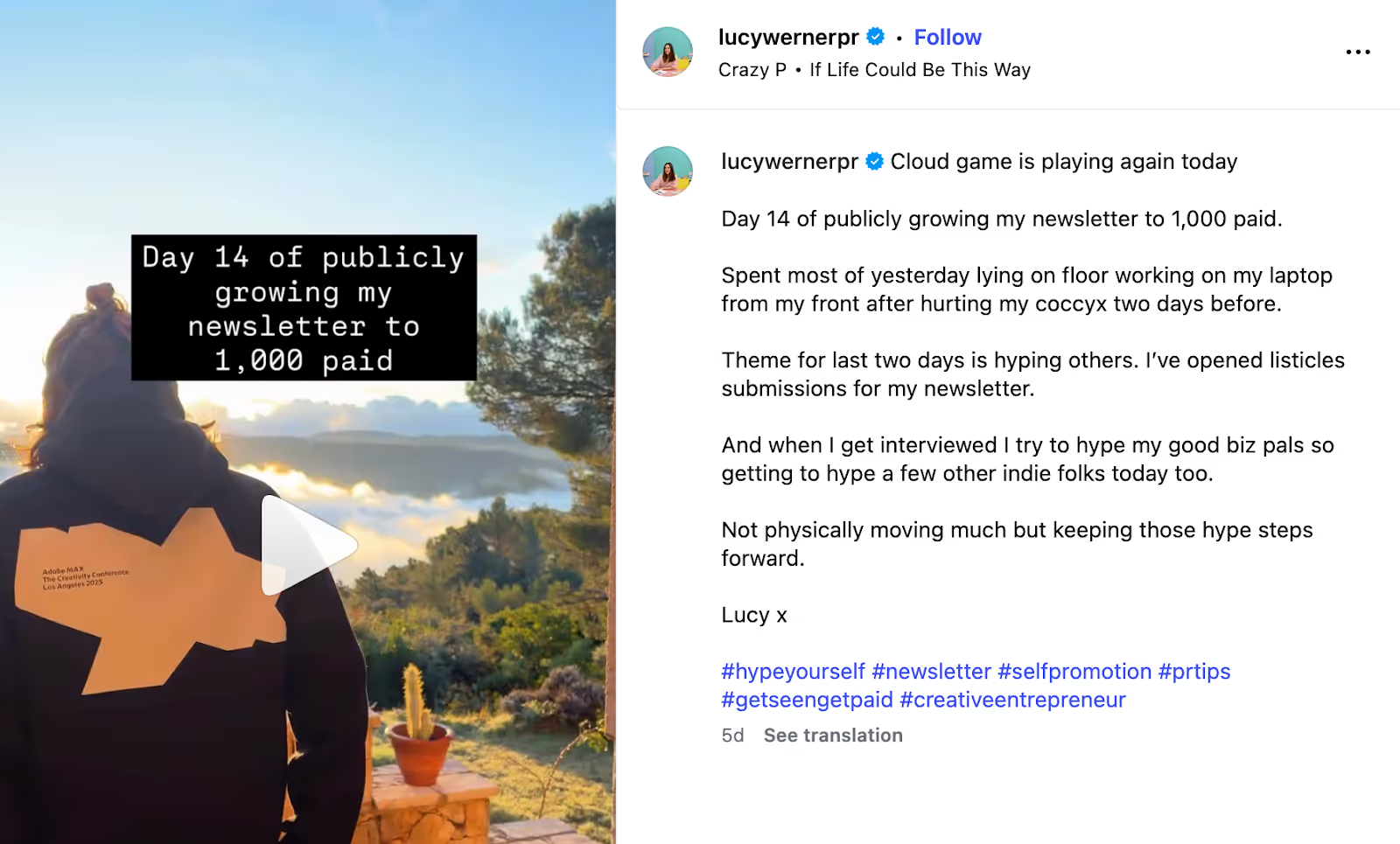
Consider serializing your content to get continued engagement. People like established content formats and seeing a journey to a set goal. Remember the viral “Who TF Did I Marry?” and “The Danish Deception” series on TikTok and use the same storytelling principles.
Use dedicated tools to ease your process
When you use social media for marketing purposes, there are a lot of tools to help you optimize the process and better understand the results of your work.
Keeping track of your strategy and content plan. Use Notion, Trello, Metricool, and other marketing tools for freelancers and solopreneurs. You can keep a content calendar and a running list of to-dos for every social media platform, all in one place. Most of these platforms also offer pre-built templates, which you can customize for your needs.
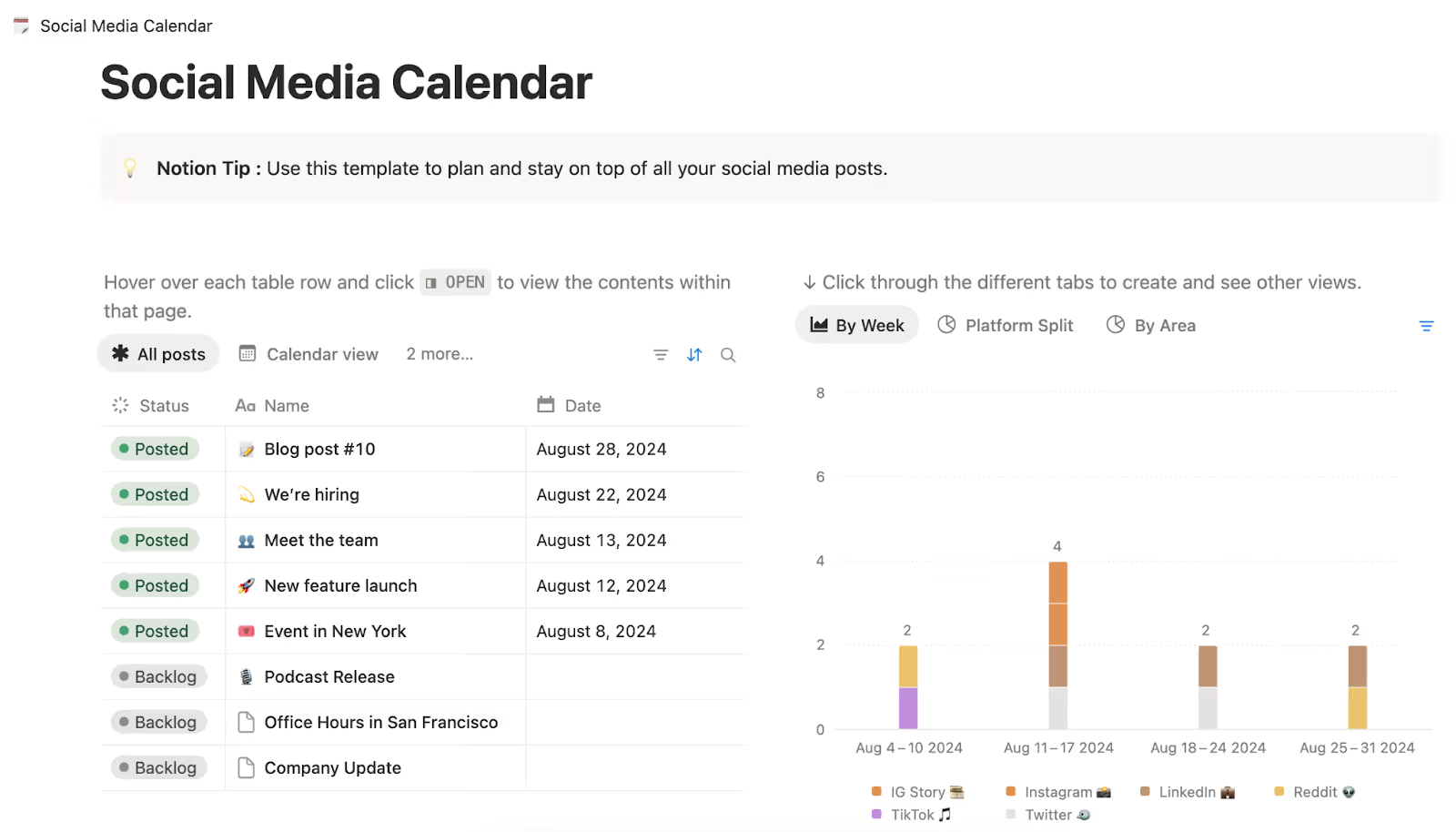
Content ideas and references. Use Notion, Miro, MyMind, and notes apps to save post ideas and write down your thoughts for the future.
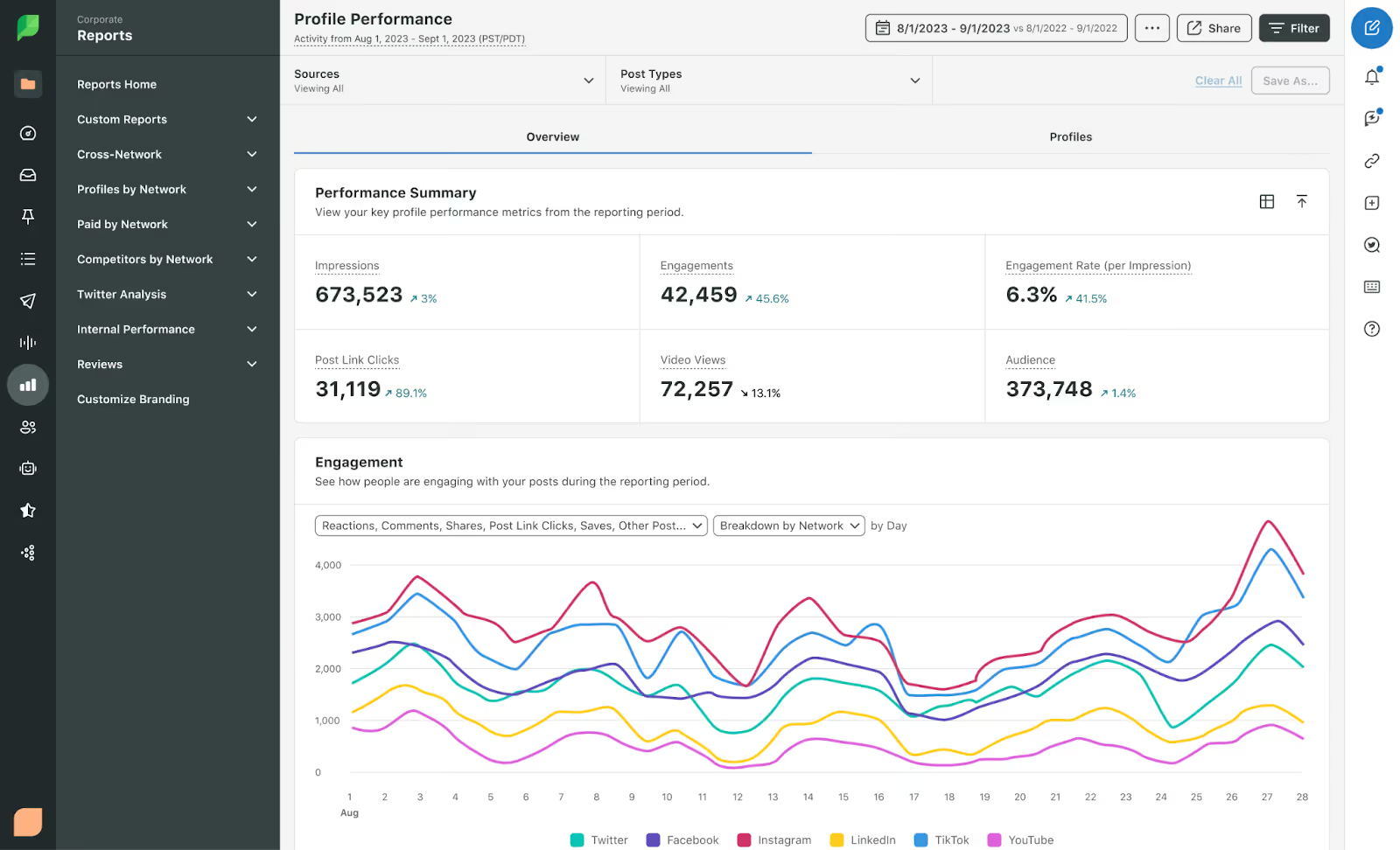
Scheduling posts and analyzing results. Explore tools like Buffer, Hootsuite, or Sprout Social to batch schedule and post across platforms. These services also allow you to clearly see the audience growth, overall and per publication engagement, organic and paid performance, hashtag performance, etc.
Analyze your results and continue improving
Even if you have a sound solopreneur social media strategy, ignoring your results and not iterating can lead to major failures. Track the performance of your social media posts weekly, monthly, and quarterly in your scheduling tools or using separate services like Google Analytics.
If your results don’t quite measure up to what you’ve hoped for, consider changing your approach. Sometimes, the issue might come from the type of content you publish or shifts in social media algorithms. For example, Instagram has been prioritizing video content, so investing in Reels creation might be better than continuing to post carousels. Other times, there might be a disconnect between your brand and tone of voice and what your audience is looking for.
If you want to do a complete overhaul, start from the beginning — analyze your competitors, contact your clients and followers to get their input, etc. Read about the recent social media platform updates and trends and try to incorporate those into your strategy as well.
Engage with your audience
To keep your social media presence active, respond to comments and messages from your customers and use hashtags to build engagement.
You don’t have to only react, though. You can be proactive and reach out to clients first, ask for reviews and feedback. If your niche allows for it, encourage user-generated content and repost what your clients share. This reinforces your brand and serves as social proof, showing prospective clients that you are trustworthy and have real impact.
Another effective strategy is to run contests and giveaways. They offer a boost in engagement and visibility and help more people discover your business.
Collaborate with other creators
If you’re growing your audience, consider working together with other creators in your niche. Aim at nano-influencers with a small yet dedicated following (from 1,000 to 10,000 followers) and commission sponsored posts or product reviews.
Network and create content together with professionals in your niche. For example, you can collaborate on posts on Instagram to engage both your and your collaborator’s audience.
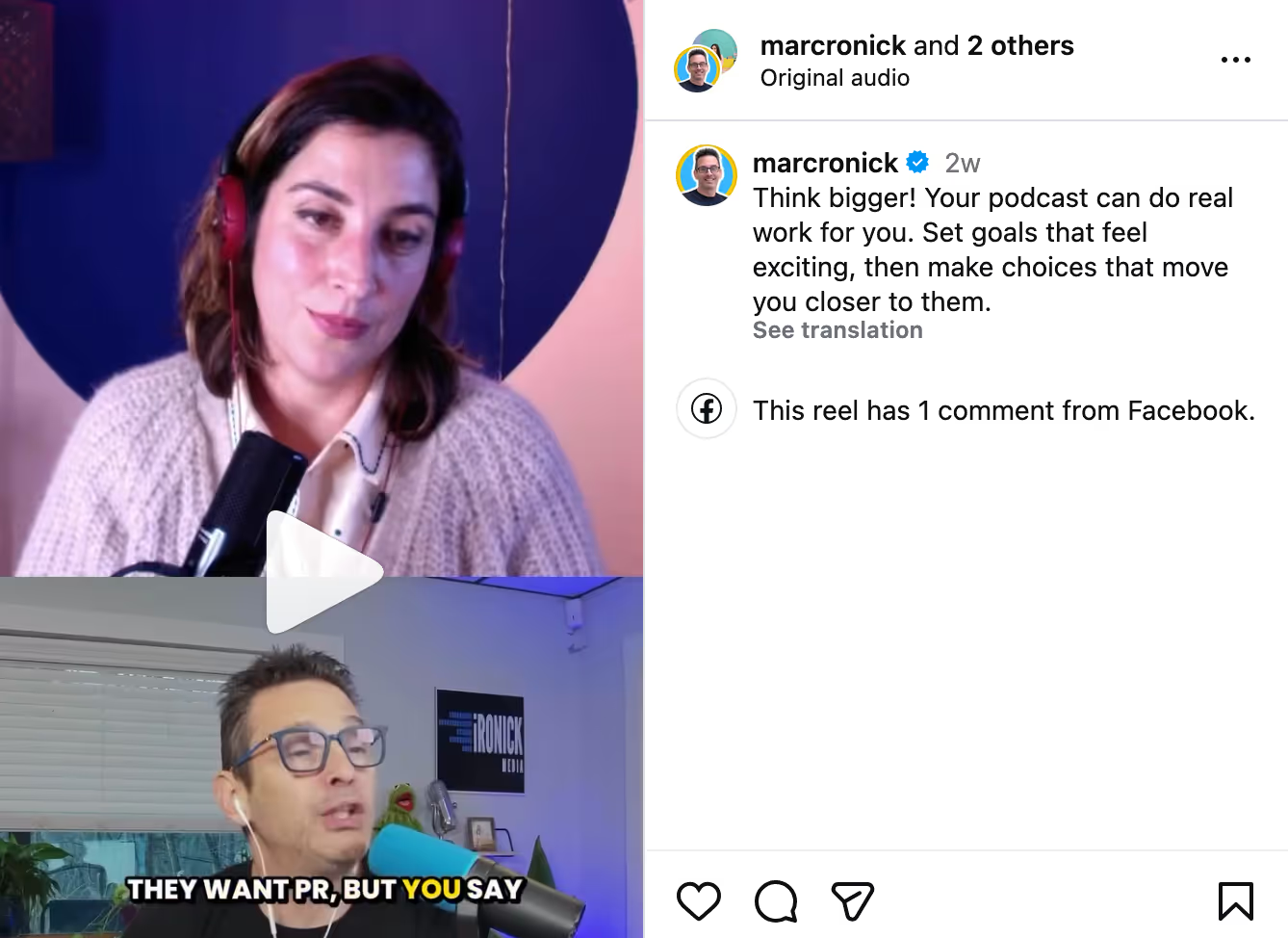
It’s also worth collaborating with other business owners and professionals you work with.
Instagram collaborations (vendors, planners, real humans...) created some of the most meaningful waves of visibility.
One of the newest examples is a wedding editorial shoot where I made a video for a Reel. There are about 5 collaborators (a wedding magazine, a wedding catering, an MUA, a wedding dress company, and me as a wedding photographer), and it brings lots of likes and comments. The Reel appears on these accounts that are part of the wedding industry, so for me, it means that any bride who would browse any of these accounts can discover my work and then possibly have a conversation about a booking for 2026. I guess this video was really special and extraordinary, something that people don't see every day, which increases engagement, in percentage, to more than 600%.
{{Marketa Sindlerova}}
Conclusion
Solopreneur social media is all about being strategic and smart about your time and resources. With the right approach and tools, even 3-4 hours weekly and one well-made post can help you reinforce your personal brand and get new clients. If you want great results, start by identifying your target platforms and keep referencing this article to make sure your social media marketing is effective.
FAQ




I’m an editor and copywriter working with SaaS and e-commerce companies to create engaging and effective content. With a background in journalism and creative writing, I value both storytelling and sound logic.
Learn moreI’m a film wedding photographer based in Prague, capturing love across the whole Europe. I document my couples in a way that feels honest and soulful thanks to film. I create space for people to feel seen.
I am a freelance virtual assistant based in the Philippines who specializes in bookkeeping, legal accounting, and backlink building. I began my freelance career in 2022 while balancing client work with my final year of college. Since then, I have supported international businesses by updating and organizing their accounting and bookkeeping records while also providing SEO services to help them strengthen their online visibility and search engine rankings.
We are here to ease your working routine
Whether you're freelancing or a full-time contractor, we simplify the working process, putting you in control.
Try it free

Gusto and Deel both help companies manage payroll and HR, but they serve different business needs. Gusto is a better fit for US-based small and midsize businesses that need simple payroll, tax filing, benefits, onboarding, and basic HR tools. Deel is better for companies hiring internationally, managing global contractors, or using Employer of Record services. This comparison breaks down their key differences in payroll, compliance, pricing, integrations, benefits, contractor management, pros and cons, and best use cases to help businesses choose the right platform in 2026.

Compare the best Deel alternatives for global hiring, payroll, EOR, and contractor payments. See pricing, coverage, pros, cons, and best use cases.
Running payroll for one employee still means tax calculations, filings, forms, and deadlines — so the cheapest option isn't always the best value. This guide compares affordable payroll services for a one-person business, breaking down real monthly costs, what's included, and which choice fits how you actually pay your worker.
