
Understanding Expense Reimbursement: How to Get Paid Back as a Freelancer
Freelancers often pay upfront. Learn the expense reimbursement process, what’s reimbursable, and how to avoid disputes.
December 12, 2025

Key Points
- Expense reimbursement means getting paid back for spending your own money upfront on business-related expenses. Both freelancers and traditional employees are eligible for expense reimbursement.
- Not all out-of-pocket expenses are automatically reimbursable, and you should agree on this with your client in advance.
- Make sure you keep all receipts, your client’s written approval, and any other documentation on hand. They’re what protects freelancers in payment disputes.
- When reimbursement becomes messy or delayed, it’s usually a sign to tighten your rules or to rethink working with this client altogether.
Covering out-of-pocket expenses is a normal part of freelance work. Unfortunately, the expense reimbursement process is often unclear for solopreneurs as opposed to salaried employees.
In this article, we’ll examine how reimbursement works for business-related expenses, how to make sure you get your money back, and how to protect yourself from common mistakes.
What is expense reimbursement?
You’ve probably heard of expense reimbursement, but let’s just rehash the definition and how it works in real life.
Basic definition in business terms
The simplest definition of expense reimbursement is basically getting paid back for money you spent on behalf of a business. An example of this would be travelling for work: you spend your own money on travel and lodging, and then the company reimburses you later once you submit the right documentation, usually a receipt and a short explanation of what the expense was for. Other things that are often reimbursed include software, supplies, or tools.
There are other financial terms that are similar to expense reimbursement, but they’re not the same thing. Let’s compare them:
How it traditionally works for employees
Most companies that reimburse their employees usually have a pretty structured process for this. Employees pay for a business expense upfront (think a client lunch, a taxi to a meeting, or a conference ticket), then they file an expense report, and their company reviews it. Most businesses have an expense policy that explains what counts as a reimbursable expense, what kind of receipts are required, and how long the approval and payment cycle usually takes.

Once the report is submitted, the employee’s direct manager reviews the details, checks the expense against the company’s policy, and either approves or rejects the request. After that, the finance team verifies the documentation and processes the reimbursement.
How expense reimbursement shows up for freelancers and solopreneurs
You don’t need to be an employee in a traditional sense to be reimbursed for your work expenses. Since Solowise is a platform for freelancers and solopreneurs, I’ll focus on how this process works for them for the rest of the article.
Reimbursable expenses for freelancers explained
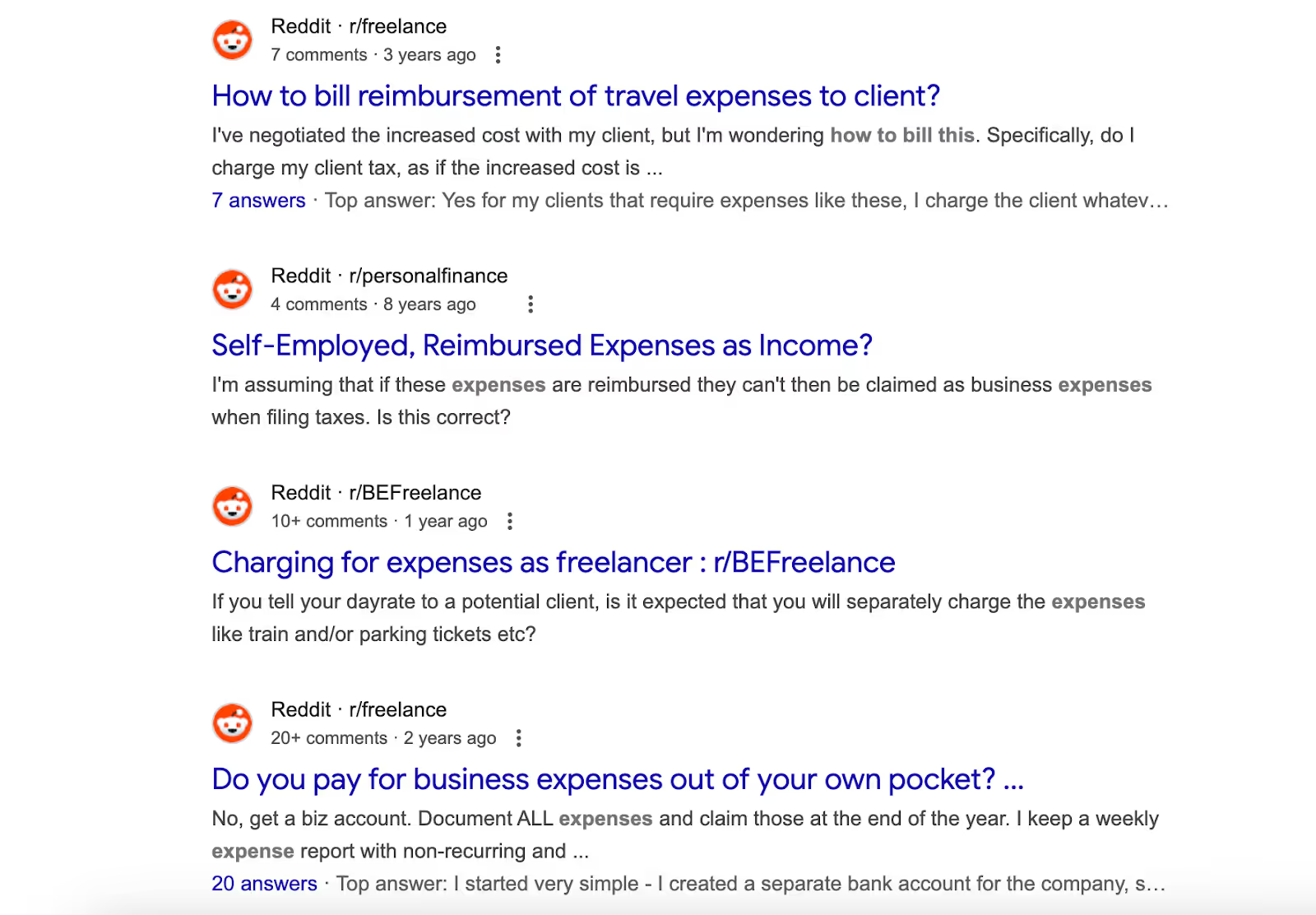
Freelancers often face situations where they cover work-related costs upfront. In these cases, reimbursement simply means the client pays you back for an agreed-upon expense that was necessary to complete the project. The concept is the same as employee reimbursement, but it’s just handled slightly differently: through client agreements as opposed to internal company policies.
My work experience focuses on digital strategy, paid advertising, and growth consulting services. I worked as a freelancer under my personal name until I needed to rush to Berlin for a workshop, so I requested flight and hotel reimbursement from the client. That same client surprisingly rewarded me with a €300 bottle of gin six months after our work together ended.
{{Vincent Carrié}}
Reimbursing vs just raising your rate
Sometimes the process of reimbursement is too much of a hassle, and it makes sense to just raise your rates for a project rather than seek reimbursement from your client.
If it’s something you need only because of that client, such as travel, physical materials, a test device, and so on, it makes sense to reimburse it. This approach keeps your rates honest.
If the expense is something you’ll use across multiple clients, such as your laptop or subscription services, that’s something you should bake into your price rather than invoicing it.
What counts as a reimbursable expense?
Let’s check out some of the most common reimbursable expenses freelancers and solopreneurs incur.
Project-specific costs
These are the expenses freelancers most commonly get reimbursed for, aka the things you only need because of a particular project or client. What exactly falls into this category is specific to the industry and niche you’re in, but it includes one-off software license, industry data, a paid plugin, physical materials, props, or any tool that isn’t part of your usual setup.
The idea here is straightforward: if the cost exists solely to deliver this client’s work, it shouldn’t come out of your general budget, and you should request reimbursement.
When I was a full-time controller before launching Spitz CPA, I regularly expensed software licenses — SmartView, specialized Excel add-ins, even a $400 annual subscription for a financial modeling tool my employer's IT didn't provision. I also billed back clients for third-party data fees when we needed industry comps for a PE pitch deck.
{{Michael J. Spitz}}
Travel, meetings, and communication costs
This is another really common reimbursable expense, both for freelancers and traditional employees who travel for work. And we’ve already seen an in real-life example of this earlier in the article — Vincent had to attend a workshop in Berlin, so he requested reimbursement for travel and accommodation.
Other common situations where you can reimburse travel expenses include attending client events or meetings, visiting a site, or running an on-location shoot. Aside from the costs associated with getting there and staying there, you can also often reimburse the costs of staying connected, such as roaming or temporary SIM cards.
Subcontractors, specialists, and external services
Sometimes you’ll encounter projects where your own skills or expertise won’t be enough, and you’ll have to hire other specialists. For example, this could include a photographer for a shoot, a developer for a feature, a translator, a video editor, a designer, a tester, or any other specialist you bring in to deliver the final result. The costs of hiring these professionals are normally reimbursable.
Some freelancers prefer to have the client pay subcontractors directly, while others invoice the client after paying the specialist upfront. Both approaches work, as long as the client agrees in writing to cover the cost before you book anyone.
Grey areas and non-reimbursable expenses
So far, we’ve covered everything you can reimburse. And what about the things you can’t? And things you’re unsure about? Unfortunately, freelancers often get burnt here. Clients will often draw a hard line between what they consider “essential” and what they view as optional, premium, or outside the project scope.
Here are some common grey areas:
- Upgraded or premium software
- Tools you use across several clients
- Training or certification (unless the client specifically requests it)
- Hardware replacement
- Convenience stuff, like faster shipping or nicer venues for client meetings
This might sound obvious in theory, but in practice, a lot of freelancers get tripped up in these grey areas!
If you're new to freelancing, never front four-figure expenses unless the contract explicitly lists them as reimbursable with a dollar cap and a payment timeline — I watched a freelance bookkeeper eat a $1,300 QuickBooks Advanced subscription because her client's contract only mentioned "standard software" and they considered Advanced a luxury upgrade.
{{Michael J. Spitz}}
To avoid situations like these, make sure you discuss the specifics with your client and get written pre-approval before paying for anything out of your own pocket. If they don’t explicitly agree to reimburse, they can (and often will) argue that it falls under your general cost of doing business.
The freelance expense reimbursement process
Here’s your step-by-step guide to reimbursement for freelancers.
1. Agree on the expense before you spend
This is possibly the most important step in the whole reimbursement process, and it takes place before you’ve actually spent any of your own money. Before you book anything, buy anything, or sign up for anything, the client needs to explicitly agree that the cost will be reimbursed. And it’s best to get approval in writing, so if something goes wrong, you have a paper trail to protect you.
My rule was always to get written approval before the purchase via a quick email saying "I need X to deliver Y by Z date, cost is $___—OK to expense?" and wait for a reply I could attach to my reimbursement request.
{{Michael J. Spitz}}
2. Tracking expenses and keeping documentation
Once you’ve discussed your expense with your client and they have approved it, the next step to take is to make sure you’ve tracked and documented everything. Nobody likes to carry around a stack of receipts, but it’s what makes reimbursement possible. If you can’t prove what you spent, when you spent it, and why it was project-related, getting paid back becomes a lot harder.
The single biggest mistake I see freelancers make is mixing business purchases onto personal cards without a clean paper trail. I keep every receipt in a dedicated Gmail label the day I spend, then log it in a simple spreadsheet with columns for date, vendor, amount, category, and client project code — it takes 90 seconds per transaction and saved me twice when a client's AP department "lost" my original submission. One late payment in 2019 got resolved in two hours because I forwarded a PDF with the original email approval, the receipt, and my log entry all in one thread.
{{Michael J. Spitz}}
3. Creating an expense report or adding a line to your invoice
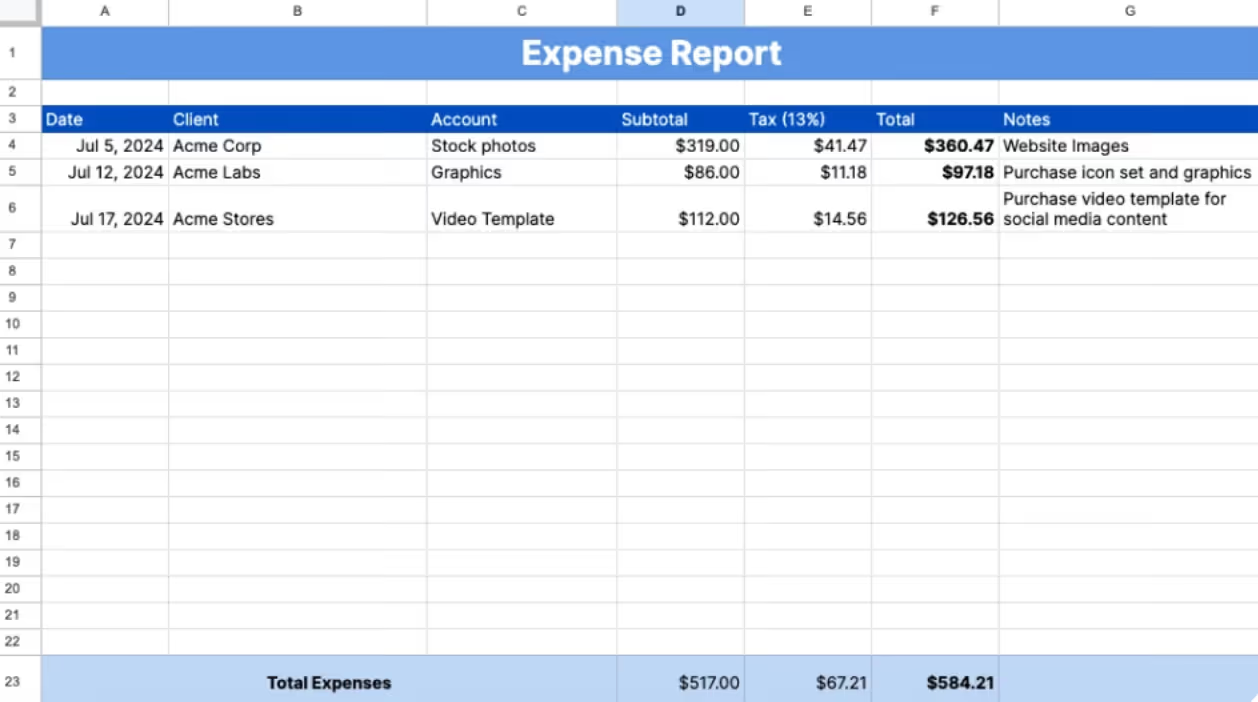
This stage is all about taking all of your expenses and documents and turning it into something your client can process (and reimburse you afterwards). There are two common ways to formalise your spending.
In more structured environments, including traditional employment, this looks like a classic expense report: a document where each cost is listed with the date, description, amount, and receipt attached. This is what the image below represents.
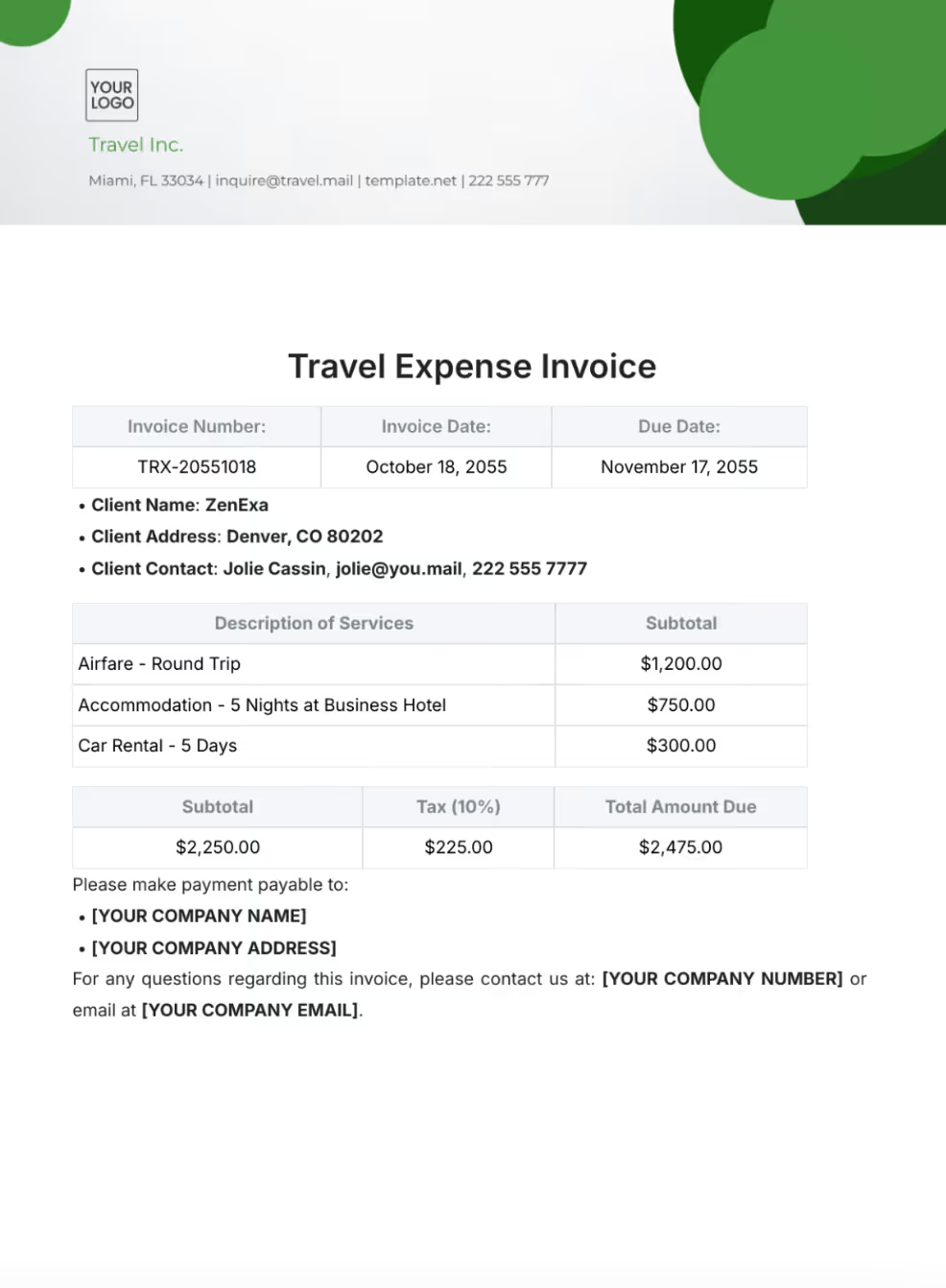
For most freelancers, though, an invoice detailing how much you spent and on what would be enough. You’ll usually see something like “travel expenses,” “project materials,” or “software license (client-approved)” added under your service fee, with the exact amount shown clearly. The image below is an example of an invoice like that. If you’ve never invoiced anyone before, you’ll be pleased to learn that there are loads of templates online you can use for free.
4. Submission, payment, and following up politely
Once you’ve submitted everything, there’s not much left to do but wait. In the best-case scenario, your client will process your reimbursement alongside the regular payment cycle with no extra effort.
However, things aren’t always as smooth in real life, and delays do happen. This is often due to internal approval chains, finance backlogs, or simple admin friction. If this happens to you, reach out to your client with a polite, documented follow-up.
A European financial services company once withheld €2,000 in reimbursement payments for over a month because their payment system needed additional processing time. I stopped all work delivery and looped in our legal team by forwarding the request email. The invoice was cleared and paid three days later.
{{Vincent Carrié}}
How to protect yourself with clear reimbursement rules
When traditional employees spend their own money upfront to be reimbursed by their employer later, they’re protected by HR, finance, or a formal expense reimbursement policy. On the other hand, when you’re freelancing, you don’t have a handbook that defines what’s reimbursable, what needs approval, or how much is “too much.” So you have to come up with your own set of rules, or your client will end up defining them for you (and not always in your favour). This is what this section is all about: helping you work out your own clear rules for reimbursement.
What to include in your policy
At the bare minimum, your reimbursement rules should answer three simple questions: what needs approval, how much is acceptable, and when you’ll get paid back.
I’m not suggesting you draft a 10-page legal document to answer these questions, but you do need to have clarity on the following:
- Pre-approval, or what expenses must be agreed on before you spend anything. Not every tiny expense needs to be approved in advance, but anything that’s unusual, expensive, or hard to undo should always be cleared first.
- Limits or expectations, not necessarily a strict budget per se, but an understanding of what is reasonable, like economy vs business travel, basic vs premium software, and mid-range vs luxury accommodation.
- Timelines, or when you’ll submit your expense report, and how quickly you expect to be reimbursed.
The easiest situations are the ones where the client already knows how they handle expenses and tells you upfront.
B2B SaaS and retail clients generally understood that campaign success required actual tools and personnel for execution. The ones offering better support usually maintained written guidelines or established a process requiring initial approval before any work began.
{{Vincent Carrié}}
How to communicate your policy to clients
In most cases, a few clear lines in your proposal, contract, or onboarding email are enough, just as long as you make sure that everything is documented in writing.
It doesn’t need to be awkward, either. If anything, your policy prevents awkwardness down the line. Here are some simple ideas you could include for simple and practical communication with clients about reimbursement:
- “Travel and accommodation are reimbursed with prior approval.”
- “Tools or external services are agreed on before purchase.”
- “Expenses are added as a separate line on the invoice with receipts.”
Tools and habits that make expense management easier
Accounting tools can really help keep track of everything related to payments. If you don’t want to use fancy software, that’s fine too. The real key to this is having one clear system and sticking to it. Some freelancers manage fine with spreadsheets and folders, while others prefer invoicing tools, accounting software, or expense tracking apps. Both approaches work, as long as everything ends up in one place.
I keep all client information organized through Notion and Google Drive folders with shared content access. That setup includes PDF receipts, active expense tracking, and regular financial statement reports. I inform my team via Slack about any expense over €50 before making a purchase.
{{Vincent Carrié}}
Common problems and how to handle them
Even if you have good habits and clear rules, reimbursement doesn’t always go smoothly. Let’s have a look at the most common issues and how to deal with them.
Client delays payment or “forgets” the reimbursement
Late payment is a massive issue for freelancers all over the world, so it’s no surprise that it crops up in the realm of reimbursement, too.
If this happens to you, follow up politely and in writing and attach all the relevant info (like the original approval and receipts). If delays become a pattern, stop fronting costs altogether for that client.
The best clients maintained written expense policies or had a straightforward requirement for obtaining approval before starting. The worst would approve my expense requests over email but then disappeared after I submitted the report. A verbal agreement quickly becomes worthless when the company’s CFO ignores it.
{{Vincent Carrié}}
Client disagrees that an expense was “business-related”
This one usually happens when the purpose of an expense wasn’t clearly documented. What felt obviously work-related to you may not look that way to someone in finance reviewing it later.
So, make sure you pre-approve business expenses with your client (especially if the costs are high), always add a short written description to the expense report or invoice (such as “plugin for client dashboard,” not just “software”), and link it clearly to the outcome of the project.
Missing receipts or fuzzy documentation
So, this one is on you! If you don’t have a receipt, you can’t expect to be reimbursed. You can avoid this by being proactive, like saving all the receipts the same day you spend something in a Dropbox folder, in your emails, or directly inside your accounting app. There are also tools with receipt-scanning features, which make keeping track of your spending really easy. Don’t forget to add an explanation to each receipt to make sure you remember what the expense was for.
A simple rule of thumb freelancers can use
If there’s one guideline that prevents most reimbursement disasters, it’s this: anything high-value should never be approved casually or verbally.
Any high-value item should have written approval from the client — it only takes two seconds to send a WhatsApp message that can protect you later. If a client hesitates to approve essential expenses that support your performance, it's usually a clear sign to rethink the relationship.
{{Vincent Carrié}}
A quick look at taxes and reimbursement
Since reimbursements are business expenses incurred for the client and supported by proper documentation, they’re usually not treated as taxable income. However, if an expense reimbursement isn’t clearly tied to a business-related expense, or if you bill it without supporting documentation, it can be treated as additional income. To avoid issues, keep receipts, submit clear reimbursement requests, and separate your service fees from reimbursements on your invoices.
This is general advice, tax rules vary country by country, so make sure to check your local specifics!
To wrap things up
Expense reimbursement might seem daunting or complicated, but it doesn’t have to be. Make sure you work out your own reimbursement policy, get approval in advance in writing, and make sure you keep all receipts.
FAQ
Can freelancers have their expenses reimbursed, or is it only for salaried employees?
Both freelancers and traditionally employed folks can get the money they spent on work-related matters back. If you’re a solopreneur, make sure your client agrees to it upfront.
What if a client asks me to “just include it in my rate” instead?
That’s fine, too. Make sure you adjust your rates accordingly!
Can clients use reimbursement to expand the scope of work?
Unfortunately, this does happen. If an expense only exists because the project expanded, that’s a scope change first, not just a reimbursement issue.
What if a client refuses to reimburse an approved expense?
If you have written approval and proper documentation, follow up calmly with the original approval attached. If they still refuse, treat it as a contract dispute, and don’t spend your own money on this client’s projects any more.
.avif)



I’m a bilingual writer and content strategist working across SaaS and digital media. I cover topics like marketing, tech, and the occasional niche curiosity.
Learn moreI operate Purple Media, a creative agency specializing in performance-based marketing with artificial intelligence solutions. I have worked as a freelancer and consultant while building teams throughout Europe and Southeast Asia.
I'm a CPA in Gilbert, Arizona with 15+ years of corporate accounting experience—I've managed everything from VC fundraising due diligence to monthly close for tech and service companies, so I've seen expense reimbursement from both the freelancer and employer side.
We are here to ease your working routine
Whether you're freelancing or a full-time contractor, we simplify the working process, putting you in control.
Try it free

Gusto and Deel both help companies manage payroll and HR, but they serve different business needs. Gusto is a better fit for US-based small and midsize businesses that need simple payroll, tax filing, benefits, onboarding, and basic HR tools. Deel is better for companies hiring internationally, managing global contractors, or using Employer of Record services. This comparison breaks down their key differences in payroll, compliance, pricing, integrations, benefits, contractor management, pros and cons, and best use cases to help businesses choose the right platform in 2026.

Compare the best Deel alternatives for global hiring, payroll, EOR, and contractor payments. See pricing, coverage, pros, cons, and best use cases.

Running payroll for one employee still means tax calculations, filings, forms, and deadlines — so the cheapest option isn't always the best value. This guide compares affordable payroll services for a one-person business, breaking down real monthly costs, what's included, and which choice fits how you actually pay your worker.
