
A Freelancer’s Guide to the Estonia Digital Nomad Visa
A clear guide to Estonia’s digital nomad visa: who can apply, income rules, documents, taxes, and what life there is like.
May 26, 2026

Key Points
- The Estonian digital nomad visa allows remote workers to live and work for foreign employers in Estonia for up to a year. After this, you can apply for another nomad visa that’ll be valid for six months.
- If you’re a business owner, remote employee, or freelancer, and if you make 4,500 euros a month or more, you’re eligible to apply.
- The Estonian digital nomad visa programme does not lead to permanent residency or citizenship.
- Estonia suits digital nomads who value strong digital infrastructure, clear rules, and a calm lifestyle.
Remote work is becoming more and more common, and so are digital nomad visas. They allow you to stay and work in a country legally while working for an employer or clients abroad. Estonia happens to offer a programme like that. In this article, I’ll explain exactly what the Estonian visa programme is like, who’s eligible to apply, what the application process is like, and any other nuances.
What is the Estonia digital nomad visa?
Ever dreamed about living in Estonia while earning abroad? I have good news for you! The Estonia digital nomad visa is designed for people who work remotely and want to live in Estonia legally. Officially launched on 1 April 2020, it’s aimed at remote professionals, freelancers, and entrepreneurs whose job doesn’t entail them being present in one place.
A big difference between Estonia’s digital nomad visa rules and those of other countries is that you can actually work for an Estonian company as well as remotely. Most countries limit digital nomad visa holders to remote employment only. In Estonia, you’re allowed to take on additional work for an Estonian company, as long as this is not the main purpose of your stay. Let’s visualise this with an example. Imagine you work remotely as an IT specialist for a foreign company. This means that you may also do some extra IT assignments for an Estonian company while living in Estonia.
E-Residency vs the Estonia digital nomad visa
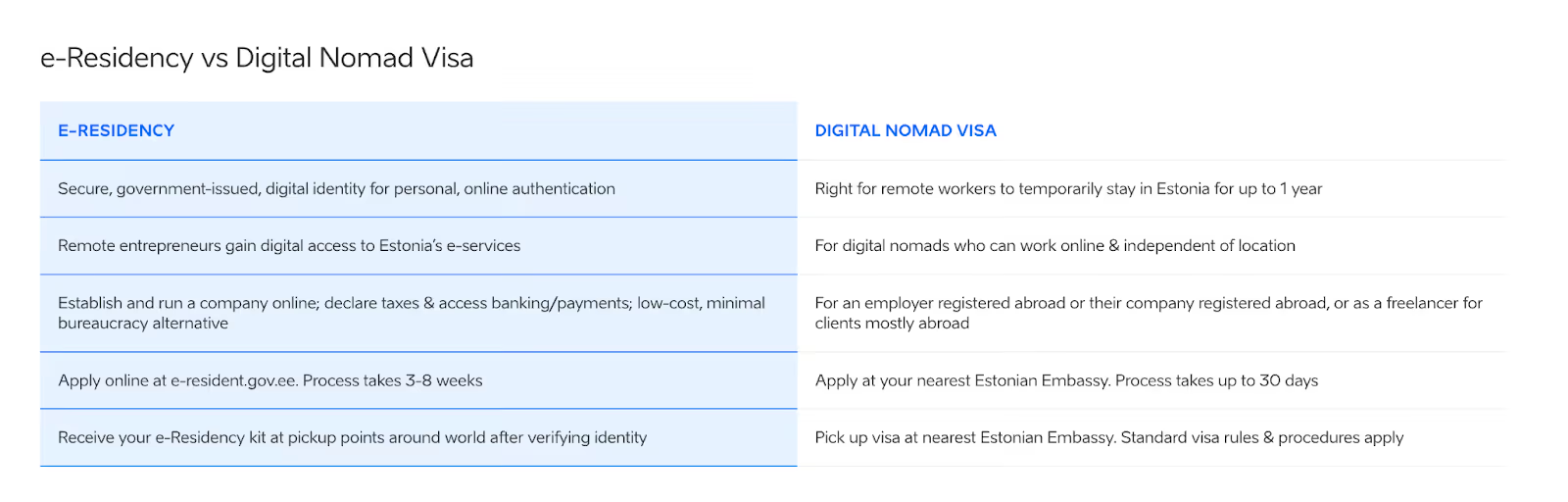
Before launching the digital nomad visa, Estonia already had a different programme called e-Residency. Launched in 2014, e-Residency allows you to access Estonia’s online services from anywhere in the world. With e-Residency, you can:
- Start and run an Estonian company online
- Sign documents digitally
- Manage business admin remotely
e-Residency is popular with freelancers and entrepreneurs who want to run a business with minimal paperwork. However, it’s important to understand that unlike the digital nomad visa, e-Residency does not give you the right to live, travel, or stay in Estonia or the EU. Check out this table provided by the Estonian government comparing the two programmes.
How long can you stay in Estonia on the digital nomad visa?
The digital nomad visa lets you stay in Estonia for up to one year. One major difference between Estonia’s digital nomad programme and those of other European countries, such as Spain or Portugal, is that the digital nomad visa doesn’t grant you the right to eventual permanent residence or citizenship in Estonia.
According to the Estonian government, once you get your digital nomad visa, you can’t extend it. You can, however, reapply for the same visa again, but there is one important limit to keep in mind. Under EU rules, a foreign national can stay on long-stay visas for a maximum of 548 days within any 730-day period (roughly 18 months over two years). In practice, this means that your second digital nomad visa will only be valid for six months, and you’ll have to leave Estonia after that.
Why choose Estonia as a digital nomad?
Many remote workers are choosing Estonia as their base. And that’s not surprising! In fact, Estonia, which prides itself on being a digital society, is one of Solowise’s top locations for digital nomads. In general, most public services are available online, paperwork is limited, and many processes can be handled remotely.
In terms of lifestyle, Estonia offers a calm and safe vibe. It’s not known as a party destination, and if you’re looking for somewhere you can tan on the beach year-round, Estonia is probably not for you.
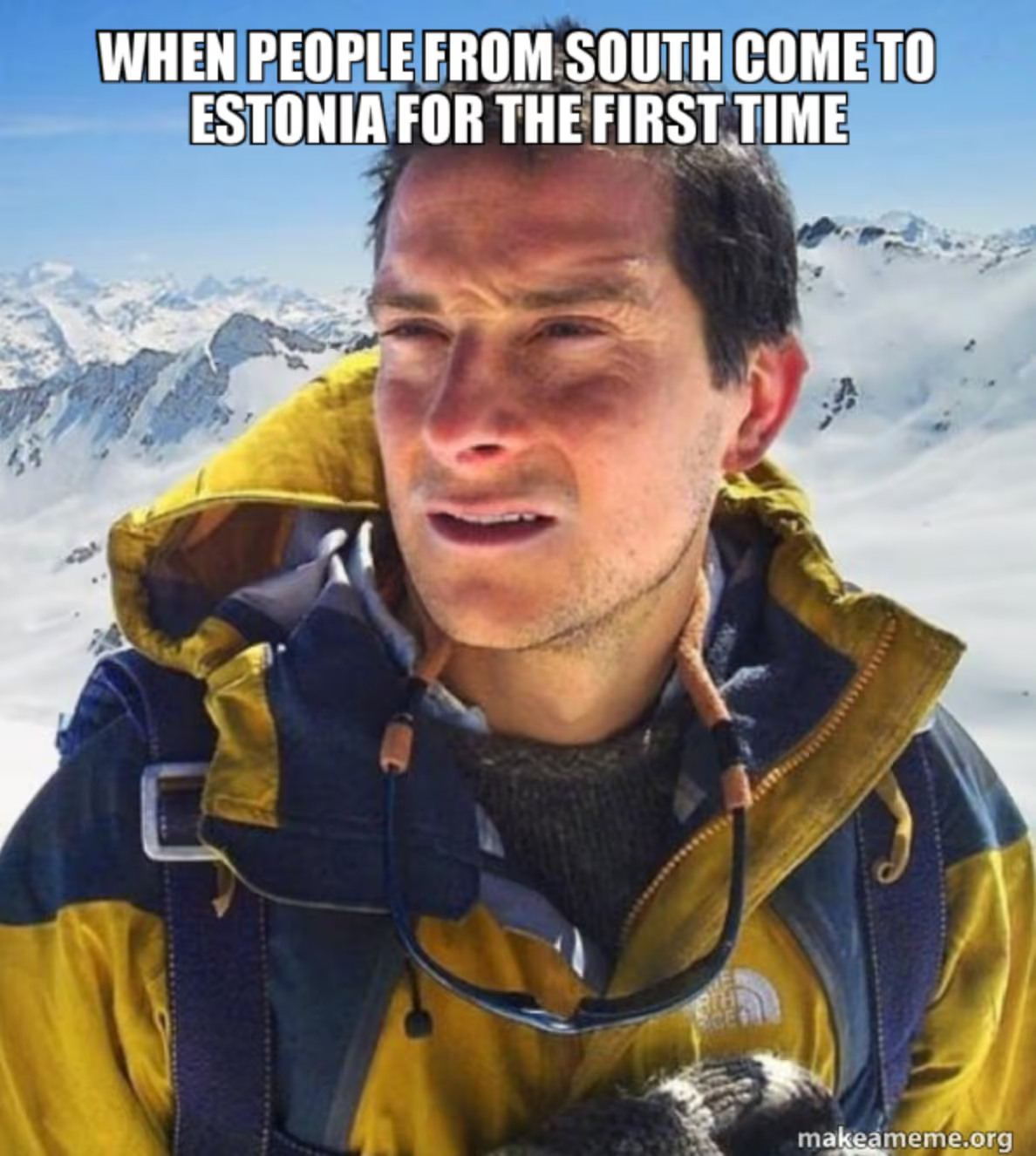
However, its delightful, compact cities, highly functional public infrastructure, and wonderful northern European nature more than make up for it. Visa-free access to the Schengen area is another huge bonus. In general, Estonia will be a good fit for you if you enjoy quieter places, cold weather, and clear rules.
Clients often choose Estonia for its pioneering digital infrastructure – it's the birthplace of e-Residency, offers gigabit-speed internet everywhere, and has a strong tech/startup ecosystem (home to companies like Skype and Bolt). The Schengen access for easy European travel, high quality of life, safety, and beautiful nature (forests and Baltic coast) are big draws. Many also appreciate the straightforward visa rules compared to other EU countries.
{{Continental Immigration}}
Who is eligible for the Estonia digital nomad visa?
Curious to learn more? Let’s find out together if you’re eligible for Estonia’s digital nomad visa.
Nationality requirements
If you’re a citizen of the European Union, one of the European Economic Area countries, or Switzerland, you don’t need to worry about any of this. You can live and work in Estonia under the EU’s free movement provisions. Everyone else is free to apply regardless of where they’re from, with the exception of citizens of Russia and Belarus.
Income requirements and employment status
The key figure to remember here is 4,500 EUR. You need to be able to show that you’re earning at least this much a month. This amount is based on the 150 EUR per day benchmark. According to the Estonian government, you don’t need to show that you have enough money to cover the entire year in advance. In practice, the Estonian authorities expect you to have enough funds for at least the first month.
When you apply, you’ll need to provide proof of your legal income over the past six months, and each application is reviewed on a case-by-case basis. There are also no requirements on the kind of work that you do; it can literally be in any field. This visa is open to people who work remotely in one of the following ways:
- Freelancers working mainly for clients outside Estonia
- Remote employees working for a foreign employer
- Business owners running a company abroad.
Your income doesn’t need to come from one source, either. Obviously, salary from a foreign employer, or freelance and contract work, count towards the 4,500 euro-a-month requirement. But you can also show dividends or director’s fees, rental income, or investment returns.
What documents do you need?
Bureaucracy is annoying, there’s no way around it! Nobody likes paperwork and stressing about visas. However, what sets Estonia apart from many other countries with digital nomad programmes is the availability of official information about what paperwork you need, how to apply, and the waiting times. Let’s go through the list of documents you need to apply.
Proof of remote work
The first order of business is proving that you do actually work remotely. If you’re working as a traditional employee, this might look like an employment contract or an official letter (saying you’re allowed to work independently of your location) from a foreign business. If you’re freelancing or consulting, you can provide client agreements or service contracts. You can also write a short explanation detailing how you plan to work remotely in Estonia.
If you own your own business, you can show that your company is registered abroad and provide confirmation of your role or ownership.
When it comes to freelancers, they might not always have a formal contract. In this case, emails or written agreements can also be accepted, as long as they clearly show that you provide services and get paid for them.
Financial documents
We’ve already discussed that you must earn at least 4,500 EUR monthly, based on income from the past six months, to qualify. There are several documents you can provide to prove that this is the case.
Financial documents can include:
- Bank statements
- Payslips or salary statements
- Invoices and payment confirmations
- Dividends, director fees, rental income, or investment income
Remember, you don’t need to prove that you have enough money to last you the whole year. Applications are reviewed case by case, and authorities look at your income history and overall financial situation together.
Other required documents
Don’t forget about the usual documents that you need to apply for any visa, not just the digital nomad one. They include:
- A passport issued within the last 10 years and valid for at least three months after your visa expires
- A completed visa application form
- Health insurance with coverage of 30,000 EUR for the duration of your stay
- A photo of you
- Payment for the visa application fee
Applying for the Estonia digital nomad visa
Once you’ve got your documents ready, it’s time to apply.
How to apply, step by step
Step 1. Choose where to apply.
There are three official ways to apply for the digital nomad visa. The most straightforward is at the Estonian embassy or consulate in your country. If you’re in Estonia legally already, you can get an appointment with the Police and Border Guard. If your country doesn’t have an Estonian embassy, you can travel to the nearest one that does. Alternatively, you can apply via VFS visa application centres, but this option is only available in the USA, Canada, Australia, Japan, and Ukraine.
Step 2. Book an appointment.
Most embassies, consulates, and VFS offices require you to book an appointment in advance. Always check the local rules before you go. Do bear in mind that appointments might not be available immediately, so you’ll need to factor that into your timeline. Make sure you bring all the documents I listed above!
Step 3. Apply and wait.
After you submit your application, the authority handling it will review everything in full and carry out background checks, just like with any other Estonian visa. The review process takes at least 15 days, and in most cases around 30 days. If you’re missing documents it might take longer than that.
Step 4. Pick up your visa.
If your application is successful, you’ll be notified about the next steps. They involve visiting the Estonian embassy abroad or the Police and Border Guard in Estonia itself again to verify your identity and pick up your visa.
The process is relatively smooth and efficient (15-30 days approval if documents are perfect), but strict on income proof (€4,500+ gross/month for the last 6 months) and remote work verification.
Common feedback: "Straightforward once prepared, but the high income threshold can be a hurdle for some freelancers." No major changes in 2025.
{{Continental Immigration}}
Visa fees
The cost of the Estonia digital nomad visa depends on the type of visa you apply for. There are two options: 100 EUR for a long-stay D-visa (up to 1 year) and 80 EUR for a short-stay C-visa (up to 90 days). Most digital nomads apply for a D-visa for longer stays, while a C-visa is useful if you only plan to stay in Estonia short term.
Please bear in mind that these are just the state fees. If you’re applying via a VFS centre, you might also have to pay their own processing fees in addition to the ones I just listed. Visa fees are non-refundable, even if you get rejected.
Living in Estonia as a digital nomad
So, you arrive in Estonia, your digital nomad visa in hand. Where should you live? Where should you work? What’s the situation with taxes? Let’s find out.
Best cities for remote workers
I may be biased, of course, but if I were to move to Estonia tomorrow, I would totally pick Tallinn. It’s one of my favourite northern European capitals! It’s the biggest city, the most international, and the easiest place to settle into daily life. English is spoken widely, everything is digital, coworking spaces are aplenty, and the city is still compact enough that commuting won’t take hours.
The vast majority settle in Tallinn – it's vibrant, English-friendly, has excellent co-working spaces (like Lift99), and a medieval old town mixed with modern vibes.
{{Continental Immigration}}
Tartu is another good option for digital nomads, especially those who want a quieter vibe. It’s a university city with a strong academic and research culture, which gives it a more laid-back, focused feel compared to Tallinn. The cost of living is generally lower.
Internet, SIM cards, and everyday essentials
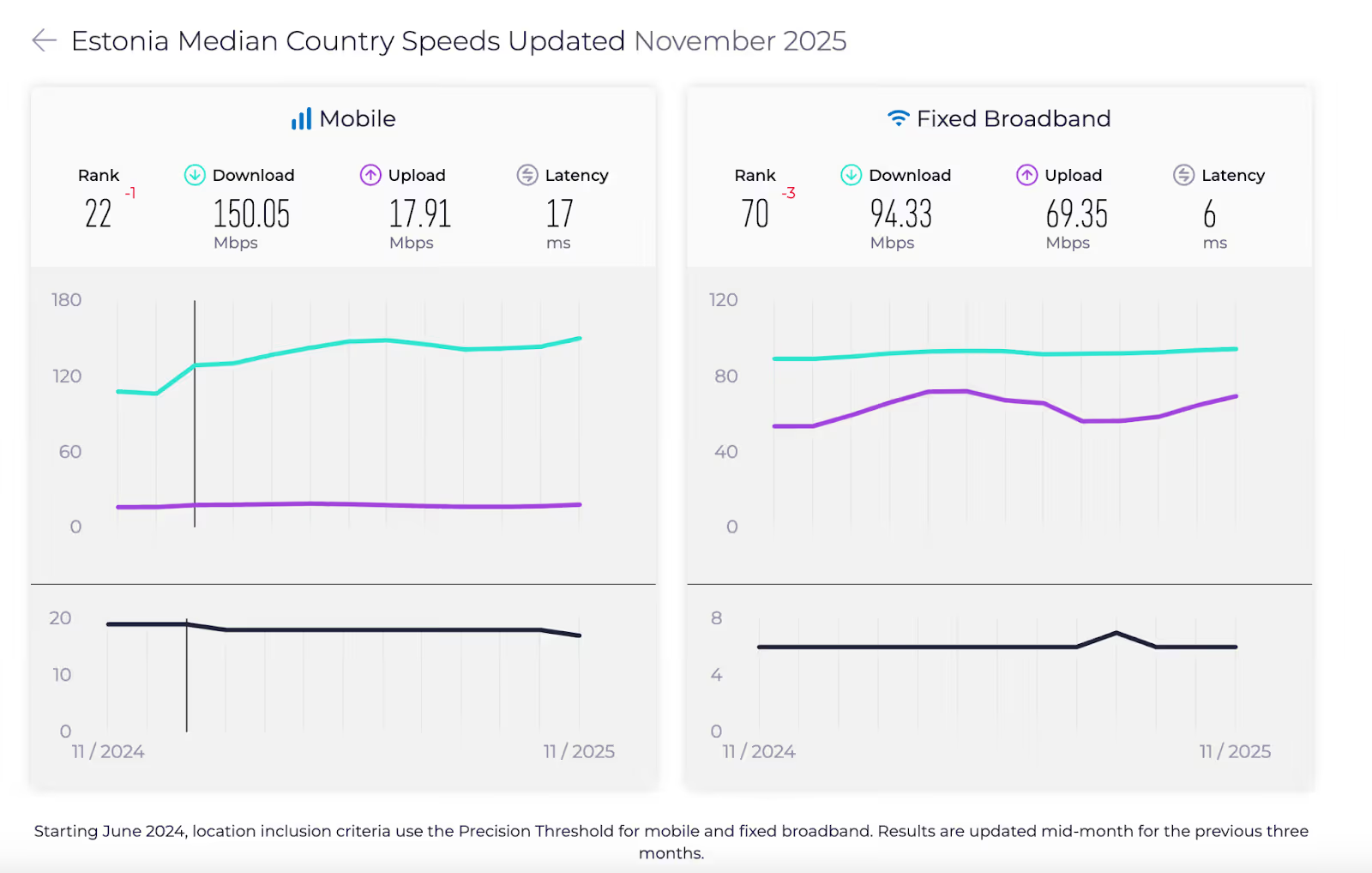
Estonia is very well connected, so you won’t have any problems staying online. Getting a SIM card is straightforward. Local providers offer prepaid SIM and eSIM options that are easy to buy at airports, convenience stores, or mobile shops, and mobile data is reasonably priced.
What about taxes?
Tax rules for digital nomads can be tricky, and Estonia is no exception. Broadly speaking, if you spend more than 183 days within 12 months in Estonia, you become a tax resident. If that happens, you’ll have to declare and pay taxes in Estonia on your income, including income earned from abroad. If you don’t become a tax resident, you’ll only have to pay taxes on the money you earn in Estonia itself. The one thing to note here is that Estonia avoids double taxation with other countries through tax treaties. If you’re ever in doubt, you should seek professional tax advice!
Pros and cons of the Estonia digital nomad visa
Let’s have a look at the advantages and disadvantages of being a digital nomad in Estonia.
Pros
- Estonia was one of the first countries to formalise remote work, so the rules around the digital nomad visa are relatively clear and well defined.
- The digital infrastructure of Estonia is very strong.
- Living in Estonia gives you access to the whole Schengen area.
Cons
- The income requirements (4,500 euros a month) are higher than other countries that offer digital nomad programmes.
- The visa is strictly temporary and doesn’t lead to permanent residency or citizenship.
- The cold climate isn’t for everyone.
Conclusion
And that’s all there is to getting started with Estonia’s digital nomad visa programme! If you were considering moving to Estonia, I hope this article gave you enough inspiration to make it happen in 2026! And if Estonia doesn’t sound like a good fit, check out our articles on digital nomad visas in Turkey or Germany.
FAQ
How long can you stay?
In total, you can stay for up to 18 months. Your first digital nomad visa will be valid for one year. After that, you can apply again for the same visa for another six months.
Can you bring your family?
Yes you can! As a digital nomad, you can bring your spouse and minor (or dependent adult) children. Family members must submit their own visa applications, but if approved, they are generally issued visas under the same conditions. You’ll need to submit documents proving your relationship, like marriage certificates or birth certificates. These documents must be apostilled or legalised by the relevant authorities in your home country and by the Estonian authorities.
Do you pay taxes in Estonia?
If you stay in Estonia for more than 183 days in a year, you’ll become a tax resident, and you’ll have to pay taxes on all your income, earned both in Estonia and abroad. If you don’t become a tax resident, only your income generated in Estonia will be taxed.
Can freelancers apply?
For sure! Freelancers are eligible if their clients are mostly based outside Estonia and they meet the income threshold.
.avif)

I’m a bilingual writer and content strategist working across SaaS and digital media. I cover topics like marketing, tech, and the occasional niche curiosity.
Learn moreContinental Immigration Consultancy Services Pvt Ltd, a renowned global visa agent and trusted immigration consultant since 2012. If you’re looking for a reliable visa agent in Delhi, choose Continental Immigration for hassle-free and successful immigration services. With years of expertise, our team of professionals provides end-to-end support for tailored solutions for various visa requirements, including tourist, visit, business, student, dependent, and immigration-related matters.
We are here to ease your working routine
Whether you're freelancing or a full-time contractor, we simplify the working process, putting you in control.
Try it free

Gusto and Deel both help companies manage payroll and HR, but they serve different business needs. Gusto is a better fit for US-based small and midsize businesses that need simple payroll, tax filing, benefits, onboarding, and basic HR tools. Deel is better for companies hiring internationally, managing global contractors, or using Employer of Record services. This comparison breaks down their key differences in payroll, compliance, pricing, integrations, benefits, contractor management, pros and cons, and best use cases to help businesses choose the right platform in 2026.

Compare the best Deel alternatives for global hiring, payroll, EOR, and contractor payments. See pricing, coverage, pros, cons, and best use cases.

Running payroll for one employee still means tax calculations, filings, forms, and deadlines — so the cheapest option isn't always the best value. This guide compares affordable payroll services for a one-person business, breaking down real monthly costs, what's included, and which choice fits how you actually pay your worker.
