
10 Best Payroll Service for Churches: Top Solutions 2026
Church payroll comes with unique rules — clergy taxes, housing allowances, and a mix of W-2 employees and 1099 contractors. This guide compares the 9 best payroll services for churches and shows how to choose the right one for your ministry.
June 3, 2026
Church payroll is not the same as regular small business payroll.
A church may have pastors, part-time staff, musicians, childcare workers, office administrators, contractors, guest speakers, and volunteers. Some workers may be employees. Others may need 1099s. Ministers may have special tax treatment. Housing allowances can affect how compensation is reported. And in many churches, payroll is handled by a pastor, treasurer, office manager, or volunteer who does not work in payroll full time.
That is why choosing the right payroll service matters. The best payroll service for churches should do more than send paychecks. It should help churches pay staff correctly, stay compliant, keep records organized, and reduce the risk of costly tax mistakes.
Below are the best payroll services and software options for churches, along with the features to look for before choosing one.
What Makes Church Payroll Different?
Church payroll has several details that many general payroll tools do not handle well.
The biggest difference is clergy payroll. Ministers often have a dual tax status. For federal income tax purposes, they may be treated as employees, but for Social Security and Medicare taxes, they are usually treated as self-employed. This means churches need to be careful when setting up tax withholding and payroll records.
Housing allowance is another major issue. Many churches provide pastors with a housing or parsonage allowance. This amount may be excluded from federal income tax if handled correctly, but it still needs to be tracked and reported properly.
Churches may also pay both employees and contractors. A full-time office administrator may need a W-2, while a guest speaker, temporary musician, or outside consultant may need a 1099. Some churches also have part-time or bi-vocational staff who work only a few hours per week.
Because of these details, churches should look for payroll providers that understand:
- Clergy tax treatment
- Housing allowance setup
- W-2 and 1099 preparation
- Federal, state, and local payroll tax filing
- Direct deposit and check payments
- Contractor payments
- Part-time and hourly staff
- Accounting integrations
- Role-based permissions
- Clear payroll reports
A generic payroll tool can work for some churches, but only if it lets you configure church-specific pay types and tax settings correctly.
Best Payroll Services for Churches
1. Solowise
Solowise Payroll Service is a practical option for churches, ministries, and nonprofit teams that need a simple way to create invoices, sign contracts, and receive payments.
The platform helps users generate invoices in one click, download them from a personal account anytime, and send them to the customer. This can be useful for churches that work with contractors, guest speakers, consultants, remote workers, or international service providers and need clear payment documentation.
Solowise also supports fast contract signing. Users can sign contracts with customers in a few minutes and start working through Solowise right away. The platform can automatically create contracts using templates that include the needed legal and financial details. It also tells users which document they need to form and sign, making the process easier for people who do not handle contracts every day.
Payments are transferred to the user’s personal account balance. From there, the money can be withdrawn in a convenient way. This makes Solowise especially relevant for churches and nonprofit teams that need to manage payments to external workers or international contractors without building a manual invoicing and contract workflow from scratch.
Best for: churches, ministries, nonprofits, contractors, and international service providers that need invoicing, contracts, and flexible payouts in one workflow.
Key features:
- One-click invoice generation
- Downloadable invoices from a personal account
- Fast contract signing with customers
- Automatic contract creation from templates
- Guidance on which document needs to be formed and signed
- Payments transferred to a personal account balance
- Flexible withdrawal options
Potential drawbacks:
- Best suited for contractor-style or service-provider payment workflows
- Churches may still need a separate payroll system for regular W-2 employees, clergy payroll, and tax filing
- Tax and legal setup should still be checked with a qualified professional when needed
2. Gusto
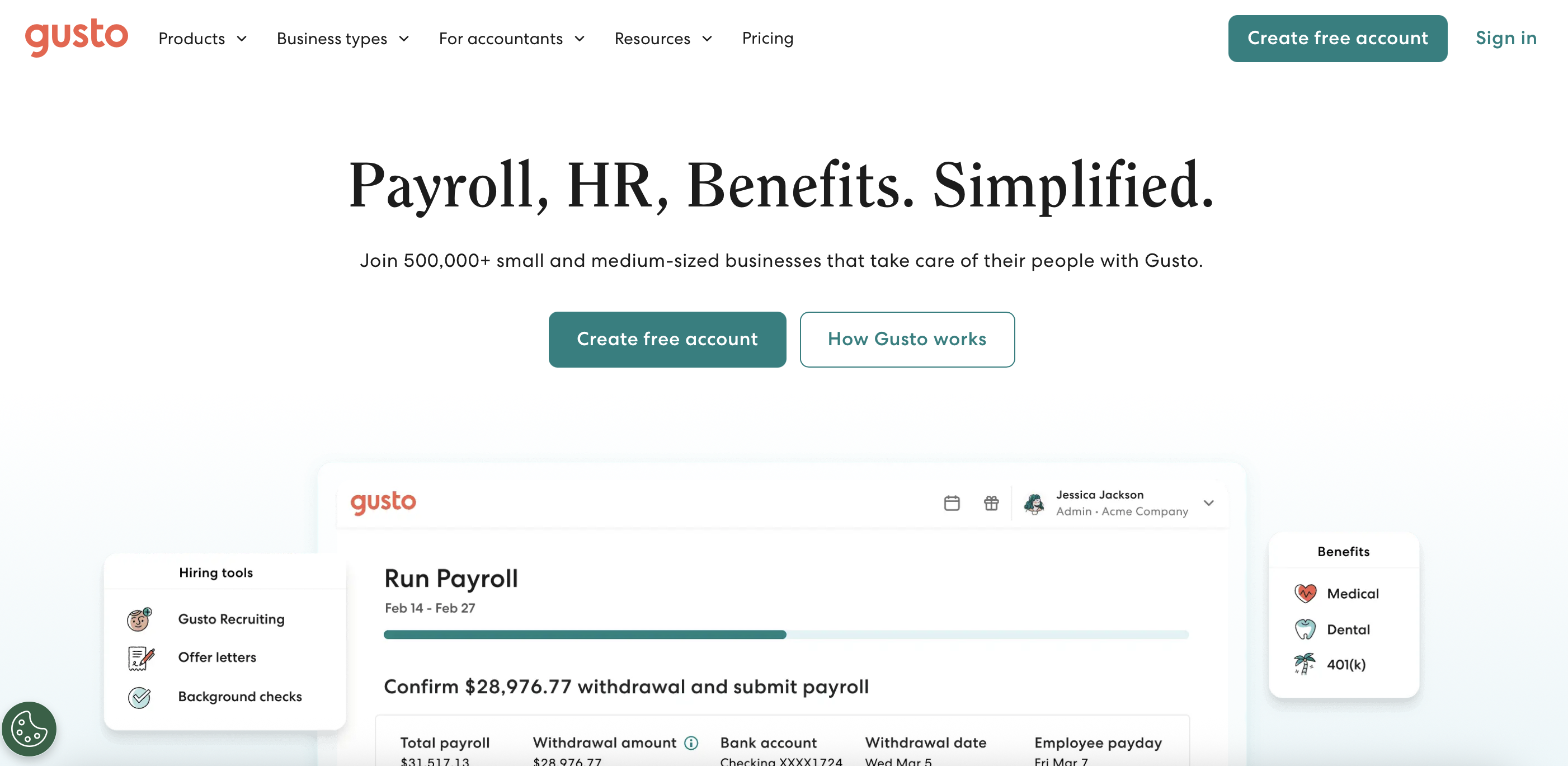
Gusto offers full-service payroll, automatic tax filing, direct deposit, employee self-service, benefits administration, onboarding tools, and integrations with accounting platforms such as QuickBooks, Xero, and Aplos. For many small and mid-sized churches, this combination is enough to simplify day-to-day payroll work.
Gusto is designed for small businesses and small teams, so it is simple to set up and use even if it is your first time running payroll. Churches can run payroll in minutes from anywhere, which is useful for pastors, administrators, or volunteer treasurers who need a system that does not require a full payroll department.
Gusto also calculates payroll taxes and automatically files them with state and federal agencies. This can help churches reduce manual tax work and avoid missed payroll deadlines. The platform supports unlimited payroll runs, which is helpful if a church pays salaried staff, hourly workers, part-time employees, or occasional bonuses on different schedules.
Best for: small and mid-sized churches that want modern payroll software with tax filing, benefits, HR tools, and transparent pricing.
Key strengths:
- Easy setup and simple payroll runs
- Payroll can be run in minutes from anywhere
- Automatic payroll tax calculation and filing
- Unlimited payroll runs for hourly and salaried employees
- Employee self-service
- Built-in time tracking and PTO policies
- Health benefits administration
Potential drawbacks:
- Not built specifically for churches
- Clergy tax treatment and housing allowance setup may require extra attention
- Advanced HR support or more complex features may require higher-tier plans
3. OnPay

OnPay is another strong payroll service for churches, especially those that want unlimited payroll runs, flexible permissions, and straightforward pricing.
One of OnPay’s advantages is its ability to handle different types of workers. Churches often need to pay salaried staff, hourly employees, part-time workers, and contractors. OnPay supports W-2 employees and 1099 contractors, making it useful for churches that pay guest speakers, musicians, childcare workers, or seasonal staff.
OnPay also includes HR features, benefits administration, direct deposit, payroll tax filing, and integrations with tools such as QuickBooks and Xero. Its permission settings can help churches delegate payroll tasks without giving every user access to sensitive information.
This is important because church payroll is often shared between several people. For example, a church administrator might enter hours, while a treasurer reviews reports and a pastor approves final payroll. Role-based access helps keep payroll organized and secure.
OnPay is a good choice for churches that want payroll flexibility without paying for a large enterprise system. However, it may not offer as many church-specific integrations as some ministry-focused platforms.
Best for: churches that need unlimited payroll runs and flexible worker management.
Key strengths:
- Unlimited payroll runs
- Employee and contractor payments
- Payroll tax filing
- Role-based permissions
- HR and benefits tools
- QuickBooks and Xero integrations
Potential drawbacks:
- Not a church-only provider
- Limited ministry-specific integrations
- Some HR advisory support may cost extra
4. MinistryWorks
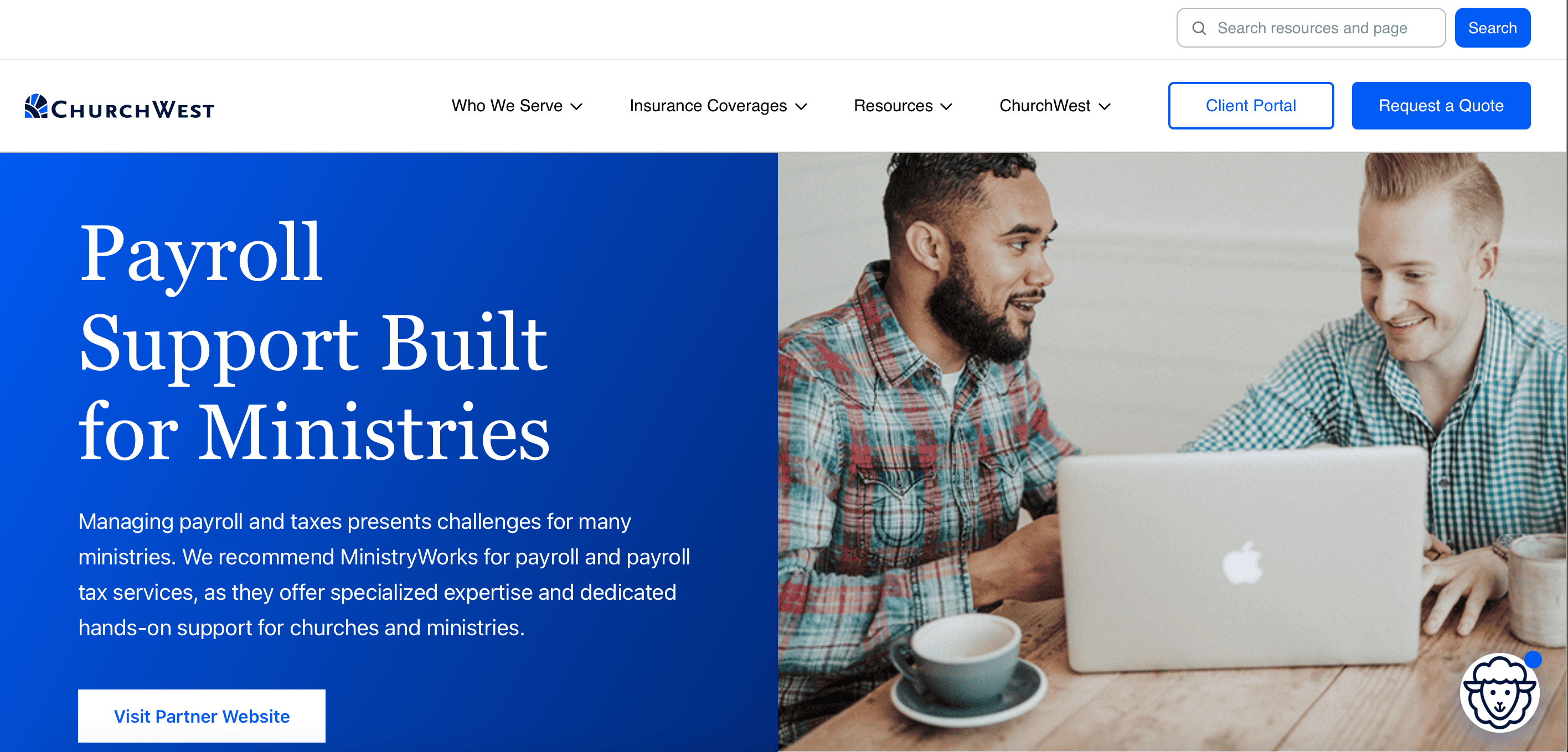
MinistryWorks is designed specifically for churches and ministries. That makes it one of the most relevant options for churches that want payroll support from people who understand clergy tax rules.
Unlike general payroll providers, MinistryWorks focuses on ministry payroll. It can help with clergy compensation, housing allowance, tax filings, direct deposit, checks, employee records, and new hire reporting. Churches also get access to payroll specialists who work with ministry clients.
This can be valuable for churches that do not have an experienced payroll administrator. A church-specific provider can reduce the chance of mistakes when setting up pastors, allowances, exemptions, and church payroll tax rules.
MinistryWorks may not be the most flexible or modern software option compared with general platforms. It may have fewer integrations and fewer customization options. But for churches that care most about church-specific payroll support, it is worth considering.
Best for: churches that want dedicated ministry payroll expertise.
Key strengths:
- Built for churches and ministries
- Clergy payroll support
- Housing allowance handling
- Payroll tax filing
- Direct deposit and check payments
- Dedicated payroll specialists
Potential drawbacks:
- May have fewer integrations
- May be less flexible than broader payroll platforms
- Some services may involve extra fees
5. QuickBooks Payroll
QuickBooks Payroll is a practical choice for churches that already use QuickBooks for bookkeeping or accounting.
The biggest advantage is integration. When payroll and accounting are connected, churches can reduce duplicate data entry and keep financial records cleaner. Payroll expenses can sync into the accounting system, which makes reporting and reconciliation easier.
QuickBooks Payroll includes direct deposit, automatic tax calculations, payroll tax filing, employee benefits, same-day or next-day deposit on some plans, and reporting tools. It can also support multiple pay types, which may help churches track housing allowance or other compensation categories.
However, QuickBooks Payroll is not a church-specific payroll service.
Best for: churches already using QuickBooks for accounting.
Key strengths:
- Strong QuickBooks integration
- Direct deposit
- Payroll tax filing
- Benefits options
- Payroll reports
- Useful for bookkeeping consistency
Potential drawbacks:
- Not church-specific
- Some tax filing or support features may require higher plans
- Clergy setup may require extra care
6. SurePayroll
SurePayroll can be a good fit for churches looking for a budget-friendly payroll service with flexible options.
It offers full-service payroll, automatic tax filing, direct deposit, employee benefits, and payroll reports. Some plans may allow churches to handle tax filing themselves, which can lower costs if the church already has someone comfortable managing payroll taxes.
This flexibility can be helpful for smaller churches with limited budgets. A church with only one or two paid employees may not need a large HR platform. It may simply need reliable payroll processing, tax forms, and direct deposit.
However, churches should be cautious about choosing a lower-cost plan that requires manual tax filing. Saving money upfront may not be worth it if it increases compliance risk or creates more work for a volunteer treasurer.
SurePayroll is a good option for churches that want affordable payroll and do not need advanced HR or church-specific features.
Best for: budget-conscious churches with simple payroll needs.
Key strengths:
- Affordable payroll options
- Full-service payroll available
- Direct deposit
- Employee benefits
- Payroll reports
- Automatic payroll runs
Potential drawbacks:
- Some tax filing options may cost extra
- Not built specifically for churches
- Integrations may involve additional fees
7. Patriot Payroll
Patriot Payroll is another cost-effective payroll option for small churches.
It offers basic and full-service payroll plans, automatic tax calculations, direct deposit, employee portals, W-2 preparation, 1099 support, and payroll reports. Its pricing is often attractive for small organizations that need simple payroll without a large monthly cost.
For churches, Patriot can work well when payroll is straightforward: a few employees, predictable pay schedules, and limited HR needs. It is also useful for churches that want an easy system without too many extra features.
The main limitation is that Patriot is not built specifically for clergy payroll. Churches with pastors, housing allowances, or complex tax treatment should confirm whether the system can handle their needs before committing.
Best for: small churches that need affordable payroll basics.
Key strengths:
- Low-cost plans
- Direct deposit
- W-2 and 1099 support
- Employee portal
- Payroll reports
- Full-service tax filing option
Potential drawbacks:
- Not church-specific
- May require careful setup for clergy payroll
- Fewer advanced HR features
8. PowerChurch Plus
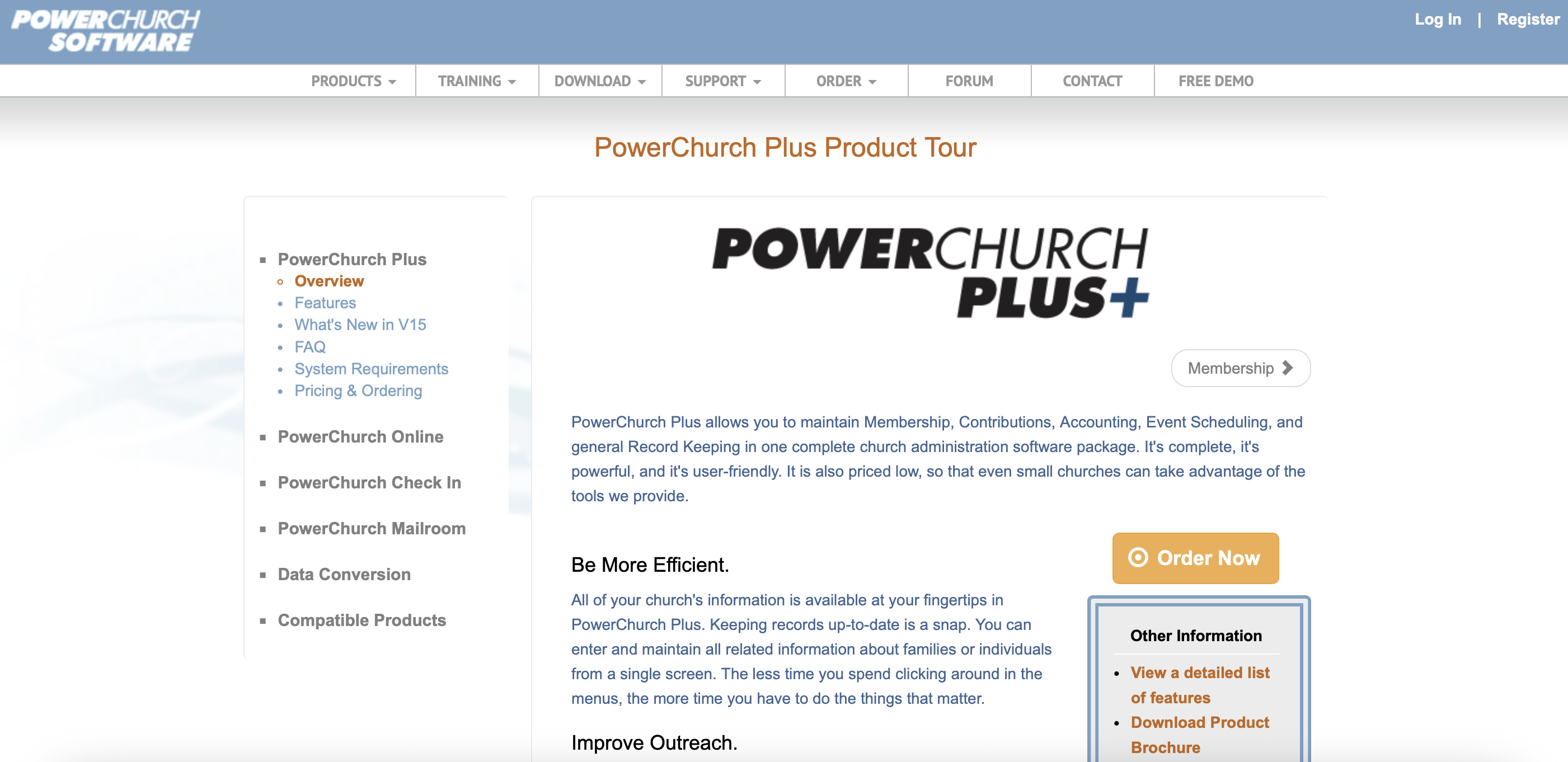
PowerChurch Plus is different from most payroll services because it is church management software with payroll and accounting features.
It can help churches manage bookkeeping, contributions, accounts payable, membership records, financial reports, and payroll. This makes it useful for churches that want several administrative functions in one system.
For churches that already use PowerChurch Plus, using its payroll features may be convenient. It keeps church records in one place and can reduce the need for multiple disconnected tools.
However, PowerChurch Plus may not feel as modern as newer cloud payroll platforms. It may also require more setup and training. Churches should compare its payroll capabilities with full-service payroll providers before deciding.
Best for: churches that want payroll inside a broader church management system.
Key strengths:
- Church-focused software
- Payroll and accounting tools
- Contribution and financial reporting
- Centralized church records
- Useful for churches already using PowerChurch
Potential drawbacks:
- May not be as modern as newer payroll tools
- May require more training
- Payroll features may not be as full-service as dedicated providers
9. Deel Payroll
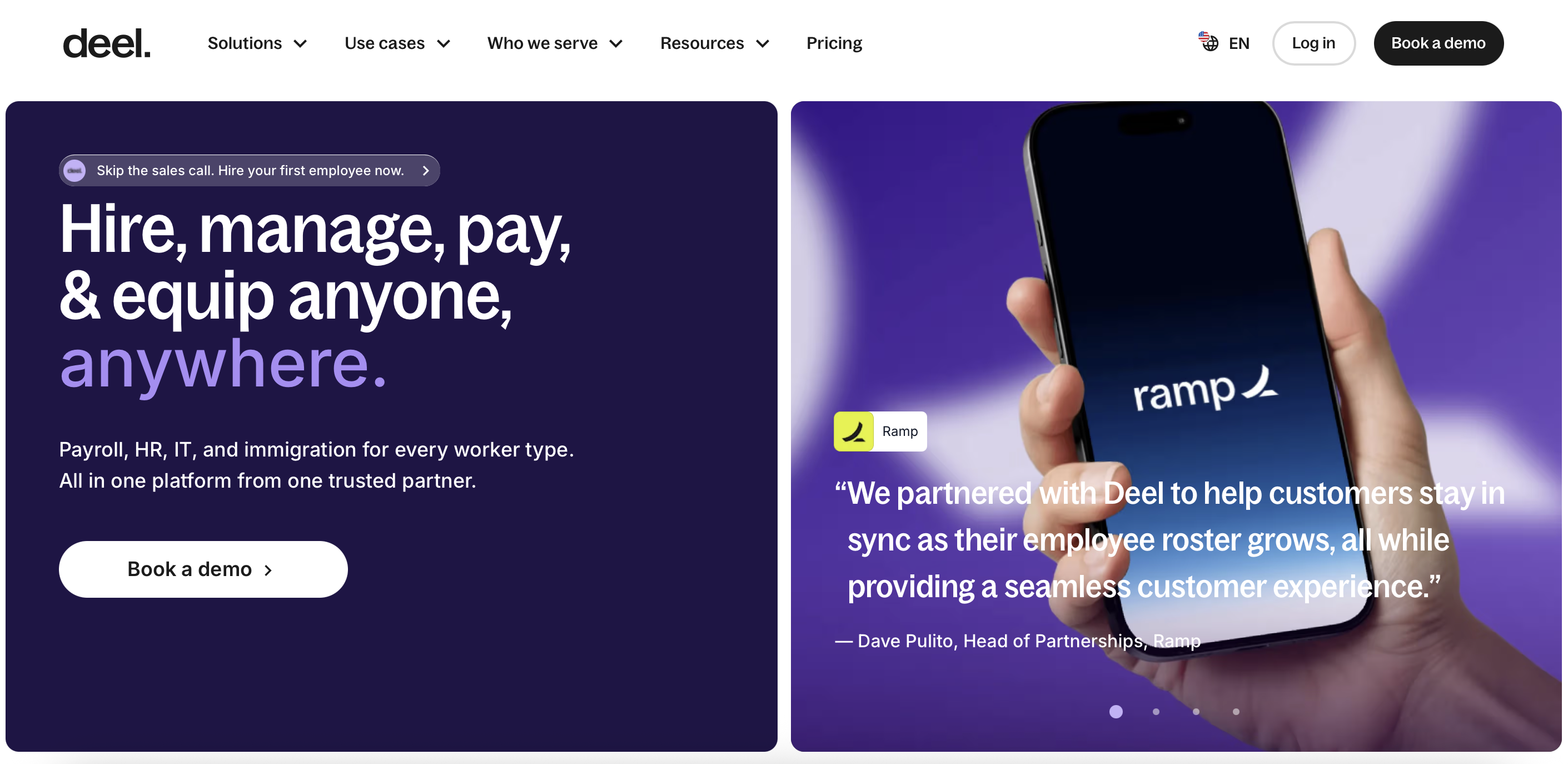
Deel Payroll is useful for churches or religious organizations that work with international staff, missionaries, remote workers, or contractors.
Most local churches may not need a global payroll platform. But churches with international missions, overseas contractors, or remote ministry workers may need to handle payments across countries, currencies, and local regulations. Deel is designed for global payroll, contractor management, compliant contracts, tax documentation, and international payments.
For example, a church supporting international ministry work may need to pay contractors or team members outside the United States. Deel can help manage those payments more easily than a standard domestic payroll provider.
Deel may not be the best choice for a small church with only local employees. But for churches with cross-border payment needs, it can be a strong option.
Best for: churches with international workers, missionaries, or global contractors.
Key strengths:
- Global payroll and contractor payments
- Multi-currency support
- International compliance tools
- Contract and tax document management
- Integrations with accounting and HR tools
Potential drawbacks:
- May be more than a small local church needs
- Not focused only on churches
- Pricing may be higher depending on use case
10. Paylocity

Paylocity is a larger HR and payroll platform that can serve churches with more complex staffing needs.
It offers payroll processing, tax filing, HR tools, benefits administration, onboarding, time tracking, employee engagement features, reporting, and integrations. For larger churches, multi-campus ministries, or organizations with many employees, these features may be useful.
Paylocity may be especially relevant for churches that need more than payroll. If a church is managing a larger staff, multiple departments, benefits, HR workflows, and compliance tasks, a more complete platform can help centralize operations.
The downside is that Paylocity may be too complex or expensive for smaller churches. Pricing may also require a custom quote, which makes it harder to compare quickly.
Best for: larger churches that need payroll plus HR management.
Key strengths:
- Payroll and HR in one platform
- Benefits administration
- Time tracking and onboarding
- Reporting tools
- Useful for larger teams
- Employee engagement features
Potential drawbacks:
- May be too advanced for small churches
- Pricing may not be transparent
- Not exclusively church-focused
How to Choose the Best Payroll Service for Your Church
Before choosing payroll software, churches should start with their actual payroll situation.
A small church with one pastor and one part-time administrator has very different needs from a multi-campus church with dozens of employees, contractors, and benefits plans.
Ask these questions first:
- Do you pay clergy?
- Do you provide a housing allowance?
- Do you pay contractors or guest speakers?
- Do you need W-2s and 1099s?
- Do you have hourly or part-time staff?
- Do you need multi-state payroll?
- Who will run payroll each month?
- Does your payroll system need to connect with church accounting software?
- Do you need benefits, PTO, or time tracking?
- Do you need a church payroll specialist?
If your church has clergy payroll, housing allowances, or complex tax treatment, prioritize providers that clearly support those needs. If your payroll is simple, affordability and ease of use may matter more.
Common Mistakes to Avoid
One common mistake is choosing payroll software only because it is cheap. Low-cost payroll can be fine for a very small church, but not if it requires manual tax filing or does not handle clergy payroll correctly.
Another mistake is assuming all workers are employees. Churches often pay contractors, guest speakers, musicians, and temporary workers. The payroll system should make it easy to separate W-2 employees from 1099 contractors.
A third mistake is ignoring housing allowance setup. If the church pays a pastor, this should be handled carefully from the beginning.
A fourth mistake is choosing software that does not integrate with accounting. Manual data entry between payroll and bookkeeping systems can create errors and waste time.
Finally, churches should avoid tools that do not provide clear support. Payroll mistakes can be expensive. If the provider does not offer reliable help, the church may be left solving tax issues alone.
Best Payroll Service for Churches: Final Recommendation
Gusto is a strong choice for small and mid-sized churches that want simple, modern payroll automation. OnPay is useful for churches that need unlimited payroll runs and flexible worker management. MinistryWorks is a better fit for churches that want dedicated ministry payroll expertise. QuickBooks Payroll works well for churches already using QuickBooks. SurePayroll and Patriot Payroll can be good budget-friendly options. Deel is useful for churches with international workers or contractors. Paylocity may fit larger churches with broader HR needs. Solowise Payroll Service is worth considering for churches and nonprofit teams that want practical help understanding payroll options, comparing providers, and choosing a setup that fits their staff structure and budget.
FAQ
1. Do churches need payroll software?
Churches do not always need payroll software, but it can make payroll much easier and safer. Payroll software helps calculate wages, manage tax forms, pay employees, file taxes, and keep records organized. For churches with pastors, housing allowances, contractors, or part-time staff, payroll software can reduce the risk of mistakes.
2. What is the best payroll service for a small church?
For a small church, Gusto, OnPay, Patriot Payroll, and SurePayroll are practical options. The best choice depends on whether the church needs full-service tax filing, contractor payments, accounting integrations, or clergy payroll support.
3. Can regular payroll software work for churches?
Yes, regular payroll software can work for churches if it supports the church’s payroll needs. However, churches should make sure the software can handle clergy tax settings, housing allowance, W-2s, 1099s, and any required tax filings.
4. Do pastors pay payroll taxes?
Pastors have special tax rules. They are often treated as employees for income tax purposes but as self-employed for Social Security and Medicare taxes. Churches should confirm proper setup with a payroll provider or tax professional.
5. What is a housing allowance in church payroll?
A housing allowance is compensation designated for a minister’s housing expenses. It may receive special tax treatment if approved and reported correctly. Payroll software used by churches should make it easy to track this amount separately.
6. Do churches issue W-2s or 1099s?
Churches may issue both. Employees usually receive W-2 forms. Contractors, guest speakers, or certain outside workers may receive 1099 forms if payment thresholds and classification rules apply.
7. Can church payroll software pay contractors?
Many payroll services can pay contractors and generate 1099 forms. This is useful for churches that pay guest speakers, musicians, consultants, or temporary workers.
8. What features matter most in church payroll software?
The most important features are clergy payroll support, housing allowance tracking, tax filing, W-2 and 1099 generation, direct deposit, accounting integrations, employee self-service, reporting, and role-based permissions.
9. Is full-service payroll worth it for churches?
Full-service payroll is often worth it if the church does not have an experienced payroll administrator. It can help reduce manual filing, tax deadlines, and compliance risks.
10. How much does church payroll software cost?
Costs vary by provider. Some basic plans start at a low monthly fee plus a per-employee charge. More advanced payroll and HR platforms may cost more or require custom pricing. Churches should check for extra fees for tax filing, year-end forms, integrations, benefits, or support.

I’m an ex-English teacher who discovered a passion for writing. My goal is to create insightful articles that help boost readers’ personal and professional growth.
Learn moreWe are here to ease your working routine
Whether you're freelancing or a full-time contractor, we simplify the working process, putting you in control.
Try it free

Ensure 100% compliance with payroll in Cyprus with our comprehensive guide to taxes, benefits, and working hours for employees.

Colombia Digital Nomad Visa: learn how to apply, eligibility requirements, and best spots for remote work in one of the most biodiverse countries.

Explore 6 important steps to help you manage your finances as a freelancer. Learn about personal and business expenses, how to plan for taxes and savings, and how to create a sustainable budget for your freelance career.
